

Ilia Hionidou
MSc Gender 2022
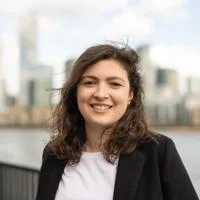
Name: Ilia Hionidou
Programme and year: MSc Gender 2022
What are you currently doing and where?
I am currently UK Policy and Advocacy Manager at Kaleidoscope Trust, influencing political leaders to support LGBTI+ human rights across the world. Previously, I worked in international development and UN advocacy, coordinating LGBT+ programming at the Westminster Foundation for Democracy, and working on LGBTI+ human rights in Geneva as a Junior Consultant with ILGA World. On a voluntary basis, I am a Trustee at ReportOUT, a charity based in the north-east of England but with volunteers from across the globe, that reports, monitors and documents the human rights abuses and development needs of sexual and gender minorities worldwide.
Why did you choose to study gender at LSE?
LSE's Gender MSc was my top choice. There are very few postgraduate programmes that predominantly focus on gender as a legitimate discipline in and of itself. A lot of gender courses at the time focussed on literature, history, art, sociology, and were patched together through contributions from a variety of departments. As I had just completed a bachelor's in the arts and humanities, I was looking for a course that allowed me to focus instead on development, human rights, politics, international relations - the LSE Department for Gender does exactly that, and is built to be flexible. I was able to select from a range of module options, and had the chance to tailor my degree to my specific interests.
How do you use what you learned at LSE Gender in your current role?
I now work in the LGBTI+ human rights sector, so it goes without saying that I use my degree every day, and have done so in every role I've had since graduating in 2022! A stark example is that in my current role, I am drafting a paper on LGBTI+ human rights and colonialism; to do so, I have scoured the reading lists from my LSE modules and reread all my old lecture slides. In a less literal sense, the LSE Gender masters programme has permanently changed the fabric of my thinking and the way I analyse the world around me. The module GI402 - feminist epistemologies and methodologies - bolstered my ethical framework not just professionally and academically, but also on a personal level. It's hard to understate quite how radically my worldviews have shifted since completing this programme.
What advice do you have for current and/or prospective LSE Gender students?
Push yourself! You'll likely be pushed anyway...it's a demanding programme. But lean into that. I remember feeling worried about saying the 'wrong thing' in a seminar room full of intelligent people. While it might be intimidating that your tutors and lecturers are world experts in their fields, what an incredible opportunity to learn and push the boundaries of your understanding.
Is there a particular highlight about your time at LSE Gender you would like to share?
I thoroughly enjoyed my lectures and seminars with SM Rodriguez for the Gender and Human Rights module. I'm so grateful that this course was my introduction to human rights. It provided me with high standards of the questions we should pose to ourselves and each other when working in the field: who is the 'human' in human rights? Who historically has determined this? And what becomes of those who aren't afforded humanity? These were crucial interrogations I came back to time and time again during my stint as a human rights practitioner in Geneva.
Connect with Ilia on LinkedIn.