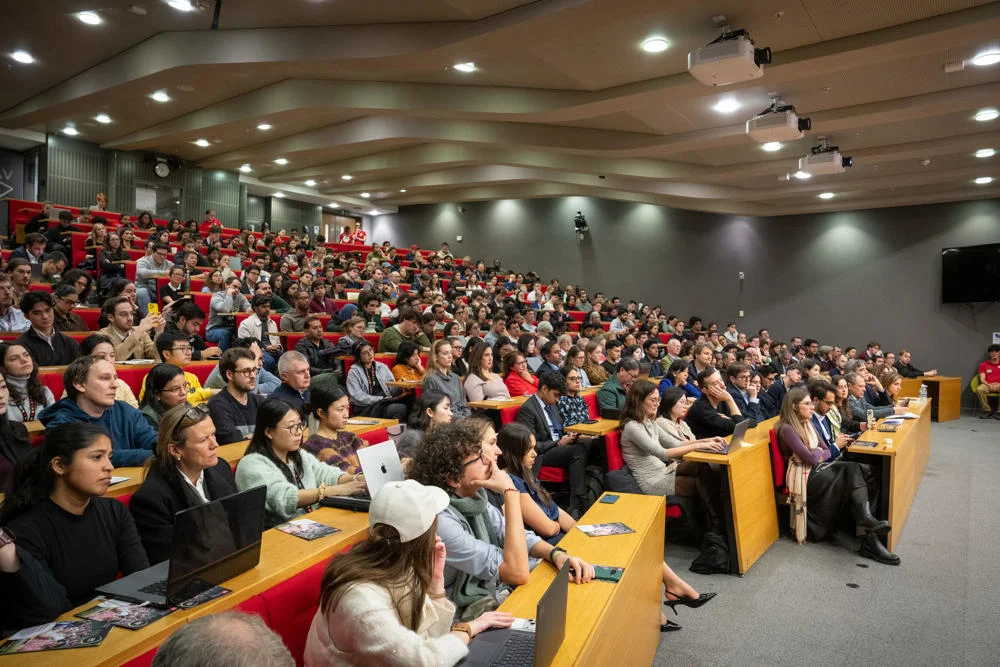
How do Britain’s private schools reproduce privilege?
Speakers




It is no secret that the alumni of Britain’s elite schools remain disproportionately represented in positions of power and influence. But what is it about these institutions that gives their students such a lasting advantage? This event marks the launch of An Elite Education: How Privilege is Produced in a Private School by Emma Taylor.
Drawing on an in-depth ethnography of one of Britain’s most prestigious private schools, Taylor explores how these institutions cultivate the dispositions that propel students into elite universities and professions. Central to the book is the concept of audacity, a carefully nurtured sense of privilege that is often mistaken for merit. Beneath the formal façade of architecture, traditions and rituals lies a complex web of everyday interactions through which students learn to assert themselves without fear of consequence. Bringing together a panel of key scholars and activists in the field, this event will examine how such taken-for-granted dispositions continue to shape access to opportunity and the reproduction of privilege in Britain.
Meet our speakers and chair
Tiwa Adebayo is an experienced journalist, broadcaster and former financial services professional, she currently works at Bloomberg News. Prior to joining Bloomberg, Tiwa worked extensively as a freelance journalist writing articles for publications including British Vogue and The Independent. A key area of focus for Tiwa is education. In 2020, her widely publicised open letter about racism in the UK private school system led to an advisory relationship with the Department for Education.
Annette Lareau is the author of the award-winning books Unequal Childhoods, Home Advantage, and Listening to People. With Blair Sackett, she authored We Thought It Would be Heaven: Refugees in an Unequal America. She is writing a book, to be published with University of California Press, on the impact of wealth on family life. She is Professor (emeritus) in the Department of Sociology at the University of Pennsylvania. Annette Lareau is a Past President of the American Sociological Association.
Lee Elliot Major is Britain’s first Professor of Social Mobility at the University of Exeter, and an Associate at LSE's Centre for Economic Performance. He advises education, government and business leaders, and was formerly CEO of the Sutton Trust. His award-winning books include Social Mobility and Its Enemies, and Equity in Education. His forthcoming book, Cracking the Class Code, examines barriers to opportunity in elite workplaces. He was awarded an OBE for services to social mobility.
Emma Taylor is a Lecturer in Education at King’s Academy, the education development centre at King’s College London. She was previously an LSE Fellow in Interdisciplinary Social Science and a Leverhulme Doctoral Scholar in the LSE Department of Sociology, supported by the International Inequalities Institute. Prior to her academic career, she spent 15 years teaching in secondary schools, an experience that continues to inform her teaching and research in higher education.
Mike Savage is Professorial Research Fellow at the International Inequalities Institute. Mike has long standing interests in analysing social stratification and inequality. He has played a major role in the revival of the sociology of social class in recent decades so that it has become once more a central plank of the discipline.
More about this event
Join us on campus or register to watch the event online at LSE Live. LSE Live is the home for our live streams, allowing you to tune in and join the global debate at LSE, wherever you are in the world. If you can't attend live, a video will be made available shortly afterwards on LSE's YouTube channel.
The International Inequalities Institute at LSE brings together experts from many of the School's departments and centres to lead cutting-edge research focused on understanding why inequalities are escalating in numerous arenas across the world, and to develop critical tools to address these challenges.
The Department of Sociology is ranked first in the UK in The Guardian University Guide 2026 and first in London in the Complete University Guide 2026. LSE Sociology provides outstanding education in the changing social world, and state-of-the-art, public-facing research on social issues. Our areas of international expertise include: economic sociology; politics and human rights; social inequalities; knowledge, culture and technology; and urban sociology.
Hashtag for this event: #LSEEvents
Any questions?
If you have a query see our Events FAQ or take a look at the information below.
You can also contact us at events@lse.ac.uk.
Many speakers at LSE events also write for LSE Blogs, which present research and critical commentary accessibly for a public audience. Follow LSE British Politics, LSE Business Review, LSE Impact, LSE European Politics and the LSE Review of Books to learn more about the debates our events series present.
If the event is live streamed, automated live captions will be available. Please note that this feature uses Automatic Speech Recognition (ASR) technology, or machine generated transcription and is not 100% accurate.
Photographs are regularly taken at LSE events both by LSE staff and members of the media and events are routinely filmed. Photographs from events taken by LSE staff are often used on LSE's social media accounts, with videos being made available on the LSE Player. If you have any concerns about this please contact the event organiser in advance of the event.
Please contact the Press Office if you would like to request a press seat or have a media query about this event, email LSE.Press.Events@lse.ac.uk. Please note that press seats are usually allocated at least 24 hours before each event.
We aim to make all LSE events available as a podcast subject to receiving permission from the speaker/s to do this, and subject to no technical problems with the recording of the event. Podcasts are normally available 1 week after the event. Podcasts and videos of past events can be found online.
Event updates and other information about what’s happening at LSE can be found on our Facebook page and for live photos from events and around campus, follow us on Instagram.
Livestreams and archive videos of past lectures are shared on our YouTube channel while event podcasts can be found on the LSE Player.
Attending our events in-person or online? Join the conversation using #LSEEvents.
If you are planning to attend this event and would like details on how to get here and what time to arrive, as well as on accessibility and special requirements, please refer to LSE Events FAQ. LSE aims to ensure that people have equal access to these public events, but please contact the events organiser as far as possible in advance if you have any access requirements so that arrangements, where possible, can be made. If the event is ticketed, please ensure you get in touch in advance of the ticket release date. Access Guides to all our venues can be viewed online.
LSE has now introduced wireless for guests and visitors in association with 'The Cloud', also in use at many other locations across the UK. If you are on campus visiting for the day or attending a conference or event, you can connect your device to wireless. See more information and create an account at Join the Cloud.
Visitors from other participating institutions are encouraged to use eduroam. If you are having trouble connecting to eduroam, please contact your home institution for assistance.
The Cloud is only intended for guest and visitor access to wifi. Existing LSE staff and students are encouraged to use eduroam instead.
From time to time there are changes to event details so we strongly recommend that if you plan to attend this event you check back on this listing on the day of the event.
LSE holds a wide range of events, covering many of the most controversial issues of the day, and speakers at our events may express views that cause offence. The views expressed by speakers at LSE events do not reflect the position or views of the London School of Economics and Political Science.
Subscribe to the LSE Events newsletter