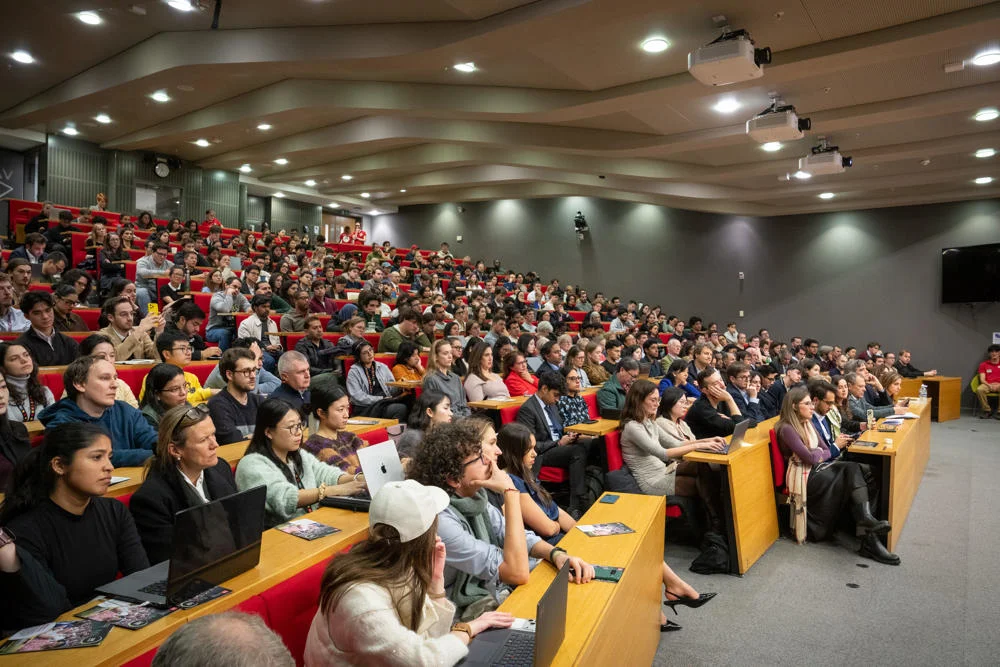

Discussing the global justice report
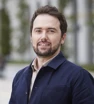

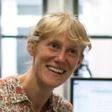

In this public event, Lucas Chancel will present the main results of the Global Justice Report, with the online presence of Thomas Piketty as a second speaker, and Tania Burchardt as a discussant.
The Global Justice Report attempts to set out a new vision for global progress in the 21st century: grounding human development and equality in planetary habitability. It explores the conditions under which the world could move toward this horizon and traces an economically and ecologically consistent transition path from 2026 to 2100. Its main conclusion is simple: it is possible to reconcile planetary habitability and high well-being for all, but only if the transformation rests on three pillars simultaneously. Fast decarbonisation of energy systems is necessary. But we also need a major shift toward sufficiency – understood as a sharp reduction in labour hours and material footprint and large changes in consumption patterns, food habits, land use, and forest cover. In addition, neither decarbonization nor sufficiency can be financed and politically sustained without a drastic reduction in inequality of income, wealth and power, both between countries and within them.
Meet our speakers and chair
Lucas Chancel is an economist. His work focuses on the study of economic inequality, its interactions with unsustainable development patterns, and on the implementation of social and ecological policies. His recent projects focused on the trends and determinants of income and wealth inequality (both past and present) in rich and developing countries as well as at the global level, based on the use of tax data, household surveys, national accounts and rich lists.
Thomas Piketty is a French economist who is a professor of economics at the School for Advanced Studies in the Social Sciences (EHESS), associate chair at the Paris School of Economics (PSE) and Centennial Professor of Economics in the International Inequalities Institute at LSE.
Tania Burchardt is a Professor in the Department of Social Policy at LSE and an Associate Director of the Centre for Analysis of Social Exclusion (CASE).
Lea Ypi (@lea_ypi) is the Ralph Miliband Professor in Politics and Philosophy at LSE, a fellow of the Wissenschaftskolleg zu Berlin, and Honorary Professor at ANU. Author of Free and Indignity (Penguin), her work has won major prizes, including the RSL Ondaatje Prize and Leverhulme Prize, and been translated into 35+ languages. She coedits Political Philosophy and writes for the FT and Guardian.
More about this event
Join us on campus or register to watch the event online at LSE Live. LSE Live is the home for our live streams, allowing you to tune in and join the global debate at LSE, wherever you are in the world. If you can't attend live, a video will be made available shortly afterwards on LSE's YouTube channel.
Alternatives to Capitalism (AC) is a major new multidisciplinary initiative to investigate viable alternatives to capitalism and explore how political, economic, and cultural life might be organised beyond capitalist social relations. Led by Lea Ypi and Vincent Harting, it brings together leading scholars in political philosophy and the social sciences to examine competing post-capitalist visions, institutions, and strategies for social transformation. Through research, public engagement, and interdisciplinary collaboration, the initiative seeks to advance rigorous thinking about what should come after capitalism and how such alternatives might be realised.
LSE Law School is one of the world's top law schools with an international reputation for the quality of its teaching and legal research.
Hashtag for this event: #LSEEvents
Any questions?
If you have a query see our Events FAQ or take a look at the information below.
You can also contact us at events@lse.ac.uk.
Many speakers at LSE events also write for LSE Blogs, which present research and critical commentary accessibly for a public audience. Follow LSE British Politics, LSE Business Review, LSE Impact, LSE European Politics and the LSE Review of Books to learn more about the debates our events series present.
If the event is live streamed, automated live captions will be available. Please note that this feature uses Automatic Speech Recognition (ASR) technology, or machine generated transcription and is not 100% accurate.
Photographs are regularly taken at LSE events both by LSE staff and members of the media and events are routinely filmed. Photographs from events taken by LSE staff are often used on LSE's social media accounts, with videos being made available on the LSE Player. If you have any concerns about this please contact the event organiser in advance of the event.
Please contact the Press Office if you would like to request a press seat or have a media query about this event, email LSE.Press.Events@lse.ac.uk. Please note that press seats are usually allocated at least 24 hours before each event.
We aim to make all LSE events available as a podcast subject to receiving permission from the speaker/s to do this, and subject to no technical problems with the recording of the event. Podcasts are normally available 1 week after the event. Podcasts and videos of past events can be found online.
Event updates and other information about what’s happening at LSE can be found on our Facebook page and for live photos from events and around campus, follow us on Instagram.
Livestreams and archive videos of past lectures are shared on our YouTube channel while event podcasts can be found on the LSE Player.
Attending our events in-person or online? Join the conversation using #LSEEvents.
If you are planning to attend this event and would like details on how to get here and what time to arrive, as well as on accessibility and special requirements, please refer to LSE Events FAQ. LSE aims to ensure that people have equal access to these public events, but please contact the events organiser as far as possible in advance if you have any access requirements so that arrangements, where possible, can be made. If the event is ticketed, please ensure you get in touch in advance of the ticket release date. Access Guides to all our venues can be viewed online.
LSE has now introduced wireless for guests and visitors in association with 'The Cloud', also in use at many other locations across the UK. If you are on campus visiting for the day or attending a conference or event, you can connect your device to wireless. See more information and create an account at Join the Cloud.
Visitors from other participating institutions are encouraged to use eduroam. If you are having trouble connecting to eduroam, please contact your home institution for assistance.
The Cloud is only intended for guest and visitor access to wifi. Existing LSE staff and students are encouraged to use eduroam instead.
From time to time there are changes to event details so we strongly recommend that if you plan to attend this event you check back on this listing on the day of the event.
LSE holds a wide range of events, covering many of the most controversial issues of the day, and speakers at our events may express views that cause offence. The views expressed by speakers at LSE events do not reflect the position or views of the London School of Economics and Political Science.
Subscribe to the LSE Events newsletter