
Six challenges for the social sciences: inequality


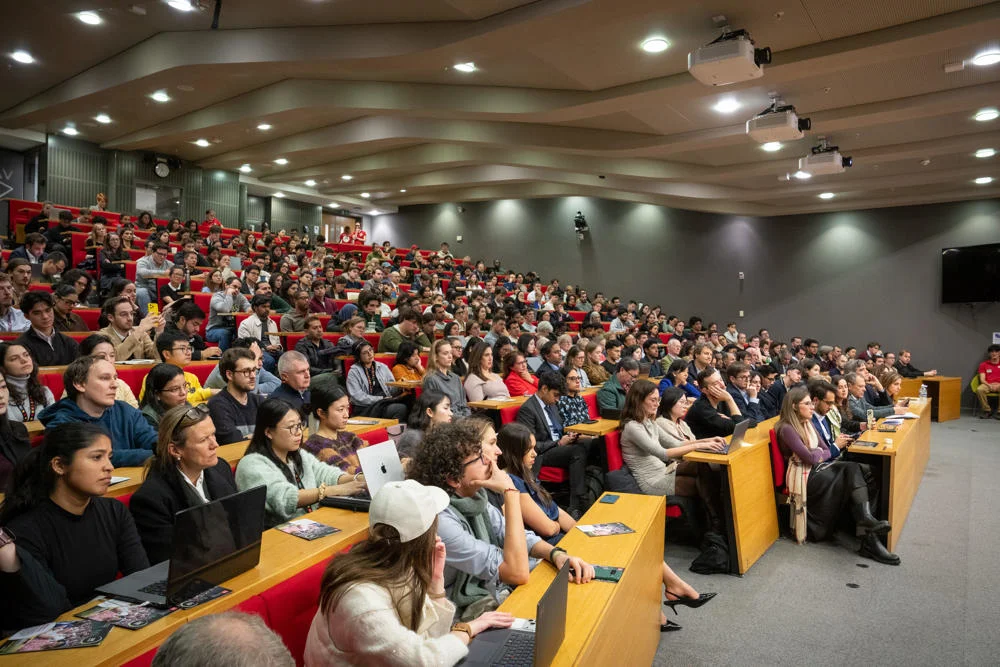
Students and scholars at or from LSE were central in shaping thought and action on all the major social issues of the 20th century. What are the issues we need to address, as social scientists, to remain similarly relevant in the 21st century?
This event series, chaired by LSE President Larry Kramer, will focus on six key challenges for the social sciences: the challenges of new technologies, of political economy, of sustainable development, of popular government, of inequality and of global governance. The complex responses required to address these challenges are deeply intertwined with—both contributing to and providing the playing field for—the increased polarisation to be found across our societies today (the topic we examined in last year's special Presidential series at LSE).
Join us for this first event in the series where we look at the issue of inequality.
As we rebuild or repair our political, economic, and social systems, we have an opportunity to address systemic inequalities that have been baked into the current ones? Racial and gender inequalities remain seemingly intractable, on top of which are enormous disparities in income and wealth, both within and between countries. Across a range of nations, it is not uncommon for the richest 1% of the population to hold 40% of the wealth. These economic and social inequalities then translate into disparities in political influence, leading to elite capture of the rule-making institutions which can, in turn, be used to entrench incumbent advantage. This inequality trap is costly and inefficient: it excludes billions of people from access to the opportunities they need to reach their full productive potential, and it can hamper cooperation in addressing critical collective action problems, like climate change. History teaches us that inequality can be substantially reduced, and voice and opportunity expanded. These traps can be broken. Yet, contemporary societies often seem hopeless and rudderless in facing the inequality trap. Join us for a conversation about how the social sciences can help build a bold new political and policy agenda to promote equality while expanding prosperity in these troubled times.
Meet our speakers and chair
Francisco H. G. Ferreira is the Amartya Sen Professor of Inequality Studies at LSE, where he is also Director of the International Inequalities Institute. He is also a Research Fellow of the Institute for the Study of Labor (IZA); an Affiliated Scholar with the Stone Centres at the City University of New York and at the University of Chicago; President-Elect of the Society for the Study of Economic Inequality (ECINEQ); and a former President of the Latin American and Caribbean Economic Association.
Naila Kabeer is Emeritus Professor of Gender and Development at LSE’s Department of International Development. She is a Faculty Associate of the International Inequalities Institute and directs its Gender Justice and Wellbeing Economy research programme. Her research focuses on gender, poverty, labour markets and social protection, and she has advised international and bilateral agencies and NGOs. Her latest book is Renegotiating Patriarchy: Gender, Agency and the Bangladesh Paradox.
Ingrid Robeyns works on issues in contemporary political philosophy and applied ethics, and holds the Chair in Ethics of Institutions at the Ethics Institute of Utrecht University. She specialises in applied and "non-ideal" ethics, interdisciplinary research, and developing normative frameworks and methods. Additionally, she is affiliated as a visiting professor at the Center for Analysis of Social Exclusion (CASE) at LSE. In 2022, she received the prestigious Vici grant from the Dutch Research Council, allowing her to establish a research team focused on the ethical and political-philosophical structures of future visions, which commenced in September 2023.
Larry Kramer has been President and Vice Chancellor of LSE since April 2024. A constitutional scholar, university administrator, and philanthropic leader, he was previously the President of the William and Flora Hewlett Foundation and the Dean of Stanford Law School.
More about this event
Join us on campus or register to watch the event online at LSE Live. LSE Live is the home for our live streams, allowing you to tune in and join the global debate at LSE, wherever you are in the world. If you can't attend live, a video will be made available shortly afterwards on LSE's YouTube channel.
This event is hosted by the International Inequalities Institute.
Future events in the series will be on 8 February, 22 February, 1 March, 8 March and 22 March.
Hashtag for this event: #LSEEvents
Any questions?
If you have a query see our Events FAQ or take a look at the information below.
You can also contact us at events@lse.ac.uk.
Many speakers at LSE events also write for LSE Blogs, which present research and critical commentary accessibly for a public audience. Follow LSE British Politics, LSE Business Review, LSE Impact, LSE European Politics and the LSE Review of Books to learn more about the debates our events series present.
If the event is live streamed, automated live captions will be available. Please note that this feature uses Automatic Speech Recognition (ASR) technology, or machine generated transcription and is not 100% accurate.
Photographs are regularly taken at LSE events both by LSE staff and members of the media and events are routinely filmed. Photographs from events taken by LSE staff are often used on LSE's social media accounts, with videos being made available on the LSE Player. If you have any concerns about this please contact the event organiser in advance of the event.
Please contact the Press Office if you would like to request a press seat or have a media query about this event, email LSE.Press.Events@lse.ac.uk. Please note that press seats are usually allocated at least 24 hours before each event.
We aim to make all LSE events available as a podcast subject to receiving permission from the speaker/s to do this, and subject to no technical problems with the recording of the event. Podcasts are normally available 1 week after the event. Podcasts and videos of past events can be found online.
Event updates and other information about what’s happening at LSE can be found on our Facebook page and for live photos from events and around campus, follow us on Instagram.
Livestreams and archive videos of past lectures are shared on our YouTube channel while event podcasts can be found on the LSE Player.
Attending our events in-person or online? Join the conversation using #LSEEvents.
If you are planning to attend this event and would like details on how to get here and what time to arrive, as well as on accessibility and special requirements, please refer to LSE Events FAQ. LSE aims to ensure that people have equal access to these public events, but please contact the events organiser as far as possible in advance if you have any access requirements so that arrangements, where possible, can be made. If the event is ticketed, please ensure you get in touch in advance of the ticket release date. Access Guides to all our venues can be viewed online.
LSE has now introduced wireless for guests and visitors in association with 'The Cloud', also in use at many other locations across the UK. If you are on campus visiting for the day or attending a conference or event, you can connect your device to wireless. See more information and create an account at Join the Cloud.
Visitors from other participating institutions are encouraged to use eduroam. If you are having trouble connecting to eduroam, please contact your home institution for assistance.
The Cloud is only intended for guest and visitor access to wifi. Existing LSE staff and students are encouraged to use eduroam instead.
From time to time there are changes to event details so we strongly recommend that if you plan to attend this event you check back on this listing on the day of the event.
LSE holds a wide range of events, covering many of the most controversial issues of the day, and speakers at our events may express views that cause offence. The views expressed by speakers at LSE events do not reflect the position or views of the London School of Economics and Political Science.
Subscribe to the LSE Events newsletter