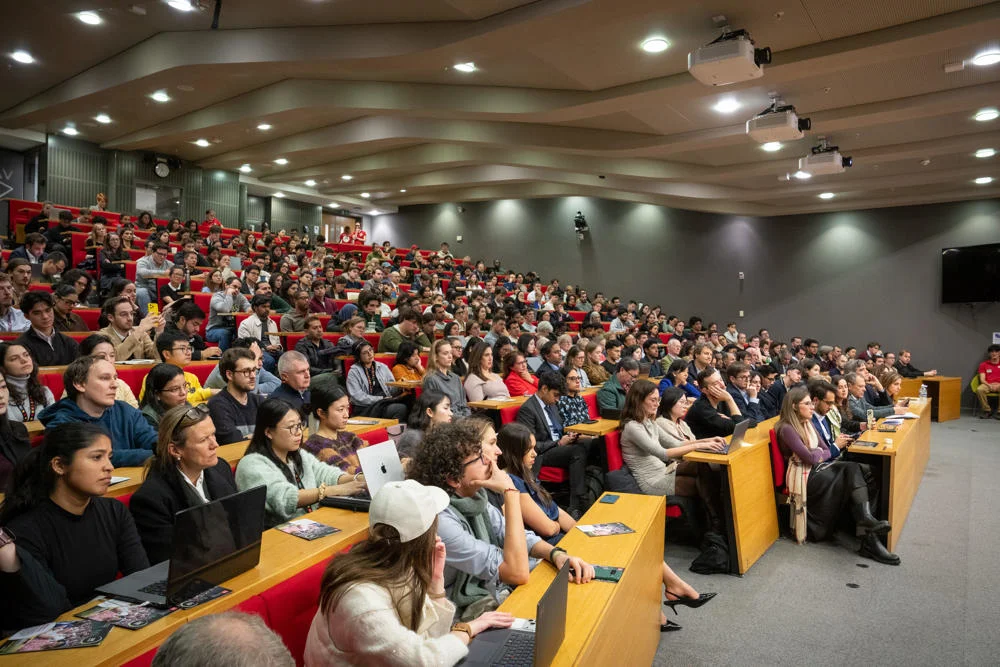

The challenges to peace and democracy in the Middle East
Speakers



This conversation is part of AFSEE's programme of events to celebrate our tenth anniversary.
Peace and democracy are facing growing challenges across the Middle East, raising urgent questions about the future of the region. From violent armed conflicts to escalating political polarisation and pressures on democratic institutions and civic participation, people across the Middle East are confronting complex and interconnected challenges. Several speakers on the panel are experts in context of the Israel -Palestine conflict. They will reflect on the political developments following the Hamas attacks on 7 October 2023 and the subsequent Israeli military campaign that has resulted in the genocide of the Palestinian population in Gaza. The panel will explore the obstacles to building peaceful and democratic societies in the region, examining how political movements, civil society organisations, and grassroots initiatives are responding to these challenges. Bringing together perspectives from academia and activism, the discussion will consider the challenges but also to the possible pathways to peace and democracy in a rapidly changing region.
Meet our speakers and chair
Rula Daood is co-leader of Place for Us All, an Arab-Jewish political party fighting for peace and equality in Israel and Palestine. As co-leader of Place for Us All, Rula is the only woman in Israel to be named as a leader of a political party. A Palestinian citizen of Israel from Kfar Yasif, she began her career as a speech pathologist before becoming a political organiser. She co-founded Standing Together in 2015 and, alongside Alon-Lee Green, was named one of TIME magazine’s 100 emerging global leaders in 2024.
Alon-Lee Green is co-leader of Place for Us All, an Arab-Jewish political party fighting for peace and equality in Israel and Palestine. A lifelong activist, he founded Israel’s first National Waiters’ Union as a teenager and played a leading role in the 2011 social protest movement in Israel. He co-founded Standing Together in 2015 and, alongside Rula Daood, was named one of TIME magazine’s 100 emerging global leaders in 2024.
Mary Kaldor is Professor Emeritus of Global Governance and Director of the Conflict Research Programme at LSE IDEAS. She has pioneered the concepts of “new wars” and global civil society. Her work on human security has influenced European and national governments, and she is the author of numerous books and articles, including New and Old Wars: Organised Violence in a Global Era, International Law and New Wars (with Christine Chinkin), and Global Security Cultures.
Yonatan Levi is a political scientist studying democratic backsliding in Israel and abroad – and the civic movements fighting against it. One of his key research interests is the relationship between the rise of right-wing populism in Israel and the Arab–Israeli conflict. He teaches at Reichman University and is a research fellow at Molad – the Centre for the Renewal of Israeli Democracy. Yonatan received his PhD from LSE’s European Institute earlier this year.
Armine Ishkanian is the Executive Director of the Atlantic Fellows for Social and Economic Equity (AFSEE) programme at the International Inequalities Institute and Professor in the Department of Social Policy at LSE. Her research focuses on the relationship between civil society, democracy, development, and social transformation.
More about this event
Join us on campus or register to watch the event online at LSE Live. LSE Live is the home for our live streams, allowing you to tune in and join the global debate at LSE, wherever you are in the world. If you can't attend live, a video will be made available shortly afterwards on LSE's YouTube channel.
The Atlantic Fellows for Social and Economic Equity programme, based at the International Inequalities Institute at the London School of Economics and Political Science, is a fellowship programme building a catalytic values-led global community of people who are committed to using collective leadership to work towards social and economic justice for all.
Hashtag for this event: #LSEEvents
Any questions?
If you have a query see our Events FAQ or take a look at the information below.
You can also contact us at events@lse.ac.uk.
From time to time there are changes to event details so we strongly recommend that if you plan to attend this event you check back on this listing on the day of the event.
Many speakers at LSE events also write for LSE Blogs, which present research and critical commentary accessibly for a public audience. Follow LSE British Politics, LSE Business Review, LSE Impact, LSE European Politics and the LSE Review of Books to learn more about the debates our events series present.
If the event is live streamed, automated live captions will be available. Please note that this feature uses Automatic Speech Recognition (ASR) technology, or machine generated transcription and is not 100% accurate.
Photographs are regularly taken at LSE events both by LSE staff and members of the media and events are routinely filmed. Photographs from events taken by LSE staff are often used on LSE's social media accounts, with videos being made available on the LSE Player. If you have any concerns about this please contact the event organiser in advance of the event.
Please contact the Press Office if you would like to request a press seat or have a media query about this event, email LSE.Press.Events@lse.ac.uk. Please note that press seats are usually allocated at least 24 hours before each event.
We aim to make all LSE events available as a podcast subject to receiving permission from the speaker/s to do this, and subject to no technical problems with the recording of the event. Podcasts are normally available 1 week after the event. Podcasts and videos of past events can be found online.
Event updates and other information about what’s happening at LSE can be found on our Facebook page and for live photos from events and around campus, follow us on Instagram.
Livestreams and archive videos of past lectures are shared on our YouTube channel while event podcasts can be found on the LSE Player.
Attending our events in-person or online? Join the conversation using #LSEEvents.
If you are planning to attend this event and would like details on how to get here and what time to arrive, as well as on accessibility and special requirements, please refer to LSE Events FAQ. LSE aims to ensure that people have equal access to these public events, but please contact the events organiser as far as possible in advance if you have any access requirements so that arrangements, where possible, can be made. If the event is ticketed, please ensure you get in touch in advance of the ticket release date. Access Guides to all our venues can be viewed online.
LSE has now introduced wireless for guests and visitors in association with 'The Cloud', also in use at many other locations across the UK. If you are on campus visiting for the day or attending a conference or event, you can connect your device to wireless. See more information and create an account at Join the Cloud.
Visitors from other participating institutions are encouraged to use eduroam. If you are having trouble connecting to eduroam, please contact your home institution for assistance.
The Cloud is only intended for guest and visitor access to wifi. Existing LSE staff and students are encouraged to use eduroam instead.
From time to time there are changes to event details so we strongly recommend that if you plan to attend this event you check back on this listing on the day of the event.
LSE holds a wide range of events, covering many of the most controversial issues of the day, and speakers at our events may express views that cause offence. The views expressed by speakers at LSE events do not reflect the position or views of the London School of Economics and Political Science.
Subscribe to the LSE Events newsletter