
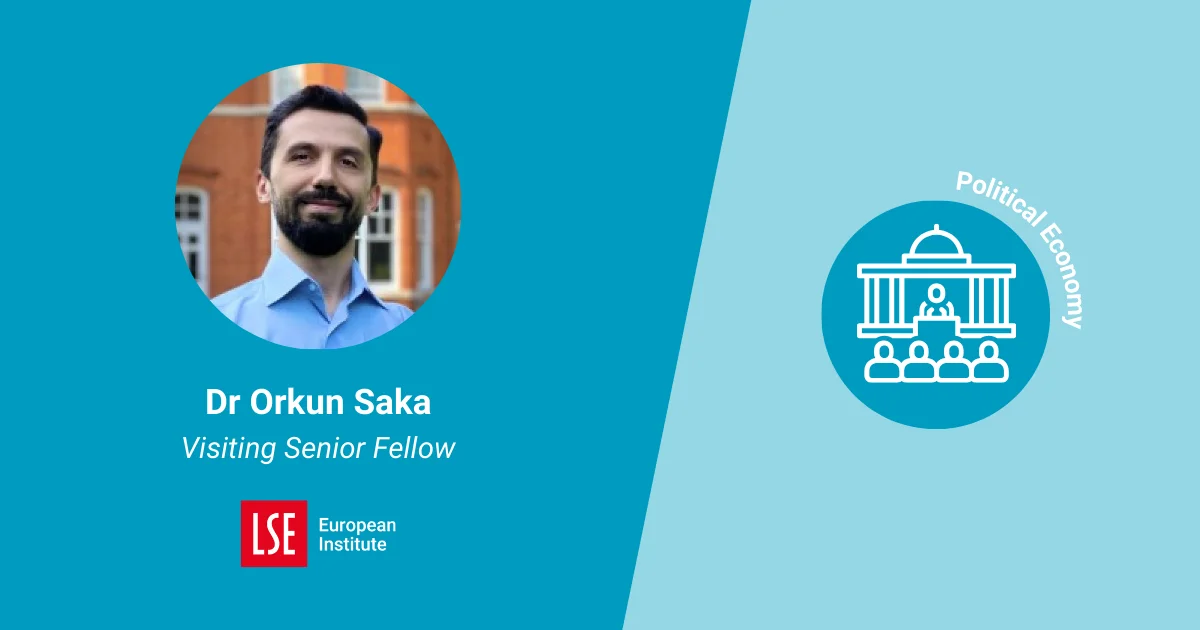
Dr Orkun Saka launches Bilateral Trust Database: an interactive tool covering 30 European countries and 900 country pairs
How much do the residents of 30 European countries trust each other?
Together with Barry Eichengreen, our Visiting Senior Fellow Dr Orkun Saka has launched a new website for their Bilateral Trust Database: an interactive tool covering 30 European countries and 900 country pairs, based on their research recently published in the Journal of the European Economic Association (see abstract below).
It documents a recent picture of how residents of 30 European countries trust each other. It includes an interactive heatmap of all country pairs, choropleth maps across 4 trust measures and options for downloading the full dataset (Excel & Stata).
Abstract
"Cultural trust biases (i.e., stereotypes) play an important role in shaping multinational banks’ cross-border exposures. Exploiting a unique identification strategy and combining European regulatory data on banks’ sovereign debt portfolios with existing and new surveys across 30 European countries, we show that multinational banks are more likely to lend to the government of a country when the residents of the countries where they operate exhibit more trust in the residents of that country. This result is robust to saturating our models with time-varying fixed effects at bank and country-pair levels, controlling for financial, informational, political and cultural linkages, and instrumenting trust via genetic and somatic similarities. Bank-level trust similarly drives corporate lending across borders and tilts banks’ sovereign portfolios toward long-term maturities. Its role is amplified when governments are hit by salience shocks such as Eurozone crises and the Brexit referendum. As potential transmission channels of stereotypes from foreign bank branches to headquarters, we provide evidence consistent with culturally biased communication and internal transfers of human capital."
Discover the Bilateral Trust Database