

Power and the people: a history of British energy since 1810
Speaker

Chair
Join us for the book launch of Power and the People, the new book by Arthur Downing.
The energy crisis of the early 2020s exposed the true nature of Britain’s energy system: fragile, fragmented, comically complicated, and hopelessly dependent on imported fossil fuels. How did it come to this? Power and the People uncovers the hidden history of British energy from the Victorians to the present.
The book tells the story of the private and publicly owned organisations that built the energy system, from local municipal electricity companies in the early twentieth century, to state-owned enterprises that built infrastructure at a massive scale and breakneck speed from 1926 to 1979. The frenzied construction bonanza changed the landscape of Britain and fabric of everyday life for citizens.
From the 1980s the electricity and gas industries were broken apart and sold off. Privatisation worked for a short time but then the model started to break down. Climate change introduced a new problem. In response, the privatised model was gradually adapted and over decades became a complex and contradictory system that is crumbling. Today, we're living under a zombie system that lurches from crisis to crisis. But there is hope. Arthur Downing offers an alternative future of what is possible, based on lessons from our own past.
Meet our speaker and chair
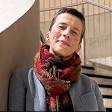
Arthur Downing is Strategy Director at Octopus Energy, the UK's largest electricity supplier, and a Visiting Senior Fellow at LSE. He was also an advisor to the Department for Energy Security and Net Zero.
He has spent his career across the energy industry — in the private sector, in regulated network companies and in government. He was previously Director of Strategy and Regulation at National Gas Transmission, and before that a Principal in the energy practice at Boston Consulting Group, where he focused on electricity network strategy, operations and regulation across transmission and distribution. Earlier, at National Grid, he led work on electric vehicle charging.
Before working in energy, Arthur was a Prize Fellow of All Souls College, Oxford. He holds a doctorate in Economic History and a first-class degree in History, both from the University of Oxford. Power and the People is his first book.
Abby Innes is Associate Professor of Political Economy at the European Institute, LSE, where she teaches the political economy of the green transition. Abby began as a specialist on the political economy of the post-communist transition, and through her subsequent work on the failures of neoliberal orthodoxy in the UK and on the green transition in Europe the complexity of ‘whole system’ transitions in political economic terms remains the common thread. Her current work is on regenerative economics, specifically, on how firms, finance and public institutions can convert from the dominant neoclassical economic methods and beliefs of the long twentieth century to strategies, methods and values more compatible with a fragile planet and a thriving society.
More about this event
Established in 1991, the LSE European Institute is a world-leading centre for the study of Europe in its global context. With eight master’s degrees and a doctoral programme, a vibrant research community, and a world-leading public events programme, our work spans Political Economy, Politics & Policy, Culture & Society, and Migration.
Follow us: Instagram, LinkedIn, Bluesky, Twitter, YouTube, and Soundcloud.
Join our mailing list to receive news about EI events.
This event is part of the European Institute's Beyond Eurocentrism Programme. The Beyond Eurocentrism programme aims to explore how the shape and shaping of Europe – its political-economy, its political policy making, or its political culture – needs to be rethought in a time of the exhaustion of Eurocentrism.
Any questions?
Contact us at ei.events@lse.ac.uk.
From time to time there are changes to event details so we strongly recommend that if you plan to attend this event you check back on this listing on the day of the event.
Whilst we are hosting this listing, LSE Events does not take responsibility for the running and administration of this event. While we take responsible measures to ensure that accurate information is given here this event is ultimately the responsibility of the organisation presenting the event.
LSE holds a wide range of events, covering many of the most controversial issues of the day, and speakers at our events may express views that cause offence. The views expressed by speakers at LSE events do not reflect the position or views of the London School of Economics and Political Science.