

Economica Coase-Phillips Lectures

Coase-Phillips Lectures are hosted jointly by the journal Economica and the Department of Economics. Information about the 2023 Economica Coase-Phillips lectures can be found below and on the Wiley webpage.
Two of Economica's most famous articles are the inspiration for the Economica Annual Lecture Series in conjunction with the Department.
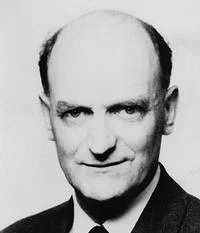
Bill Phillips is famous for uncovering one of the most famous relationships in macroeconomics, the Phillips curve, and for building the MONIAC machine to assist in teaching the Keynesian model. The 'Phillips Curve' article was the most heavily-cited macroeconomics title of the 20th century.
A W Phillips The Relation Between unemployment and the Rate of Change of Money Wage Rates in the United Kingdom, 1861-1957 Vol 25 Issue 100, November 1958
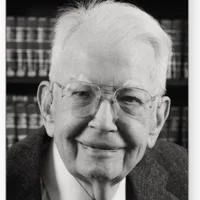
Ronald Coase won the Nobel Prize for his work on the theory of the firm which began with his Economica article. The article introduces the concept of transaction costs to explain the nature and limits of firms.
R H Coase The Nature of the Firm Vol 4 Issue 16, November 1937
Following the 2007 inaugural lecture, the Economica Phillips lecture (named after the "Phillips Curve" article, published 50 years ago this year) was given every other year, in rotation with the Economica Coase lecture series (after Ronald Coase's celebrated work on the theory of the firm published in Economica), which was inaugurated in 2007. From 2016 onwards, when Economica was re-launched, both Economica Phillips and Economica Coase lectures take place in the same academic year.
Following the inaugural lecture by Oliver Hart in 2007, the Economica Coase-Phillips lectures have played host to Robert Lucas, Jean Tirole, Thomas Sargent, Ernst Fehr and Christopher Pissarides.
For more information about the lecture series and the articles from the lectures, please visit the Economica pages.
2026 Economica-Coase Lecture
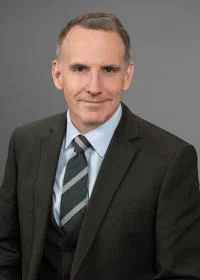
Economica-Coase Lecture
Housing supply and the future of our urban planet
Speaker: Edward Glaeser, Harvard University
Chair: Henry Overman
Date: Thursday 19 March 2026
Time: 6.00pm to 7.15pm
Venue: Old Theatre, Old Building, LSE
Register for your ticket here
#LSEEvents
2025 Economica-Coase Lecture
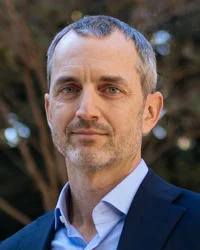
Economica-Coase Lecture
Unbiased: Challenges and contradictions in defining a fair society
Speaker: Matthew Gentzkow, Stanford University
Chair: Tim Besley
Date: Monday 02 June 2025
Time: 6.00pm to 7.15pm
Venue: MAR.2.04, LSE
This public event is free and open to all. No ticket or pre-registration is required, and entry is on a first come basis.
#LSECoase
Measuring and combatting bias has been a central focus of policy and research in domains including employment, courts, news, medicine, college admissions, and AI. Yet notions of a what it means for a decision to be unbiased remain contested and often contradictory. I present a unified framework to define notions of bias and lack of bias across these and other domains, consider when "unbiased" is (or often isn't) a helpful concept, relate these definitions to empirical evidence, and draw lessons for those seeking to combat harmful biases in society.
2025 Economica-Phillips Lecture

Economica-PhillipsLecture
Rethinking Keynesian Fiscal Stimulus
Speaker: Valerie Ramey, UCSD
Chair: Wouter Den Haan
Date: Wednesday 02 April 2025
Time: 6.00pm to 7.15pm
Venue: Hong Kong Theatre, LSE
#LSEPhillips
Podcast & video
A podcast of this event is available to download from Rethinking keynesian fiscal stimulus.
A video of this event is available to watch at Rethinking keynesian fiscal stimulus.
Starting in the 1930s, Keynesian fiscal stimulus was the leading policy tool for fighting recessions, but it subsequently fell out of favor with the discovery of the permanent income hypothesis and evidence for the effectiveness of monetary policy. However, Keynesian fiscal stimulus re-emerged as an important policy tool when interest rates hit the effective lower bound during the Global Financial Crisis. Most policymakers and many academics now believe that temporary transfers, infrastructure spending, and other types of government purchases and tax programs are effective ways to fight recessions. This lecture revisits the evidence for this view. Using a variety of methods to check the plausibility of some of the leading estimates and models, it identifies cases in which these types of spending did not appear to stimulate the macroeconomy as intended. It also discusses the costs of fiscal stimulus, both in terms of the ratcheting up of the government debt-GDP ratio and the negative effects of distortionary tax finance on GDP.
Past Economica Coase-Phillips Lectures

Economica-Coase Lecture
Perceptions, Mindsets and Beliefs Shaping Policy views
Speaker: Stefanie Stantcheva
Chair: Camille Landais, Professor of Economics
Date: Wednesday 08 May 2024
Time: 6.00pm to 7.15pm#LSECoase
Joining instructions for the event coming soon
People form their policy views based on many concerns related to fairness, self-interest, and beliefs about the impacts. Social economic surveys and experiments can help us better understand how people reason and make decisions about policies that affect their lives in important ways. This talk will consider tax policy, climate change policies, trade policy, and measures to act against inflation.
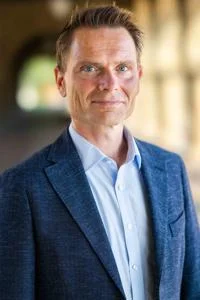
Economica-Phillips Lecture
How curvy is the Phillips curve?
Speaker: Nick Bloom, Stanford University
Chair: Wouter den Haan
Date: Wednesday 16 October 2024
Time: 6.30pm to 7.45pm
#LSEPhillips
Find out more here.
The 1958 Phillips curve was a masterpiece of macro analysis, showing a highly curved relationship between wage inflation and unemployment. But this was linearized by Samuelson and Solow in 1960, and for the next 60 years moved from being a "curve" to a "line". We revisit this using rich global macro data and UK micro data from the Bank of England Decision Maker Panel to argue the "curve" is alive and well. Indeed, the curviness of the Phillips relationship was one factor behind the great inflation of 2021-2024. Firm-level prices rise about 3 times faster in response to positive demand shocks than they fall in response to negative demand shocks. So, the large cross-sectional spread of demand shocks in the COVID drop and rebound seems to have generated a surge in overall inflation. It appears the importance (and curviness) of Phillip’s ground-breaking 1958 paper continues to live on.
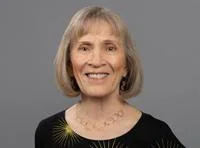
Economica-Coase Lecture
Why Women Won
Speaker: Claudia Goldin - 2023 Nobel Prize in Economics Winner
Chair: Francesco Caselli
Date: Thursday 02 May 2024
Time: 5.00pm to 6.15pm
Venue:Old Theatre - Ground floor, Old Building, LSE#LSECoase
Watch lecture on YouTube.
How, when, and why did women in the US obtain legal rights equal to men’s regarding the workplace, marriage, family, Social Security, criminal justice, credit markets, and other parts of the economy and society, decades after they gained the right to vote? The story begins with the civil rights movement and the somewhat fortuitous nature of the early and key women’s rights legislation. The women’s movement then formed to press for further rights. Of the 155 critical moments in women’s rights history from 1905 to 2023, 45% occur between 1963 and 1973. The greatly increased employment of women, the formation of women’s rights associations, and the unstinting efforts of various members of Congress were behind the advances. But women became splintered far more than did men. A substantial group of women emerged in the 1970s to oppose various rights for women, just as they did during the suffrage movement. They remain a powerful force today.
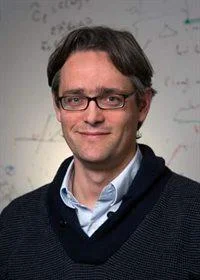
During the last two years, inflation has re-emerged in the developed world together with concerns about it being persistent. Previous inflationary episodes have taught us a lot on what causes inflation and what can be done to reduce it. But the world has changed, and previous insights may no longer be valid. Professor Werning discusses how old insights extended with new frameworks can be used to shed light on the recent surge in inflation.
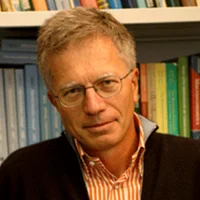
Economica-Philips Lecture
Institutional and Cultural Birufication: The Great Divergence between China and Europe
Speaker: Guido Tabellini
Chair: Ricardo Reis
Thursaday 01 December 2022, 6:30pm to 7:30pm
Clement House, Hong Kong Theatre
Find out more here.
Professor Guido Tabellini presents Economica Phillips 2022 lecture: Institutional and Cultural Bifurcation: The Great Divergence between China and Europe.
Why was Europe and not China the hub of modern economic growth and of modern democracy? And how can we explain the divergent evolution of political institutions between these two areas? The lecture will emphasize how the divergent institutional trajectories of China and Europe emerged at the turn of the first millenium from different social organizations and cultural traditions. Both in China and in Europe, state institutions were built on top of other social organizations. But during the Middle Ages, when the State was absent or not far reaching, society was organized in very different ways in these two parts of the world. In China, most local public goods were provided by kin-based social networks, like clans. In Europe, cooperation took place within self-governing corporate organizations like monasteries, universities, guilds, free towns. These different social structures left an indelible imprint in the subsequent evolution of legal and political institutions, and contribute to explain the Great Divergence between China and Europe.
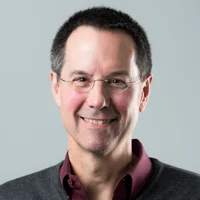
Economica-Coase Lecture
From Coase to Culture: Visible Hands Building Equilibrium
Speaker: Robert Gibbons
Chair: Maitreesh Ghatak
Tuesday 11 October 2022, 6:00pm to 7:15pm
Clement House, Hong Kong Theatre
Find out more here.
Bob Gibbons will speak about value creation—both within organizations and in other organized activities, in settings that require relational contracts. He will focus on relational contracts that are difficult to build, asking whether ideas and techniques associated with organizational culture might be useful in building such relational contracts.

2021 Economica-Phillips Lecture
Monetary Policy and Financial Cycles
With Hélène Rey
Tuesday 12 October 2021, 6:00-7:30pm
Online Event
Hélène Rey is the Lord Bagri Professor of Economics at London Business School. Until 2007, she was at Princeton University, as Professor of Economics and International Affairs in the Economics Department and the Woodrow Wilson School.
Her research focuses on the determinants and consequences of external trade and financial imbalances, the theory and empirics of financial crises and the organization of the international monetary system.
A podcast of this event is available to download from Monetary Policy and Financial Cycles.
A video of this event is available to watch at Monetary Policy and Financial Cycles.
Podcasts and videos of many LSE events can be found at the LSE Public Lectures and Events: podcasts and videos channel.
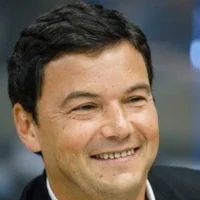
LSE alumnus Thomas Piketty (@PikettyLeMonde) is Professor at EHESS and the Paris School of Economics.
He is the author of numerous research articles and of a dozen books.
He has done historical and theoretical work on the interplay between economic development, the distribution of income and wealth, and political conflict.
He is also co-director of the World Inequality Lab and the World Inequality Database.
He is the author of the international best-sellers Capital in the 21st Century (2014) and Capital and Ideology (2020).
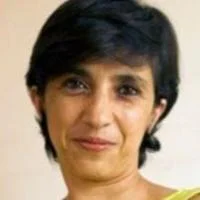
2020 Economica-Coase Lecture
Theory and Practice: Designing anti-poverty programs when power matters
Monday 30 November 2020, 4.00pm-5.00pm
Online event
Professor Rohini Pande is the Henry J. Heinz II Professor of Economics and Director of the Economic Growth Center at Yale.
Pande is an economist whose research examines the economic costs and benefits of informal and formal institutions in the developing world and the role of public policy in effecting change.
Her work has examined how institutions - ranging from electoral to financial - can be designed to empower historically disadvantaged groups; how low-cost improvements in information collection and dissemination can enable flexible regulation and more efficient outcomes in areas as diverse as environmental protection and elections; and how biased social norms, unless challenged by public policy, can worsen individual well-being and reduce economic efficiency.
Pande earned her undergraduate degree from Delhi University, her M.A. from Oxford University, and her Ph.D. from the London School of Economics.
This online public event is free and open to all but pre-registration is required.
Registration for this event will open on Monday 16 November after 10am.
Watch the video and listen to the podcast.

2020 Economica-Phillips Lecture
Capital Flow Cycles: a long global view
Thursday 28 May 2020, 3.00pm-4.15pm
This online public event is free and open to all but pre-registration is required.
Registration for this event will open on Thursday 21 May after 10am.
Carmen M. Reinhart, just named chief economist and vice president at the World Bank, is the Minos A. Zombanakis Professor of the International Financial System at Harvard Kennedy School. She was Senior Policy Advisor and Deputy Director at the International Monetary Fund and held positions as Chief Economist and Vice President at the investment bank Bear Stearns.
She serves in the Advisory Panel of the Federal Reserve Bank of New York. Her book (with Kenneth S. Rogoff) entitled This Time is Different: Eight Centuries of Financial Folly documents the striking similarities of the recurring booms and busts that have characterized financial history. It has been translated to over 20 languages and won the Paul A. Samuelson Award.
She has been listed among Bloomberg Markets Most Influential 50 in Finance, Foreign Policy’s Top 100 Global Thinkers, and Thompson Reuters' The World's Most Influential Scientific Minds. In 2018 she was awarded the King Juan Carlos Prize in Economics and NABE’s Adam Smith Award, among others.
Podcast
A podcast of this event is available to download from LSE Player.

2019 Economica-Coase Lecture
An Unexpected Convergence: informality, the gig-economy, and digital platforms
Tuesday 4 June 2019, 6:00-8:00pm
Old Theatre, Old Building
Professor Pinelopi Goldberg is the Elihu Professor of Economics at Yale University. She is currently on public service leave from Yale while acting as the Chief Economist of the World Bank Group. She served as the Editor-in-Chief of the American Economic Review from 2011 to 2017, and Coeditor from 2007 to 2010. Pinelopi is currently Vice-President of the American Economic Association, Second Vice-President of the Econometric Society (to serve as President in 2021), and President of the Eastern Economic Association.
Oriana Bandiera (Chair) is Professor of Economics and Sir Anthony Atkinson Chair in Economics at LSE, and Director of STICERD.
Podcast
A podcast of this event is available to download from LSE Player.
Slides
A copy of the PowerPoint presentation is available here.
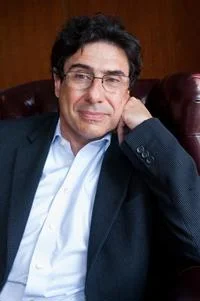
2018 Economica-Coase Lecture
Finance, Competition and Innovation-Based Growth, by Professor Philippe Aghion
Tuesday 5 June 2018, 6:30-8:00 pm
Sheikh Zayed Theatre, New Academic Building
Philippe Aghionis a professor at the College de France and LSE, and a fellow of the Econometric Society and of the American Academy of Arts and Sciences.
Oriana Bandiera (@orianabandiera) is a Professor of Economics and the Director of the Suntory and Toyota Centre for Economics and Related Disciplines (STICERD) at the London School of Economics.
Twitter Hashtag for this event: #LSECoase
Info: This event is free and open to all with no ticket or pre-registration required - further information from LSE Events.
Recordings: Audio recording on Soundcloud
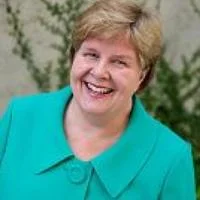
2017 Economica-Phillips Lecture
Why Are Some Times Different: Macroeconomic policy and the aftermath of financial crises, by Christina D Romer
Wednesday 17 May 2017, 6:30-8:00 pm
Old Theatre, Old Building
The Annual Economica Phillips lecture is jointly sponsored by the journal Economica and the Department of Economics.
Christina Duckworth Romer is the Class of 1957 Garff B Wilson Professor of Economics at the University of California, Berkeley and a former Chair of the Council of Economic Advisers in the Obama administration.
Francesco Caselli (chair) is Norman Sosnow Professor of Economics at LSE.
Twitter Hashtag for this event: #LSEPhillips
Info: Event free and open to all with no ticket or registration required - further information from LSE Events.

2017 Economica-Coase Lecture
Breaking the Glass Ceiling, by Marianne Bertrand
Wednesday 23 March 2017, 6:30-8:00 pm
Old Theatre, Old Building
Marianne Bertrand is an applied micro-economist whose research covers the fields of labor economics, corporate finance, and development economics. Her research in these areas has been published widely, including numerous research articles in the Quarterly Journal of Economics, the Journal of Political Economy, the American Economic Review, and the Journal of Finance.
Oriana Bandiera (chair) (@orianabandiera) is a Professor of Economics and the Director of the Suntory and Toyota Centre for Economics and Related Disciplines (STICERD) at the London School of Economics.
Twitter Hashtag for this event: #LSECoase
Info: Event free and open to all with no ticket or registration required - further information from LSE Events.
Recordings: Video recording on YouTube, Recordings and slides on LSE Media page
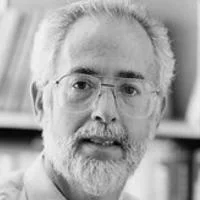
2016 Economica-Coase Lecture
Taxes, Targets, and the Social Cost of Carbon, by Robert Pindyck
Thursday 12 May 2016, 6:30-8:00 pm
Old Theatre, Old Building
Professor Pindyck, one of the world’s leading microeconomists, will discuss his recent work, which focuses on economic policies relating to rare disasters.
Robert Pindyck is an American economist, Bank of Tokyo-Mitsubishi Professor of Economics and Finance at Sloan School of Management at Massachusetts Institute of Technology. He is also a Research Associate with the National Bureau of Economic Research. He received bachelor degrees in Electrical Engineering and Physics from MIT. in 1966, a master's degree in Electrical Engineering from MIT in 1967, and a PhD in Economics from MIT in 1971.
Ian Martin is a Professor of Finance at the LSE. He received his PhD in Economics from Harvard University. Before moving to LSE, he was an Associate Professor of Finance at Stanford GSB. His research interests include cross-country contagion in financial markets; the valuation of long-dated assets; catastrophes; derivative pricing; and forecasting in financial markets. Professor Martin is the Programme Director of the LSE's MSc in Finance and Economics, and is an editor of Economica.
Twitter Hashtag for this event: #LSECoase
Info: Event free and open to all with no ticket or registration required - further information from LSE Events.
Recordings: Video recording on YouTube, Recordings on LSE Media page
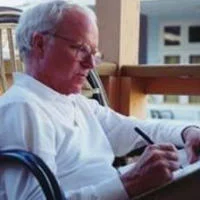
2016 Economica-Phillips Lecture
Understanding the Stagnation of Modern Economics, by Robert Hall
Thursday 28 April 2016, 6:30-8:00 pm
Old Theatre, Old Building
The annual Phillips Lecture, jointly sponsored by the journal Economicaand the Department of Economics, in which Professor Hall, one of the world's leading macroeconomists will speak on the macroeconomics of persistent slumps.
The annual Phillips Lecture, jointly sponsored by the journal Economicaand the Department of Economics, in which Professor Hall, one of the world's leading macroeconomists will speak on the macroeconomics of persistent slumps.
Robert Hall is an American economist and a Robert and Carole McNeil Senior Fellow at Hoover Institution and Professor of Economics at Standford University. He is generally considered a macroeconomist, but he describes himself as an "applied economist".
Bob Hall received a BA in Economics at the University of California, Berkeley and a PhD in Economics from MIT for thesis titled Essays on the Theory of Wealth under the supervision of Robert Solow. He is a member of the Hoover Institution, the National Academy of Sciences, a fellow at both American Academy of Arts and Sciences and the Econometric Society, and a member of the NBER, where he is the program director of the business cycle dating committee. Hall served as President of the American Economic Association in 2010.
Francesco Caselli (chair) is the Norman Sosnow Chair in Economics at the Department of Economics at LSE.
Twitter Hashtag for this event: #LSEPhillips
Info: Event free and open to all with no ticket or registration required - further information from LSE Events.
Recordings: Video recording on YouTube, Recordings and slides on LSE Media page
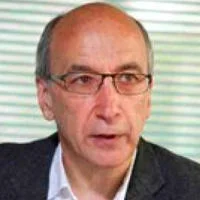
2015 Economica-Coase Lecture
Human Capital, Inequality and Tax Reform: Recent past and future prospects, by Richard Blundell
Tuesday 10 March 2015, 6:30-8:00 pm
Old Theatre, Old Building
Even before the financial crisis many developed economies were facing growing inequality and struggling to maintain employment and earnings. This lecture will dig deeper into the background to these trends and will examine the evidence on how tax and welfare reform impacts on human capital, inequality and earnings.
It will ask two general questions: What are the key margins where we might expect tax and welfare reform to have most impact on earnings, employment growth and inequality? How has this changed in the light of the great recession?
The talk will consider prospects for the future and the potential for policy reform.
Professor Sir Richard Blundell CBE FBA is Ricardo Professor at University College London and Research Director of the Institute for Fiscal Studies. He is an alumnus of LSE.
Twitter Hashtag for this event: #LSECoase
Info: Event free and open to all with no ticket or registration required - further information from LSE Events.
Recordings: Video recording on YouTube, Recordings on LSE Media page
For an overview of the lecture, please visit the Department's Storifypage.
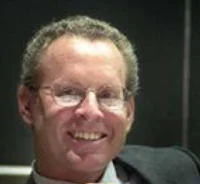
2014 Economica-Phillips Lecture
Environmental Protection and Rare Disasters, by Robert J Barro
Thursday 20 March 2014, 6:30-8:00 pm
Old Theatre, Old Building
Drawing on work on rare macroeconomic disasters, this lecture will argue that optimal environmental investment can be a significant share of GDP even with standard values for the rate of time preference and the expected rate of return on private capital.
The Stern Review’s evaluation of environmental protection relies on extremely low discount rates, an assumption criticized by many economists. The Review also stresses that great uncertainty is a critical element for optimal environmental policies. An appropriate model for this policy analysis requires sufficient risk aversion and fat-tailed uncertainty to get into the ballpark of explaining the observed equity premium. A satisfactory framework, based on Epstein-Zin/Weil preferences, also separates the coefficient of relative risk aversion (important for results on environmental investment) from the intertemporal elasticity of substitution for consumption (which matters little). Calibrations based on existing models of rare macroeconomic disasters suggest that optimal environmental investment can be a significant share of GDP even with reasonable values for the rate of time preference and the expected rate of return on private capital. Optimal environmental investment increases with the coefficient of relative risk aversion and the probability and typical size of environmental disasters but decreases with the degree of uncertainty about policy effectiveness. The key parameters that need to be pinned down are the proportionate effect of environmental investment on the probability of environmental disaster and the baseline probability of environmental disaster.
Robert J Barro is Paul M Warburg Professor of Economics at Harvard University and a senior fellow of the Hoover Institution of Stanford University.
Twitter Hashtag for this event: #LSEBarro
Info: Event free and open to all with no ticket or registration required - further information from LSE Events.
This event will be webcast live on the LSE website on LSE Live.
Recordings: Video recording on YouTube, Recordings and slides on LSE Media page
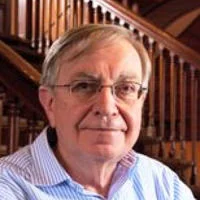
2013 Economica-Coase Lecture
Foreign Trade and Investment: Firm-level perspectives, by Elhanan Helpman
Thursday 21 February 2013, 6:30-8:00 pm
Old Theatre, Old Building
During the last decade the analysis of foreign trade and investment has been re-oriented toward the roles played by firms with different characteristics. This has been enabled by the emergence of rich data sets that provide new stylised facts on trade and investment. In response, new theoretical models have been developed to explain these patterns and to re-examine a host of issues, such as the effects of trade policy on productivity and trade openness on inequality. The lecture will review these developments.
Elhanan Helpman is the Galen L Stone Professor of International Trade at Harvard University and a Fellow of the Canadian Institute for Advanced Research. He holds a BA degree in Economics and Statistics from Tel Aviv University, an MA degree in Economics from the same institution, and a PhD degree in Economics from Harvard University. He was the Archie Sherman Professor of International Economic Relations at Tel Aviv University before moving to Harvard.
Helpman is a confounder of the "new trade theory" and the "new growth theory", which emphasise the roles of economies of scale and imperfect competition. he was Co-Editor of the Journal of International Economics, Editor of the European Economic Review, and I currently an Editor of the Quarterly Journal of Economics. He is a member of the Israeli Academy of Sciences and Humanities, a Foreign Honorary Member of the American Academy of Arts and Sciences, a Corresponding Fellow of the British Academy, a member of the European Academy of Sciences and Arts and a Distinguished Fellow of the American Economic Association. He was President of the Israeli Economic Association and President of the Econometric Society. He received the Mahalanobis Memorial medal, the Bernhard Harms Prize, the Rothschild Prize, the EMET Prize, the Nemmers Prize, the Onassis Prize and the Israel Prize.
Info: Event free and open to all with no ticket or registration required
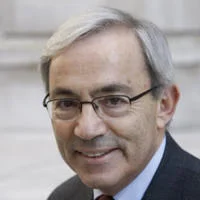
2012 Economica-Phillips Lecture
OECD Labour Markets in the Great Recession, by Christopher Pissarides
Thursday 9 February 2012, 6:30-8:00 pm
Old Theatre, Old Building
Labour markets across the OECD reacted differently to the financial crisis of 2009 and the debt crisis that followed. Professor Pissarides will review these different responses, seek explanations for them, and draw conclusions about labour market policy in recession. The focus will be on unemployment and how to contain its rise in light of the negative shocks to economic activity.
Christopher Pissarides is the Norman Sosnow Chair in Economics, LSE, and recipient of the 2010 Nobel Prize for Economic Sciences.
Twitter Hashtag for this event: #lsework
Info: Event free and open to all with no ticket or registration required - further information from LSE Events.
Recordings: Video recording on YouTube, Recordings and slides on LSE Media page
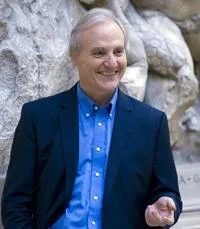
2011 Economica-Coase Lecture
The Lure of Authority: Motivation and incentive effects of power, by Ernst Fehr
Thursday 24 February 2011, 6:30-8:00 pm
Old Theatre, Old Building
Authority and power permeate political, social, and economic life - yet there is limited empirical knowledge about the motivational origins and consequences of authority. Based on an experimental approach, Ernst Fehr's lecture will explore the psychological consequences of authority for important economic interactions. He will document the human desire to exercise authority, the motivation-enhancing effect of possessing authority and the detrimental motivational effects of a lack of authority.
Ernst Fehr is director of the Department of Economics at the University of Zurich. He has conducted influential research on the role of social preferences in competition, cooperation and incentive provision.
Info: Event free and open to all with no ticket or registration required - further information from LSE Events.
Recordings: Video recording on YouTube, Recordings on LSE Media page
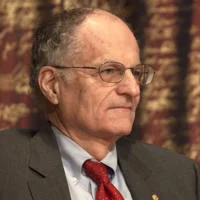
2010 Economica-Phillips Lecture
Uncertainty and Ambiguity in American Fiscal and Monetary Policies, by Thomas J Sargent
Wednesday 10 February 2010, 6:30-8:00 pm
Old Theatre, Old Building
Combining an historical approach with macroeconomic theory, Thomas Sargent will discuss ways of thinking about American fiscal and monetary policies - exploring how contradictions have developed and how they have been resolved.
Thomas Sargent is professor of economics at New York University and senior fellow at Hoover Institution at Stanford University.
Info: Event free and open to all with no ticket or registration required - further information from LSE Events.
Recordings: Video recording on YouTube, Recordings on LSE Media page
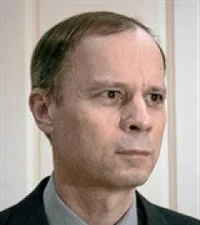
2009 Economica-Coase Lecture
Individual and Corporate Social Responsibility, by Jean Tirole
Thursday 19 February 2009, 6:30-8:00 pm
Old Theatre, Old Building
Professor Jean Tirole is one of the world's most eminent economists working in the fields of industrial organisation, banking and finance and game theory, and economics and psychology. He is director of the Fondation Jean-Jacques Laffont-Toulouse School of Economics, scientific director of the Institute d' Economie Industrielle in Toulouse and a visiting professor at MIT. Professor Tirole will speak on 'Individual and Corporate Social Responsibility'.
Recordings: Audio recording on LSE Media page
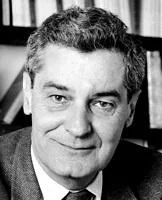
2008 Inaugural Economica-Phillips Lecture
Schooling and Growth, by Robert Lucas
Thursday 7 February 2008, 6:30-8:00 pm
Old Theatre, Old Building
The Department of Economics is delighted to announce that the 2008 EconomicaPhillips Lecture will be given by Robert Lucas, the John Dewey Distinguished Service Professor in Economics at the University of Chicago. One of the world's leading authorities on monetary theory, growth and development, he was awarded the Nobel Prize for Economics in 1995.
Info: Event free and open to all with no ticket or registration required - further information from LSE Events.
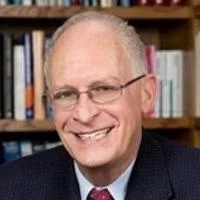
2008 Inaugural Economica-Coase Lecture
Contracts, Reference Points, and the Theory of the Firm, by Oliver Hart
Thursday 22 February 2007, 6:30-8:00 pm
Old Theatre, Old Building
In this inaugural Coase lecture, Oliver Hart will discuss how his recent work with John Moore on contracts as reference points can be used to shed light on the theory of the firm.
Oliver Hart is the Andrew E. Furer Professor of Economics at Harvard University, where he has been teaching since 1993. A major authority on contract theory, the theory of the firm, and corporate finance, he has published numerous articles in leading scientific journals, as well as in the Wall Street Journal and the Financial Times.
Info: Event free and open to all with no ticket or registration required - further information from LSE Events.