

Mebratu Kelecha

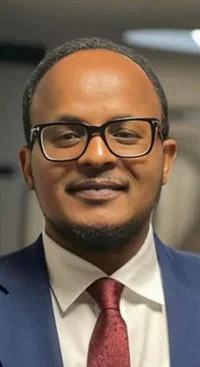
Dr Mebratu Kelecha is a political scientist whose work focuses on African politics, democracy, and development. His research examines democratic transformation, state–society relations, and social movements in postcolonial Africa, with particular attention to governance models that move beyond winner-takes-all systems. Drawing on indigenous African political traditions, he explores cooperative and plural approaches to democracy and political organisation that reduce political confrontation and emphasise peaceful and respectful ways of managing differences. His scholarship also addresses questions of sovereignty, inequality, and the effects of overlapping global polycrises on Africa’s development. In recent years, his work has expanded to include African agency in digital geopolitics, artificial intelligence governance, and digital sovereignty. His research links critical political theory with policy engagement to advance African autonomy and strengthen the continent’s voice in global affairs.
Can you tell us about your work, and what brought you to the Institute?
My work focuses on African politics, democracy, and how societies manage conflict and political change. I’m especially interested in how ordinary people organise themselves, take part in protests, and push for fairer and more inclusive political systems. Much of my research looks at Ethiopia — its political tensions, elections, and debates about national identity — but I also study wider African questions about governance, development, and the relationship between citizens and the state.
One of the key issues I explore is how “winner-takes-all” politics can deepen division in societies that are already fragile. I’m interested in how democracy can work in a more cooperative and less confrontational way. To do this, I draw lessons from traditional African systems of governance that value dialogue, consensus, and shared responsibility. My recent work looks at how democracy can move away from constant political confrontation and instead focus on managing differences peacefully and respectfully.
I also study African sovereignty as a continuous process of building substantive autonomy in practice, not just a legal idea on paper. This includes looking at how African states try to reduce dependence on outside powers while still working within the global system, especially in new areas like digital technology and artificial intelligence.
I was drawn to the Institute because it puts Africa at the centre of global conversations and supports research that connects academic ideas with real political challenges. It’s a place where serious scholarship and practical engagement come together, which is exactly how I like to work.
How did your time at the Institute shape your research?
My time at the Institute helped me grow as a researcher. Being around scholars from different disciplines pushed me to think beyond politics and connect my work to history, society, technology, and development. Conversations with colleagues from across Africa also helped me see Ethiopia’s challenges as part of wider continental experiences. The Institute gave me the space and support to explore new ideas, especially about democratic innovation and African knowledge systems. This experience strengthened my belief that research should not only study problems but also offer practical and locally grounded solutions. It also made me more aware of the need to treat African perspectives and knowledge systems as central sources of knowledge, rather than simply adding them to existing Western frameworks.
What did you most enjoy about working with the Institute?
What I enjoyed most was the supportive and intellectually open environment. The Institute values honest discussion, diverse perspectives, and research that can make a real difference. I especially appreciated the chance to share my work through public events and blogs, which allowed me to reach audiences beyond academia. It was inspiring to be part of a community that is genuinely committed to raising African voices and ideas in global debates.
What do you think is the value of having a dedicated Africa Institute at LSE?
I think having a dedicated Africa Institute is incredibly important. Africa is often discussed in global conversations, but African perspectives are not always given enough space. The Institute helps address this by creating a strong platform for research, teaching, and debate focused on African issues. It supports African scholars and future leaders, builds partnerships with institutions across the continent, and encourages policy discussions that are informed by local realities.
At the same time, the continued development of such an Institute requires sustained attention to how knowledge about Africa is produced and validated. Expanding equitable research collaborations, strengthening long-term institutional partnerships, and creating greater space for diverse intellectual traditions remain essential. In this respect, the Institute has made notable progress, while its future development presents important opportunities to build a more globally balanced and epistemically inclusive scholarly environment.
What do you think have been the highlights of the last 10 years of the Institute?
Over the past decade, the Institute has grown into a major centre for African research and engagement. One important achievement has been the expansion of leadership programmes that have supported and connected many young African professionals. The Institute has also strengthened its research networks, developed strong thematic programmes, and created more spaces for public discussion through conferences, blogs, and events. Its growth into a fully established Institute reflects the increasing recognition of African studies as an essential field within global scholarship and policy dialogue, both at LSE and internationally.
What do you hope we will be able to achieve in the next 10 years?
Looking ahead, I hope the Institute continues building strong partnerships with African universities and research centres so that knowledge is co-produced— not just about Africa, but with Africa. I would love to see more work that draws on African political traditions and lived experiences to rethink democracy and governance in ways that fit African societies.
I also hope the Institute plays a leading role in helping Africa respond to major global challenges — including conflict, inequality, climate change, and the growing risks linked to digital technologies. As artificial intelligence becomes more important in shaping economies and security, African countries need the capacity to avoid digital dependency and instead build their own technological strength. I hope the Institute takes a leading role in addressing these urgent global challenges by helping to develop the skills, research networks, and policy ideas needed for Africa to participate in global AI debates and safeguard its digital sovereignty.
Most importantly, I hope the Institute continues to support and inspire young African scholars and leaders who will shape the continent’s future and ensure Africa has a strong voice in global decision-making.