

Gibril Faal

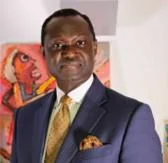
Professor Gibril Faal is a multi-disciplinary business and development executive. He is the co-founder and director of GK Partners, RemitAid™ and the Migration and Sustainable Development programme. He is a visiting professor in practice at the London School of Economics, council member of Carnegie African Diaspora Fellowship Program, board member of GivingTuesday philanthropy and lead consultant to the African Union Commission on innovative and diaspora finance. Prof Faal has previously served as social enterprise expert for the UK government; UK magistrate and Justice of the Peace; vice chair of Bond; chair of AFFORD-UK; technical expert to the United Nations, World Bank, European Union, Abu Dhabi Dialogue, German, Swedish, Swiss and UAE governments, and many other development institutions. He previously worked for University of Oxford and the Open University.
Can you tell us about your work, and what brought you to the Institute?
My work focusses on how to leverage and optimise the contributions of diaspora communities to international development. I develop methodologies and undertake action research to generate new data, knowledge and insights regarding the multiplicity of diaspora resources. I also create and implement innovative mechanisms and structures to expand and enhance diaspora contributions to sustainable and inclusive development. My work covers: the nexus between migration, diaspora and development; remittances and the other forms of diaspora finance and investment; and global, regional, national and sectoral policies, practices and programmes. I joined LSE in 2017 as the first visiting professor in practice at the Institute of Global Affairs, before moving to FLIA in 2021.
How did your time at the Institute shape your research?
FLIA’s diverse programmes and activities highlight two major issues. On the one hand we are exposed to the enormity and chronic nature of the challenges that undermine African development. On the other hand, we are engaged with African scholars, policymakers, sector leaders and students with extensive knowledge, world-class intellectual skills, progressive ideals and values, and commitment to effect change. For me, this triggers a moral urgency to focus on applied research with results that can be implemented to address challenges and harness opportunities. Since I joined FLIA, I’ve implemented several research-backed programmes, the most recent being the AFFORD Diaspora Direct Investment (DDI) Index, launched at the 2026 African Union summit.
What do you most enjoy about working with the Institute?
One of the many legacies of Professor Tim Allen, the FLIA founding director who sadly passed away in February 2026, is that he created an accommodating culture that welcome new ideas, approaches and partnerships. This stimulates a collaborative ethic and pleasant working environment and help staff become the best of themselves. I am grateful that I can call on support from FLIA colleagues and gain access the enormous convening power of LSE. In 2023/24, I convened a series of Diplomatic Roundtable on Digital Global Collaborations. This involved collaboration between FLIA and LSE IDEAS, and external partners including Meta and African diplomatic mission accredited to the United Kingdom.
What do you think is the value of having a dedicated Africa Institute at LSE?
LSE’s engagement with African students, activists and scholars date back to its formation in 1895. FLIA is particularly important as it serves as a permanent home and prominent hub for Africa at the LSE. People are aware of African leaders studying at LSE, starting with Jomo Kenyatta in 1934-38. However, LSE also trained generations of African technocrats in diverse fields. I’m from Gambia and I found that the first Gambian sociologist, Ebrima Daour (E.D.) Njie studied at LSE (1944-46); he was later better known as a lawyer and opposition party leader. In 2009, I was very excited when Professor Thandika Mkandawire was appointed the first LSE Chair of African Development. I arranged one of his first London engagements when I invited him to chair the Ninth African Diaspora Development Days at Chatham House in July 2010.
What do you think have been the highlights of the last 10-years of the Institute?
I think that the transformation of the Centre for Africa to a fully-fledged, endowed institute in 2021 has been one of the highlights in the past decade. We are grateful to Mr Firoz Lalji for his generous support and to the late Prof Tim Allen for his visionary leadership. The new Firoz Lalji Global Hub building is also a major highlight, further reinforcing the permanence and prominence of African affairs at the LSE. Regarding programme activities, the annual Africa Summit is an important flagship event. With FLIA’s technical and operational support, students get the experience of convening, coordinating and delivering a world-class policy, networking and engagement forum every year.
What do you hope we will be able to achieve in the next 10-years?
Regarding my areas of expertise and experience, I hope that FLIA takes up research and policy leadership and set up a centre on diaspora finance. At the United Nations Fourth International Conference on Financing for Development in July 2025, my work on RemitAid supported by FLIA, was selected as one of the ‘Sevilla Platform for Action’ impactful global initiatives. As an innovative development finance mechanism, RemitAid uses Remittance Match Funding to unlock billions of dollars of new Remittance Micro-Contributions. In addition to RemitAid and the DDI Index, further research, policies and programmes can be undertaken on transformative forms of diaspora finance including African Diaspora-Targeted Bonds and Diaspora Development Funds.