

Eliza Ngutuku

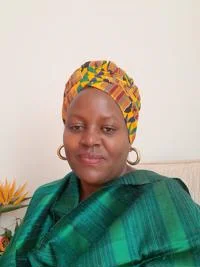
Dr Eliza Ngutuku has over 20 years working on multidisciplinary issues affecting children and young people with a special focus on poverty, education and sexual and reproductive health.
Eliza is a Visiting Senior Research Fellow at the Firoz Lalji Institute for Africa, at the London School of Economics and Political Science. Eliza is a Visiting Research Fellow at the African Institute of Professional and Development Studies, University of Eldoret, Kenya, and a Visiting Senior Research Fellow at the University of Johannesburg in South Africa.
Eliza obtained her PhD from Erasmus University Rotterdam, in 2020. Her PhD research was awarded the prestigious Research Prize of the Premium Erasmianum Foundation. Awarded for Excellence in PhD research in the Netherlands.
Can you tell us about your work and what brought you to the Institute?
I work on issues of children and youth, and I have been doing this since 2000. This ranges from research and practice to teaching on child poverty, education, social protection, sexual and reproductive health and rights, youth activism, and young people's experiences in conflict situations. I have also been involved in scholar activism on indigenous knowledge in Early Childhood Education and Development, something very close to my heart.
It is therefore this work and research that brought me to the institute more than five years ago, as the Inaugural African Fellow. I had just completed my award-winning PhD when I saw the Job Advert, whose description sounded like what I had always done: issues of children and youth in processes of social change. I discovered that there was an Africa Centre at LSE, committed to placing Africa at the heart of understandings and debates about global issues and to bringing African voices into the global debate. I instantly knew that it was at the Firoz Lalji Centre for Africa as it was known then, where I belonged. Further, I studied development Studies for my master’s and PhD at the International Institute of Social Studies. I had therefore read the works of Professor Tim Allen, the Institute's Director. Connecting closely with key researchers at the Institute was therefore another motivation.
I must also say that, as an African scholar, identity is key to my work, and identifying with the Institute for Africa was another motivation.
How did your time at the Institute shape your research?
I have always been interested in correcting discourses about Africa through my teaching, theorising, and knowledge activism. Being part of the Institute gave me a platform that is not always available to everyone, especially to scholars from the Global South. Through the Institute, I found freedom and funding to experiment with my ideas around approaching research issues as multiplicities and non-linear, and through Ubuntu, which also emphasises relationality, diversity, and multiplicity. The core issues I had explored in my PhD research continued to guide my work at the institute. I, for example, carried out research on Grassroots actors working on addressing violence against children and what I positioned as their messy forms of agency in their interactions with the state and the NGOs. I also documented the processes of coming of age for girls in colonial Kenya. This research did not just give me a platform for my theorising. It gave space to African women who grew up during the colonial period to share their experiences and correct the mistakes and erasures of their knowledge. Most of these women have since passed on in the last five years. But I am glad that my being at the institute enabled me to stop the decay of their knowledge and critical African perspectives.
Being at the institute also provided a space to work with others and to influence scholarship and research in Africa. I have been part of the United Nations Office of the Special Advisor for Africa Knowledge Network. I have continued being part of the Knowledge activism around Early childhood Education and Development. For example, in 2024, I attended a high-level ideation event with Abu Dhabi's Early Childhood Authority to continue my knowledge activism work and as part of the Africa ECD network. I continue working with African Universities. For example, through my visiting fellowships at the University of Johannesburg and the University of Eldoret, Kenya. In 2025, I was pleased to be invited to serve as a Keynote speaker at the Launch of the new Africa Institute at the University of Eldoret, Kenya, in my backyard. Sharing the platform and planning space with Key African Intellectuals like Ngugi wa Thiong'o and Dr Khanyisile Litchfield Tshabalala was a key highlight. I continue these conversations around African philosophies and education at the University College London, where I work.
Through FLIA, I interacted with LSE students, teaching and sharing my research and lived experience as a scholar of African Origin at LSE. I am pleased about the opportunities I had to offer guest lectures in the African Development M.A. Course, which was for years coordinated by the late professor Thandika Mkandawire. And if research and scholarship are also about personal satisfaction, I always wanted someone to pinch me for offering a guest lecture in this course, which is structured around Thandika's core ideas.
What did you most enjoy about working with the Institute?
The institute is a free space to experiment with big ideas, and this is what I liked most about my stay. I liked the collective proposal writing where each of us would bring a paragraph, or a great idea. And we were always interested in each other’s research and work, and we would from time to time meet to reflect together. In 2025, I launched my book on Children’s Lived Experience of Poverty. Many people including those from the larger FLIA community and others from LSE and UCL came. We had a full house at the Alumni Centre! It was the most beautiful evening ever, spent talking about my work and just catching up and drinks. After that some of us went for more street food and drinks at the Waterloo bridge. Eating while watching the stars and celebrating my work. I will forever treasure such moments!
What do you think is the value of having a dedicated Africa Institute at LSE?
There is the Institute's role in in developing the future generation of leaders in Africa through the PFAL programme. In addition to conducting research on Africa, I also see the Institute as a space for sharing good research and the cutting-edge methodologies we have used in Africa.
Importantly, we are celebrating FLIA during a strange moment in history. We are witnessing unprecedented marginalisation of certain people and some ‘continents’ along with all the weird stuff happening around us. An Institute for Africa at LSE will continue to signify a presence, and Africa's presence in global debates, even just the existence of her people. I also see the institute as key in correcting epistemic inequalities by offering a space where Africa can tell its stories.
What do you think have been the highlights of the last 10 years of the Institute?
I have watched at least four sets of PFLAs come and go out, and seen some become part of the staff at FLIA. This contribution towards developing thought leaders in Africa has had a phenomenal impact.
The Centre for Public Authority and International Development project has been another highlight. The Institute has run with this idea for almost 8 years as I can remember, influencing ideas about how we think about state and public Authority in development. A few months ago, I was discussing a new book on sexual and reproductive health with an editor and suggested that we could structure a chapter around the concepts of Public Authority and I was so pleased when this idea was accepted. In 2021, I remember delivering the inaugural lecture at the Lunch and Learn Seminar series coordinated by FLIA. I think these seminars have been a key highlight of the institute, where everyone, including our research assistants, joins from all over the world to present and be part of the conversations. And I can go on and on about this kind of stuff.
What do you hope we will be able to achieve in the next 10 years?
I like storytelling, and I will tell you a story to represent what I see as just a tiny bit of FLIA's future contribution. A few months ago, I was walking from Waterloo to LSE when a stranger stopped me to talk. The conversation starter was the FLIA tote bag I was carrying with LSE and Ubuntu, the concept for Africa's relational philosophy embossed on it. My bag, he said, reminded him of the late Professor Mkandawire, the Chair of African development at LSE. Through my bag and me, he said he found the only connection to mourn Mkandawire, whom he said was passionate about Africa's issues.
I think the greatest contribution FLIA will make is to continue Conversations about Africa at LSE and in Europe. I have witnessed conversations around the Agora in the proposed Firoz Lalji Global Hub at LSE. The Agora reminds us of the traditional African fireplace where stories were shared while seated in a circle. Such symbolism is useful as we imagine the Future of FLIA. I hope these conversations about Africa can become part of the random conversations with those we are familiar with at LSE, and strangers, as it happened for me. In addition to supporting African scholars who can influence change back in their countries, FLIA's vital contribution can also be through continued support to African scholars at LSE. This way, and getting back to our conversation starter, we can, and we need more Mkandawire's at LSE. Such a future is not Utopian, and the institute has a role to play.
Key publications
Ngutuku, E. 2025 Children's Lived Experience of Poverty and Vulnerability in Kenya: Going Beyond Multi-dimensionality
Ngutuku, E. 2025, How Decolonial and Learner-Centred are the Competency-Based Education Policies in Africa? Reflections on Kenya's Experience
Auma Okwany and Elizabeth Ngutuku. 2023. Leveraging Early Childhood at the Margins in Kenya. In A. Pence, H. Ebrahim, O. Barry and P. Makokoro (eds) Sankofa: Appreciating the Past in Planning the Future of Early Childhood Education, Care and Development in Africa. Paris. UNESCO. pp.230– 243
Ngutuku, E., & Okwany, A. (2024). Beyond Colonial Politics of Identity: Being and Becoming Female Youth in Colonial Kenya. Genealogy.
Ngutuku, E. (2023). Re-imagining and repositioning the lived experience of children seen as outsiders in Kenya. Childhood Journal.
Ngutuku, E., Emeke, O., Sibert, A. (2023). Information Communications Technology in Higher Education in Africa: Challenges from the COVID-19 Pandemic. United Nations policy briefing report.
Ngutuku, E. (2022). Education as future breakfast: children's aspirations within the context of poverty in Siaya, Kenya. Ethnography and Education,17 (3). 224-40.
Ngutuku, E. (2020) How do Grassroots Networks Tackle Violence Against Children in Kenya?
Ngutuku, E. (2020) Voices of Children and Youth in Tanzania's Covid 19 Response
Ngutuku E, 2021: A genealogy of policies on poor and vulnerable children and youth in Kenya
Ngutuku, E. and Okwany A. 2023 Un-scripting African Cultures: Historical Tensions and Contemporary Possibilities for Anthropology in East Africa. In A. Singer (ed). A Touch of Genius: The Life, Work and Influence of Sir Edward Evans-Pritchard. Sean Kingston Press: London. 252-258.
Thank you for your contribution to our 10-year anniversary celebrations!