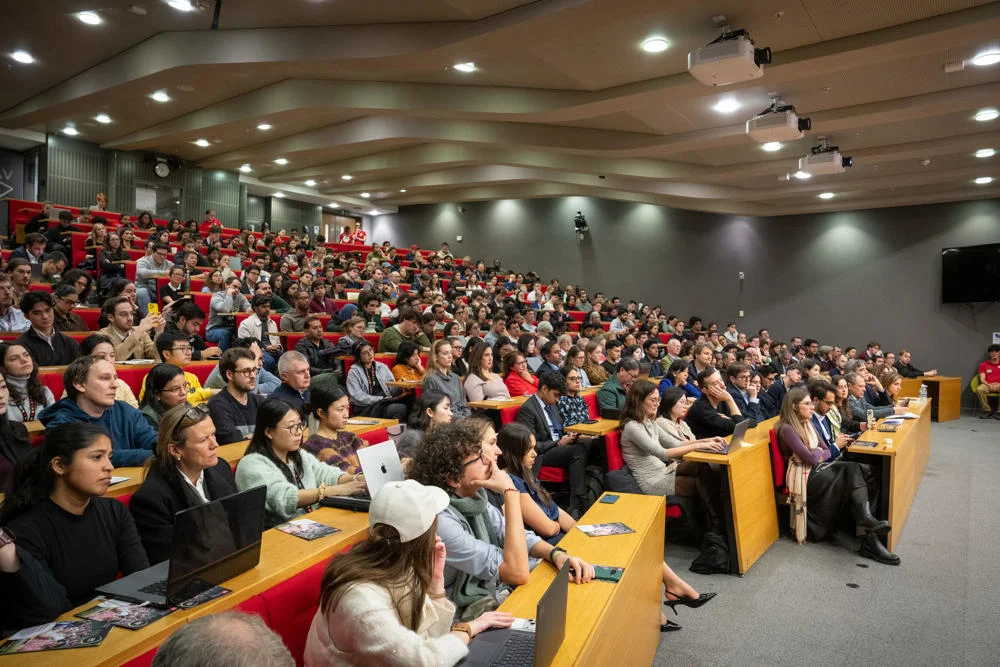
In Conversation with Martin Lewis | LSE Festival

Speaker

Ours is an age of rampant inequalities and pervasive financial struggles, where the power of big banks and corporations seems overwhelming to the individual. Whilst you might hope for longer term systemic change, what can you do in the shorter term to improve your financial situation and change your relationship with money?
Money-saving expert, financial journalist, broadcaster and LSE alumnus Martin Lewis, in conversation with Nicholas Barr, will discuss his work to empower individuals to have more control of their finances, as well as his campaigning for policy changes to address everyday financial inequality.
Meet our speakers and chair
Martin Lewis CBE (@MartinSLewis) founded the the Money Saving Expert site in 2003 and is currently its Executive Chair. He is an award-winning campaigning journalist and broadcaster, has his own prime-time ITV show, is a newspaper columnist, charity founder and author.
Born in Manchester in 1972, he grew up in Cheshire's Delamere Forest. Today he lives in London with his wife, BBC Click presenter Lara (aka Mrs MSE), and 10-year-old daughter Sapphire (aka Mini MSE). In 2012, he started his own, now live, prime-time ITV series, The Martin Lewis Money Show, which after 11 series is these days a staple of the TV schedule, attracting millions of viewers each week. In 2022, BBC's The Martin Lewis Podcast started and regularly hits the Apple top 10 UK podcast charts. Martin is also a resident expert on many other shows, and a regular guest presenter of ITV's Good Morning Britain. In 2016, he founded the influential Money and Mental Health Policy Institute charity, which he still funds and chairs (see more details on Martin's charity fund).
He has spearheaded major financial justice campaigns, including on reclaiming bank charges and PPI (helping consumers get paid back over £10 billion on those two alone); and successfully campaigned to get financial education on the national curriculum, as well as personally funding over 300,000 free textbooks for all state schools.
Nicholas Barr is Professor of Public Economics at LSE.
More about this event
This event is part of the running from Monday 12 to Saturday 17 June 2023, with a series of events exploring how change affects people and how people effect change. Booking for all Festival events will open on Monday 15 May.
Twitter hashtags for this event: #LSEFestival
Podcast and video
A podcast of this event is available to download from In Conversation with Martin Lewis.
A video of this event is available to watch at In Conversation with Martin Lewis.
Podcasts and videos of many LSE events can be found at the LSE Public Lectures and Events: podcasts and videos channel.
Many speakers at LSE events also write for
, which present research and critical commentary accessibly for a public audience. Follow
, the
, the
,
and the
to learn more about the debates our events series present.
Automated live captions will be available at this webinar. Please note that this feature uses Automatic Speech Recognition (ASR) technology, or machine generated transcription, and is not 100% accurate.
Photographs taken on behalf of LSE are often used on our social media accounts, website and publications. At events, photographs could include broad shots of the audience and lecture theatre, of speakers during the talk, and of audience members as they participate in the Q&A.
If you are photographed participating in an event Q&A but would not like your photograph to be stored for future use, please contact events@lse.ac.uk.
We aim to make all LSE events available as a podcast subject to receiving permission from the speaker/s to do this, and subject to no technical problems with the recording of the event. Podcasts are normally available 1-2 working days after the event.
of past events can be found online.
Follow LSE public events on Twitterfor notification on the availability of an event podcast, the posting of transcripts and videos, the announcement of new events and other important event updates. Event updates and other information about what’s happening at LSE can be found on the LSE's Facebookpage and for live photos from events and around campus, follow us on Instagram. For live webcasts and archive video of lectures, follow us on YouTube.
If you are planning to attend this event and would like details on how to get here and what time to arrive, as well as on accessibility and special requirements, please refer to
. LSE aims to ensure that people have equal access to these public events, but please contact the events organiser as far as possible in advance if you have any access requirements so that arrangements, where possible, can be made. If the event is ticketed, please ensure you get in touch in advance of the ticket release date.
Access Guides to all our venues can be viewed online
.
LSE has now introduced wireless for guests and visitors in association with 'The Cloud', also in use at many other locations across the UK. If you are on campus visiting for the day or attending a conference or event, you can connect your device to wireless. See more information and create an account at Join the Cloud.
Visitors from other participating institutions are encouraged to use
. If you are having trouble connecting to eduroam, please contact your home institution for assistance.
The Cloud is only intended for guest and visitor access to wifi. Existing LSE staff and students are encouraged to use
instead.
LSE holds a wide range of events, covering many of the most controversial issues of the day, and speakers at our events may express views that cause offence. The views expressed by speakers at LSE events do not reflect the position or views of The London School of Economics and Political Science.
From time to time there are changes to event details so we strongly recommend that if you plan to attend this event you check back on this listing on the day of the event.
LSE holds a wide range of events, covering many of the most controversial issues of the day, and speakers at our events may express views that cause offence. The views expressed by speakers at LSE events do not reflect the position or views of the London School of Economics and Political Science.
Subscribe to the LSE Events newsletter