

Inside city hall: a new approach to understanding how cities innovate
Written by Catarina Heeckt.
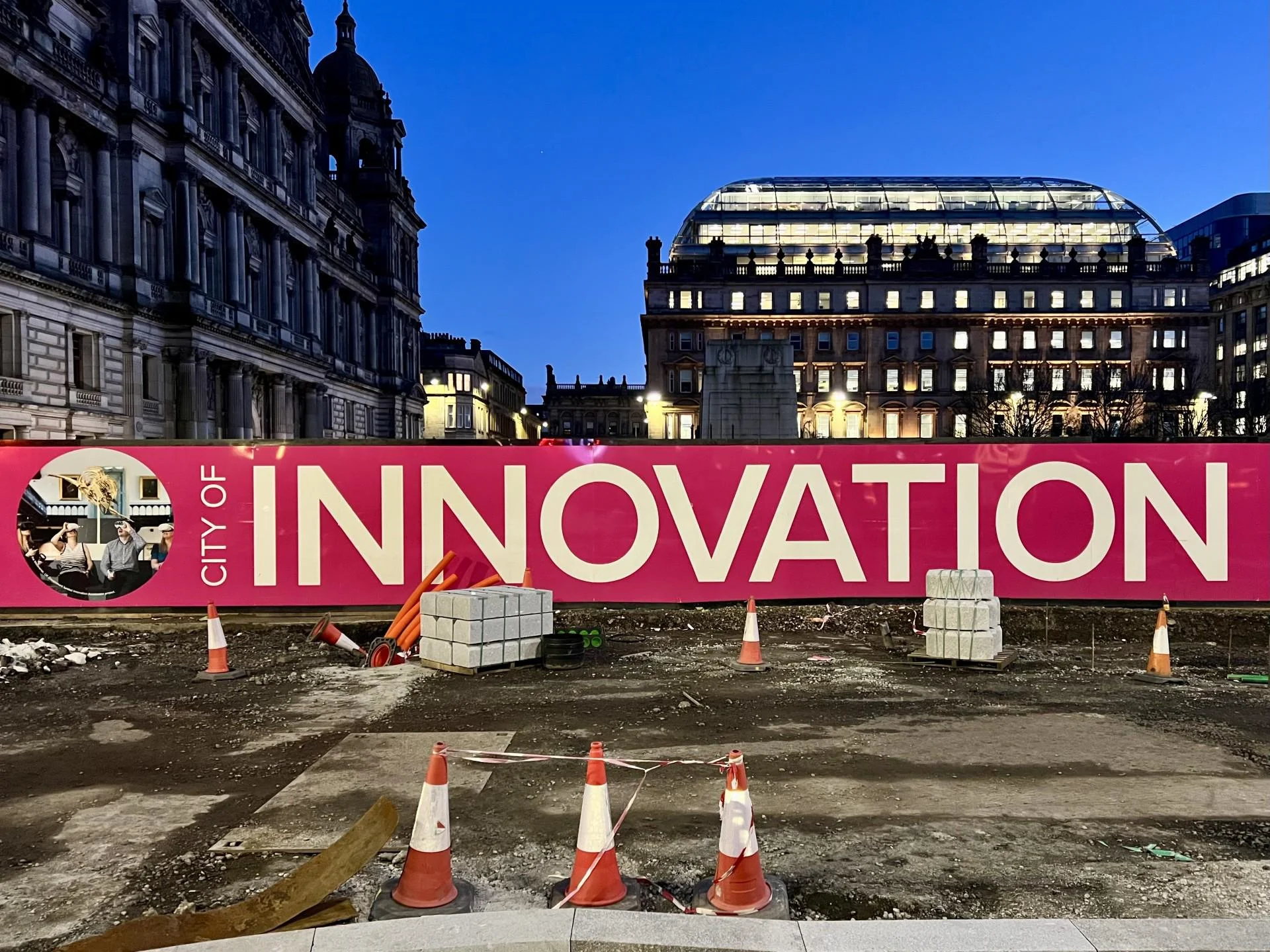
Photo credit: Estelle Broyer
This blog introduces a new LSE Cities research programme that combines peer research and organisational ethnography to explore the skills, routines and cultures that enable or inhibit innovation. This approach remains largely untested in the context of city government innovation but holds great promise as a novel research method that bridges academic inquiry and real-world impact.
As urban challenges grow more layered and unpredictable, a pressing question keeps resurfacing: how can we meaningfully and durably strengthen the capacity of the public sector to innovate in response?
LSE Cities’ new in-depth qualitative research programme into city government innovation (CGI) capacity is driven by several key questions that lie at the heart of this debate: What skills do the people inside city hall need to activate and sustain innovation beyond one-off pilots? How are innovative approaches understood, promoted, but also resisted by those tasked with delivering these changes? What organisational routines and cultures make innovation possible, or quietly stifle it? And how do all these factors interact with the wider political, financial and legal contexts that cities operate within?
Working with three European cities each year over the course of four years, the Deep Dives programme is designed to build a rich picture of how city governments develop and maintain their capacity to innovate. Using methods that go well beyond the traditional case study, the Deep Dives will also complement more quantitative studies such as the CGI Observatory.
In our pilot we are working with the city governments of Amsterdam, Glasgow and Bologna. Here is what we are doing, and why we think it matters.
Exploring novel methods
Methods such as one-off interviews, surveys and document analysis are clearly valuable tools for academics studying city government innovation, but they tend to capture just a snapshot or just the official story: the formal strategies and plans, the leadership narratives, the accounts people give when a researcher from a university asks them how things work. They are not as good at capturing the messy, informal and sometimes uncomfortable reality of how innovation happens (or fails to happen) inside large public organisations.
Responding to this challenge, our programme foregrounds two approaches that are still relatively uncommon in this field: organisational ethnography and peer research.
Organisational ethnography
Organisational ethnography involves sustained, immersive engagement with an organisation. Ethnographic researchers spend extended periods of time observing how people work, how decisions are made, and how formal strategies play out in practice. This kind of deep immersion is well suited to uncovering tacit knowledge, unspoken power dynamics, and the emotional and cultural dimensions of working life that shape whether new ideas take root or disappear again. Innovation strategies are issued from the top and expected to cascade down; ethnography, by contrast, is traditionally written from the bottom up.
Peer research
Peer research takes a different but complementary approach. Rooted in participatory action research traditions, it involves training and supporting people from within the organisation to become co-researchers. In our case, that means municipal officers themselves designing research questions, conducting interviews and observations, and collaborating on analysis. This is not about external researchers studying city halls from the outside. It is about creating the conditions for city government staff to investigate their own organisations with an ethnographic sensibility, drawing on their insider knowledge while developing new skills and understandings in the process.
Peer research shares with ethnography the aspiration to create a more reciprocal relationship between researchers and participants, challenge dominant narratives, and generate new bottom-up knowledge and insights that can be of value both to city governments and to research.
Three cities, three tailored approaches
A distinctive feature of this pilot year is the tailored approach that we are taking to working with each city.
- In Amsterdam, a locally recruited ethnographer will lead the research, embedded within the city government and focusing on a single major innovation initiative.
- In Glasgow, peer researchers drawn from a single municipal department will lead the work, exploring innovation from the vantage point of their own programmes and institutional priorities.
- In Bologna, a peer research team assembled from across different city government departments will work closely with the support of a local ethnographer.
By testing and comparing these different methodological configurations, we can begin to understand which combinations of insider and outsider perspectives, deep and wide organisational focus, and academic and practitioner knowledge yield the most valuable insights, and under what conditions.
Why this approach is pioneering (and why it is risky)
Peer research has most commonly been used with marginalised communities, particularly young people. Using it with policymakers and municipal officials is largely untested, although our own recent work in Islington showed us that such research can be incredibly impactful. City government staff are not lacking in voice or institutional power in the way that traditional peer research participants are, and this fundamentally changes the dynamics. Officials may, consciously or not, shape the research in ways that serve institutional narratives rather than advancing critical understanding. Navigating these tensions with care and rigour is one of the central challenges of the programme.
At the same time, many city officials are already skilled researchers in their own right, with formal academic training and years of practical experience in policy analysis. This makes them unusually well suited to a genuine partnership model of peer research, where they collaborate as equals across all stages of the process.
The combination of ethnographic and peer research approaches in the study of city government innovation is, to the best of our knowledge, novel. The case study, organisational ethnography and peer research literatures each offer distinctive resources for this kind of inquiry, but they have rarely been brought into conversation with one another in the context of municipal governance.
The work ahead
Our pilot year is designed as a rigorous test of whether these approaches are feasible, useful and adaptable across contexts. As we develop this research, some of the questions that we will ask include: can ethnographic and peer research methods generate insights that are meaningfully richer than what traditional qualitative methods produce? How do we navigate the tension between the ambition to compare across cities and the imperative to understand each one on its own terms? How do we balance structure with emergence, and the empowering potential of peer research with the risks of institutional capture?
We do not yet have answers to these questions. That is precisely the point. The most demanding, interesting and illuminating work lies ahead, in the field. Watch this space!