

The new supply-side era: the O-ring meets geopolitics
Lazard CEO and Chairman Peter Orszag sees a new supply-side era taking shape, in which supply shocks that are increasingly geopolitical in origin and rooted in the physical world have displaced demand as the dominant source of macroeconomic variance.
This is not the supply side of the 1980s: the binding constraint is now the physical and network dependencies that a generation of globalisation wrought. Following UChicago economist Michael Kremer's O-ring logic, a single missing input can halt production far beyond it—which is why these shocks work through the economy slowly and unevenly, surfacing in prices months or years later. Both policymakers and corporate leaders need to adapt their thinking to this new era.
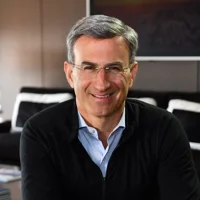
Peter R Orszag is CEO and Chairman of Lazard. Mr Orszag joined Lazard in 2016 and previously served as CEO of its Financial Advisory business. He has had a distinguished career spanning finance, public policy, and academia. Prior to joining Lazard, Mr. Orszag was Director of the Office of Management and Budget (OMB) in the Obama Administration and Director of the Congressional Budget Office (CBO). He also served in the Clinton Administration at the Council of Economic Advisers and as Special Assistant to the President for Economic Policy.
Mr Orszag is a member of the National Academy of Medicine, the Council on Foreign Relations, and the Aspen Economic Strategy Group. He also serves on the boards of the Institute for Advanced Study, the Peterson Institute for International Economics, and Mount Sinai Hospital. He graduated summa cum laude from Princeton University and earned his Ph.D. from LSE as a Marshall Scholar.

Tony Travers is Professor in Practice in the LSE Department of Government, Associate Dean of the LSE School of Public Policy and Director of LSE London. His key research interests include local and regional government, elections and public service reform. He provides expert analysis for broadcast and print media, regularly appearing on major television and radio networks.
- Podcast of the event [LSE Player]
- Video recording of the event [YouTube]
This event was held on 14 September 2026 and was co-hosted with LSE's School of Public Policy.