

BSc Data Science and Business Analytics (study online)

Transform complex data into strategic, evidence-based business decisions. The online BSc Data Science and Business Analytics degree combines rigorous quantitative modelling with LSE’s globally renowned social science perspective.
Develop highly sought-after technical capabilities in statistical modelling, machine learning, R and Python, with skills relevant to an increasingly data and AI-driven world. You will learn how to translate complex data into actionable insights that address challenges across business, management, economics and society.
Key information
- Qualification: Undergraduate Degree (BSc)
- Duration: 2 - 6 years (Graduate Entry) | 3 - 6 years (Standard Entry)
- Type of study: Online
- Intakes: February, May, August & November
- Awarding body: University of London
- Academic direction: The London School of Economics and Political Science
Why choose LSE Global Programmes?
- Access a world-class education – wherever you are
Ranked #1 in the UK (Complete University Guide 2027) and #5 globally for social sciences and management (QS World University Rankings 2026), LSE is a world-leading university, specialising in social sciences. - Study online on your terms
Complete your undergraduate degree flexibly over 2 to 6 years, allowing you to balance your learning with work and other personal commitments, all without the added expense of relocating. - Earn a globally respected qualification
Your degree is awarded by the University of London (UoL), recognised internationally by employers and graduate schools. Many graduates progress to master’s study at LSE and other leading institutions. - Gain skills for real-world impact
Build analytical thinking, global perspectives, and problem-solving skills to tackle complex challenges across sectors and borders. Join a global alumni community driving change worldwide.
Start your journey with LSE Global Programmes – wherever you are
Interested in learning more or starting an application? Complete the form below and a member of the team will provide further information about studying this course online.
Why study Data Science and Business Analytics?
As data, AI and machine learning increasingly shape how organisations operate and make decisions, the ability to analyse complex information and turn it into useful insight is increasingly valuable. This degree combines technical data skills with their application across business, management, economics and policy.
- Build technical capability
Develop knowledge in statistics, mathematics, programming, machine learning and business analytics. - Support data-driven decisions
Learn to analyse complex datasets and use quantitative evidence to inform real-world decision-making. - Apply skills across different fields
Use your knowledge across areas such as finance, marketing, management, public policy and education.
Academic direction from LSE
LSE Global Programmes are all UoL qualifications. LSE is a federation member of UoL and provides academic direction for the Global Programmes portfolio. This means that LSE is responsible for:
- Planning the structure and content of each programme
- Developing and writing the study materials
- Setting assessments and marking
- Determining the academic regulations
Your final degree will be from UoL and will identify LSE as having developed the syllabus and curriculum and provided assessment.
Meet the Programme Director
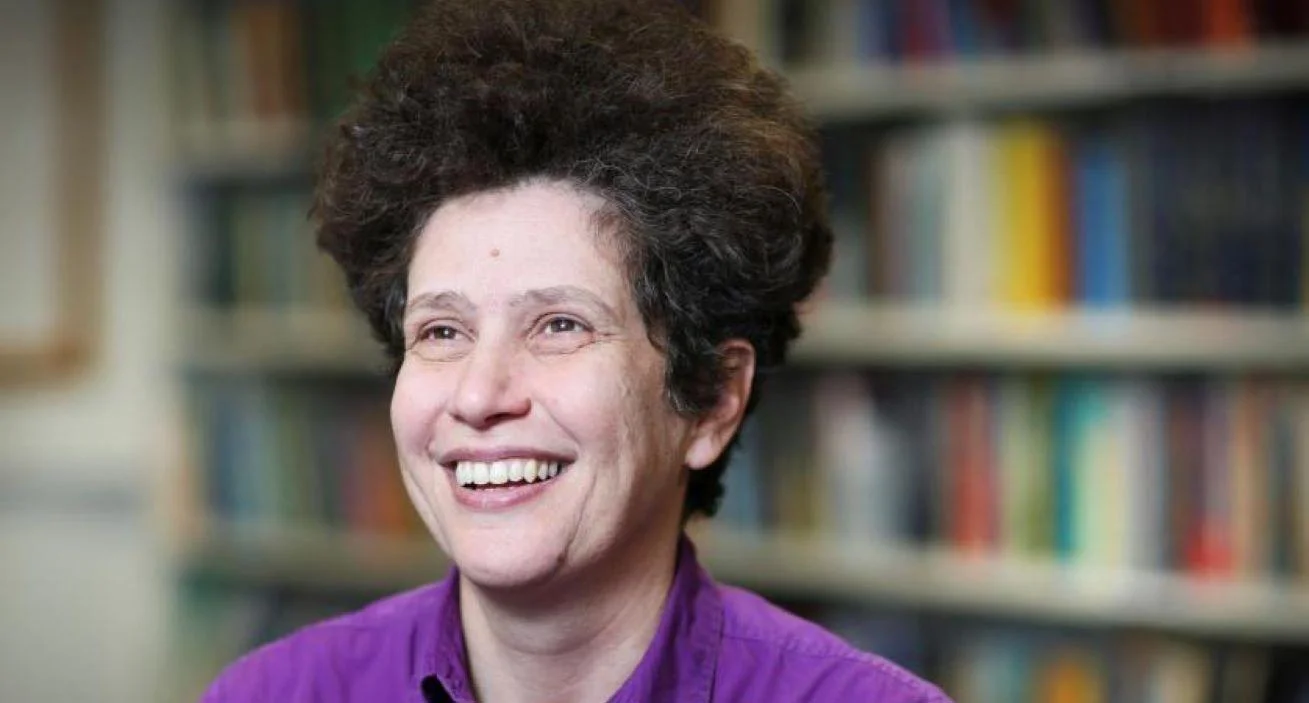
Professor Irini Moustaki is the Programme Director for Data Science within LSE Global Programmes. Her research focuses on statistical methods for analysing large and complex datasets, with applications across the social sciences, education and health.
Irini is a co-founder of the Psychometrics Lab in LSE’s Department of Statistics and was elected a Fellow of the British Academy in 2025.
The Data Science and Business Analytics programme is designed to provide you with strong quantitative skills that are transferable to any substantive area of applications and to make you an independent data analyst.
Programme structure
The BSc Data Science and Business Analytics degree is available through the Standard or Graduate Entry route.
| Route | Requirement | Credits |
|---|---|---|
| Standard Entry route | 12 full courses | 360 credits |
| Graduate Entry route | 9 full courses | 270 credits |
Students are advised to study around three full courses, or 90 credits, per academic year. The maximum registration period is six years, although students are encouraged to complete the programme within three to four years.
Students aiming to finish in three years should plan to take four full courses or equivalent each year.
The curriculum combines mathematics, statistics, programming, machine learning and business analytics, developing the quantitative and technical skills needed to analyse complex data and support evidence-based decision-making.
The table below shows a suggested sample course sequence for students taking the programme through the Standard Entry Route over three years.
| Year One | Year Two | Year Three |
|---|---|---|
| MT1186 Mathematical Methods | ST2195 Programming for Data Science | MN3141 Marketing Management |
| ST104A Statistics 1* | ST2133 Advanced Statistics: Distribution Theory* | ST3189 Machine Learning |
| ST104B Statistics 2* | ST2134 Advanced Statistics: Statistical Inference* | ST3188 Statistical Methods for Market Research |
| EC1002 Introduction to Economics | MT2116 Abstract Mathematics or EC2020 Elements of Econometrics | Open Choice** |
| MN1178 Business and Management in a Global Context | ST2187 Business Analytics, Applied Modelling and Prediction |
For more detailed information about individual courses, including course content and assessment, please visit the Course Information Sheets.
* Half course
** Open choice courses: Choose one 100-, 200- or 300-level course, or two half courses, from the Programme Specification, or two LSE Summer School courses.
You will study through a combination of flexible online learning, live interactive classes and academic support.
- Your digital campus
Access study materials, reading lists and peer discussion areas through the Virtual Learning Environment, as well as e-books and journal articles through the Online Library. - Live interactive classes
Join live online sessions to collaborate with class teachers and peers, evaluate ideas and solve problems together. - Comprehensive support
Receive academic guidance from class teachers, progression advice from a Student Success Advisor and tailored employability support through the Careers Service.
Programme specification
View the BSc Data Science and Business Analytics Programme Specification for full details on programme structure, learning outcomes, assessment and regulations.
Course outcomes
By the end of the BSc Data Science and Business Analytics degree, you will have developed practical skills in data science, statistics and business analytics.
You will be able to:
- analyse complex data and draw actionable insights
- use R and Python for data analysis
- apply probability, statistics and quantitative models
- use machine learning methods including prediction, classification, regression and clustering
- apply data analysis to real-world business and policy decisions
- evaluate data and quantitative methods critically
Entry requirements
For access to the BSc Data Science and Business Analytics degree, you will usually meet the following criteria:
- Age 17+ by 30 November in the year of registration.
- Satisfy our general entrance requirements (see below).
- Meet the relevant mathematics requirement.
You will need to demonstrate competence in mathematics at least equivalent to UK GCE A-level at Grade A–E. Equivalent qualifications from a range of countries are accepted, and relevant university-level study in subjects such as mathematics, statistics, calculus or quantitative methods may also be considered. We accept qualifications from around the world. To check your country equivalent, please contact our enrolment advisors.
If you do not already hold the relevant mathematics qualification, you may wish to consider completing LSE Maths Essentials. A mark of 60 per cent or above will fulfil the mathematics requirement for this programme.
If you already hold qualifications with similar learning outcomes to our degree modules, you can apply for Recognition of Prior Learning (RPL).
Your entry requirements may vary depending on your age and previous qualifications:
- Age 20 or younger: you will usually need qualifications equivalent to three UK GCE A-levels at grades EED or above, or one year of university-level study.
- Age 21–26: you may qualify through Reduced/Mature Entry with one UK GCE A-level at Grade C or above, or an acceptable equivalent. Relevant work experience may also be considered.
- Age 27 or older: you may qualify through Reduced/Mature Entry with one UK GCE A-level at Grade E or above, or an acceptable equivalent. Relevant work experience may also be considered.
We accept qualifications from around the world. To check your country equivalent, please contact our enrolment advisors.
You need to demonstrate a good level of English to be admitted to our programmes. We accept a range of evidence, including proficiency test scores. If you don’t have evidence but believe you can meet the standard, we may consider your case. View English language requirements.
You may apply for Graduate Entry if you hold an acceptable undergraduate or postgraduate award. The awarding programme must be full time, at least one year in duration and considered at least comparable in level to a UK undergraduate degree. We will consider other undergraduate, postgraduate, professional membership and professional qualifications on an individual basis. You must also satisfy English language and mathematics requirements for your chosen degree.
We set minimum basic computer requirements because your study resources are accessed via the Student Portal and it is vital that you can access this regularly. For this degree, you will also need to be able to view video material and use a media player, such as VLC, to play video files. The programme also involves using statistical software and programming languages including R and Python, so you will need a computer that can support these tools.
Tuition fees
The following fees apply to the August 2026, November 2026, February 2027 and May 2027 registration windows.
| UK residents* | Non-UK residents | |
|---|---|---|
| Half module/course fee (10 weeks) | £740 | £1,100 |
| Full module/course fee (20 weeks) | £1,470 | £2,190 |
| Indicative total programme fee | £17,640 | £26,280 |
The indicative total programme fee is based on completing 12 full modules/courses in the minimum study period without resits. Fees may be subject to an annual increase of up to 5%.
*UK residents include those eligible for UK Tuition Fee Loans from Student Finance England on the same basis as UK nationals.
How to apply
Applications to our online degree programmes are made online, through the University of London's application portal. Applications are specific per programme, and separated into standard and graduate entry.
View application linksYou can view the application deadlines for upcoming intakes in the table below.
| Intake | Application deadline |
|---|---|
| 9 November 2026 | 2 October 2026 |
| 1 February 2027 | 1 January 2027 |
| 24 May 2027 | 23 April 2027 |
If you have any questions about the application process, you can contact our team via email at online.degrees@lse.ac.uk.
Careers
The BSc Data Science and Business Analytics degree develops analytical, technical and business skills that can be applied across a wide range of industries and organisations. Graduates may go on to careers and further study in areas including:
- Data Science
- Business Analytics
- Finance
- Business and Management
- Marketing
- Health and Social Policy
- Education
- Forecasting and Risk
Dedicated career support
- Careers service: Access tailored employability support, online resources, expert-led webinars, and employer networking events whether you are starting, developing, or changing your career.
- Global alumni network: Automatically join a lifelong community of over one million UoL graduates across 180+ countries.