
The Consortium for Researching Inclusive Cultures in the Arts (CRICA)

Our MPhil/PhD programme has been created by LSE and the University of Roehampton together with non-academic partners from the performing arts. It is funded by Arts and Humanities Research Council Doctoral Focal Award scheme. The programme explores how inclusive cultural practices and spaces are created and experienced, and how these can inform broader societal and economic changes. The primary research theme of CRICA is the intersection of disability and the creative economy, specifically the performing and participatory arts sectors.
CRICA is offering studentships and Collaborative Doctoral Awards for prospective students, that cover tuition fees and a stipend. All nationalities are eligible; conditions may apply.
"By positioning disabled ways of being as sources of knowledge and creativity, CRICA aims to shift the paradigm from an assimilationist view of inclusion to one that values and integrates diverse experiences."
Welcome from CRICA Co-Directors

Dr Carrie Friese, Associate Professor and Deputy Head of Department for Research, LSE Department of Sociology:
"Welcome to CRICA! The Department of Sociology at the LSE is committed to doing impactful research and CRICA offers a unique opportunity to do this in really innovative ways. We are thrilled to be working with colleagues at Roehampton to facilitate the interdisciplinary exchange needed to make the cultural economy more inclusive and, therein, vibrant. CRICA will allow social scientists to learn from performing artists at both Roehampton and among our industry partners in an exciting training program that should, in the process, make both the performing arts and higher education more inclusive to a full range of embodied experiences. This is a unique opportunity and so please do get in touch if you would like to contribute!"
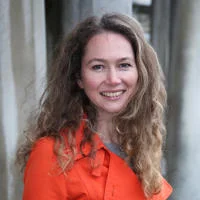
Professor Sara Houston, Professor and Director of Research & Knowledge Exchange, Centre for Arts and Creative Exchange, University of Roehampton:
"A warm hello from Roehampton! If you’ve clicked on this page you are the first stage on the way to thinking through a PhD and that is an exciting prospect! We are passionate about the arts but we know there’s work to be done in creating the best environment where all arts professionals, spectators and participants can flourish. CRICA is a PhD programme that will fund you to do research to help support performing and participatory arts to be more inclusive. You’ll also be provided with an exciting training programme so you can enter the world of work with more tools and skills at your disposal. A CRICA PhD is a very special offer that we would love to talk more about to you. Do get in touch!"
Programme Details
Existing research on disability and the arts tends to be short-term and evaluation-based. This can occlude research on how the experience of disability can benefit the creative economy. The scale of CRICA will permit researchers to address systemic obstacles to the academic, creative, economic and social benefits of this knowledge, such as ableist informed timelines, environments, labour value and aesthetic. This programme seeks to increase access for researchers, artists, arts professionals and community arts participants through structures that address the constructive contributions their knowledge makes.
CRICA trains researchers to create a new body of scholarship and practice that will speak to these issues and challenges, promoting new perspectives and creative ventures within the disability arts sector and wider creative economy.
The aims of CRICA are to:
- Enable students to become both researchers and change-makers.
- Fund research that investigates how inclusive arts practices and cultures are produced and experienced.
- Generate new knowledge on the relationships between disability, creativity, structures and systems within participatory and performing arts.
- Expand discourses and practices of disabled ways of being-in-the-world through strong partnerships and collaborations with disability arts organisations.
- Equip students with an innovative training programme using inclusive methods of engagement, connection and learning.
CRICA develops dedicated doctoral partnerships and cross-methodological, embodied, experiential training. The proposed programme is nurtured by a group of world-renowned experts in dance, sociology, and theatre at the University of Roehampton and LSE, in partnership with participatory and performing arts organisations who are at the forefront of innovation within the arts, by/with/for disabled and non-disabled people.
The doctoral training programme includes:
- Doctoral programme training at LSE MPhil/PhD in Sociology – please see here for more details.
- Mentorship, supervision and support from leading scholars and highly respected industry professionals.
- Workshops and experiential labs, organised jointly by LSE and Roehampton.
- Conversation and Movement Jams and annual meetings of students and academics with non-academic partners of the programme.
- Embedded placements within the sector.
- Access to a network of participatory and performing arts organisations for collaboration and knowledge exchange.
Further, optional modes of training incorporate embodied experiences, discussion, collective reading, writing, and play in creative connection. Optional courses include teacher training, leadership lab, and induction to UK academia.
Supplementary funding is available for training or development, such as learning British Sign Language or attending conferences.
The research themes that fall under the remit of CRICA include the following. Please note this is not an exhaustive list:
- Inclusive approaches to performance.
- Inclusive pedagogies.
- Valuing and valuations of (dis)ability in the performing arts and creative economy.
- Delineating embodied knowledge in/of the performing arts and creative economy.
- Assessing barriers to equality (such as access, hierarchy, infantilisation).
- Analysing archives of creative practices of our partner arts organisations.
- Analysing how inclusive arts practices, spaces and organisations are produced and experienced, identifying the unique insights they can generate.
- Analysing inclusivity, including in theory, practice, art spaces, social change and activism.
- Inclusion in theory vs. inclusion in practice.
- The failure of the social model of disability- access, equality, societal barriers.
- When can we stop talking about disability?
As part of CRICA, Collaborative Doctoral Awards (CDAs) will be offered. These are doctoral research projects co-developed and co-delivered by higher education institutions and non-academic partners, ensuring equitable collaboration and generating impact beyond academia.
CDAs are designed with a strong focus on student career development. Students will spend up to half of their time embedded within the partner organisation, supported by two supervisors—one based in academia and one in the partner organisation.
Over the four-year intake period for CRICA, four Collaborative Doctoral Awards will be available in partnership with non-academic partners. These opportunities will be announced as they become available.
Students will have two supervisors, normally from the ‘home’ institution, occasionally inter-institutional, combining the universities’ strengths in arts, humanities and social sciences. While it is not a formal requirement to have a potential supervisor’s support before applying, we recommend making contact with potential supervisors to discuss your research project.
If you believe that co-supervision from both LSE and Roehampton would enhance your doctoral research, we encourage you to contact prospective supervisors at both institutions to help decide which institution to apply to.
Please see the research profiles of our supervisors below to determine which institution to apply to.
At LSE:
- Dr Rebecca Elliot (economic sociology)
- Dr Carrie Friese (bodies and embodiment; sociology of health and illness)
- Prof Sam Friedman (inequalities, sociology of culture)
- Dr Jana Melkumova-Reynolds (Crip theory, cultural sociology, dance and performance studies)
- Dr Dylan Mulvin (media and disability studies)
- Dr David Pinzur (economic sociology)
- Prof Aaron Reeves (inequalities)
- Dr Hakan Sandahl-Wilson (race and gender)
At the University of Roehampton:
- Dr. Nicola Conibere (choreography, social choreography, politics of performance, crip choreographies, spectatorial exchange)
- Dr. Heike Salzer (Embodied practices, site-specific choreography, somatic, film and audio-visual practices)
- Dr. Chi-Fang Chao (dance anthropology, ethnography, embodiment)
- Dr. Tamara Tomic-Vajagic (mediated choreography and visual culture)
- Prof. Alexandra Kolb (politics of dance, philosophy, theatre, literature)
- Prof. Sara Houston (community dance, creative health, dance politics, arts and social inclusion)
- Dr Deborah Jermyn (film studies, feminism, older women in media, audience studies in media and creative industries)
- Dr. Alex Bubb (disability history, multilinguialism, migration and nineteenth century imperialism)
- Dr. Mary Shannon (disability history and culture, literature, nineteenth century popular culture)
- Dr. Dionysios Kapsaskis (media access, translation and the creative economy)
- Dr Yuwei Lin (science and technology, art-led/performance-led creative methods, critical data studies)
- Dr. Ingrid Bacon (mental health and occupational health)
- Dr. Markieta Domecka (sociology of work and employment)
- Dr. John Moxon (religion, minority culture, disability)
Additionally, students will benefit from our partner organisations’ support, knowledge and resources through their contribution to the research remit, training programme and (through CDAs) hosting and supervising students. Specialist facilities at Roehampton include five dance studios (four wheelchair accessible) and a fully equipped theatre.
Partner organisations take part in the MPhil/PhD programme training and events, offer their advice and placements to PhD students, as well as develop Collaborative Doctoral Awards together with LSE and Roehampton.
CRICA list of partners includes:
- Amici Dance Theatre Company, London, UK
- Candoco Dance Company, London, UK
- Chronically Ill Artist’s Network, Leicester, London
- Clod Ensemble, London, UK
- Entelechy Arts, London, UK
- Independent Dance, London, UK
- People Dancing: foundation for community dance, Leicester, UK
- Second Hand Dance, London, UK
- The Place, London, UK
- Oily Cart, London, UK
Sandpit
Biannual sandpits with a dramaturg provide training for change-makers in inclusion by developing skills to enhance effective communication across divides of ways of speaking and being. Participants will experience embodied movement and communication practice.
Jams
Conversation and Movement Jams provide an informal and useful space for students to experience inclusion and different methods of communication and networking in a way that informs their doctoral research. The Jams and Sandpit are designed to further dialogue and understanding of difference and inclusion by fostering collaboration and exchange across disciplines, methodologies and artistic practices.
Writing Retreats
Three-day residential writing retreats led by writing coaches are offered for CRICA PhD students to focus on their PhD writing skills in a community setting. Retreats are tailored to the participants’ needs and include 1:1 consultations, with time for meeting, sharing, discussing and networking.
Podcasting and social media skills
Workshops designed for CRICA PhD students provide training in podcasting, public engagement skills and social media for 21st -century scholars and artists.
Each enrolled student will receive funding for tuition fees and stipend. Find out more about the CRICA PhD Programme Studentship.
The deadline for submitting your application for CRICA is 3 December 2026. You will need to submit your application through the Graduate Applicant Portal, and you will be invited to a conversation pre-interview with one of the CRICA directors if you haven't already had a conversation with a supervisor or director. Interview questions will be circulated beforehand.
We recommend making contact with potential supervisors to discuss your research project.
We particularly welcome applications from those with disabilities and disabled scholars and artists who are currently under-represented within PhD programmes.
Please see information about our entry requirements.
Please reach out if you have any questions about the programme: sociology.phd@lse.ac.uk /pgresearch@roehampton.ac.uk.
Discover more about the programme at the University of Roehampton.