

Planning amid division: the politics of the public in Beirut - a lecture by Prof Mona Fawaz

CITY Annual Lecture
This event interrogates the normative foundations of progressive planning, particularly its assumption that participatory and co-productive practices can provide an adequate pathway toward inclusive planning responses.
It does so against the backdrop of a global context in which the rise of right-wing populist politics has profoundly unsettled assumptions about a functional public. Once grounded in the belief in a shared or common interest, planning now operates within an increasingly fragmented political and epistemic landscape (Rivero et al., 2020). Populist discourses have deepened social divisions and eroded the legitimacy of any single actor—particularly the state—as custodian of the common good. In parallel, the dynamics of the post-truth era further complicate co-production by destabilising the authority of science, academia, and expert knowledge—the very foundations on which scholars and practitioners engage communities (Perry 2020). These intertwined political and epistemic ruptures expose the limits of consensus-driven planning practices, echoing Chantal Mouffe’s (2005) critique of the “post-political” denial of conflict and antagonism at the heart of democracy.
This event will examine these dynamics through a case study of a public intervention in Beirut, Lebanon, following the 2020 Port explosion. In this context, researchers and practitioners affiliated with the Beirut Urban Lab attempted to co-design a public square, directly confronting tensions between knowledge, politics, and representation in a polarised and post-truth environment. Drawing on this collective work, the event will reflect on how co-production might be reimagined amid epistemic and political fragmentation, proposing pathways for reintegrating power, acknowledging conflict, and rethinking the notion of a fractured “public” within the democratic project of planning.
Meet our speakers
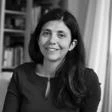
Mona Fawaz is a Professor in Urban Studies and Planning and the Coordinator of the Graduate Programs in Urban Planning and Design at the American University of Beirut. Her scholarly interests stem from the imperative of making cities more inclusive, particularly from the perspective of enabling low-income dwellers to take part in shaping their cities. Her work spans across urban history and historiography, social and spatial justice, informality and the law, property and space, as well as planning practice, theory, and pedagogy.
Fawaz has authored over 40 scholarly articles, book sections, and reports in Arabic, French, and English. She is currently working on an alternative history of Beirut, a project that aims to critically engage scholarship about the city’s history in its post-independence period and propose an alternative narrative built from the standpoint of urban peripheries. Fawaz is also the founder and coordinator of the Social Justice and the City Program at the Issam Fares Institute, a research-based platform that seeks to influence public policymaking by supporting ongoing advocacy work with research-based evidence to strengthen their role.
Fawaz holds a BArch from the American University of Beirut (1995), a Master's in City and Regional Planning (1998) and a PhD (2004) from the Department of Urban Studies and Planning at the Massachusetts Institute of Technology. Fawaz was a fellow at the Radcliffe Institute of Advanced Studies at Harvard University during the 2014/15 academic year.
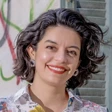
Catalina Ortiz is a Professor of Critical Urban Pedagogy at the Bartlett Faculty of the Built Environment at the University College London. She is a Colombian urbanist and educator passionate about spatial justice. She is committed to an ethics of care and an engaged scholarship to trigger radical spatial imagination for a negotiated co-production of space. She uses decolonial and critical urban theory through creative methodologies to study the politics of space production to foster more just cities and the recognition of multiple urban knowledges. She is the Director of the UCL Urban Lab and joined the Urban Studies journal as an editor in 2024.
Meet our chair
David Madden is an urban sociologist and housing researcher. He is Associate Professor of Sociology and Director of the Cities Programme at the London School of Economics. His teaching and research interests include urban studies, housing studies, social theory and political sociology. His work seeks to understand how urban and residential space is shaped by political-economic processes and how cities and housing systems might become resources for political-economic change.
From time to time there are changes to event details so we strongly recommend that if you plan to attend this event you check back on this listing on the day of the event.
Whilst we are hosting this listing, LSE Events does not take responsibility for the running and administration of this event. While we take responsible measures to ensure that accurate information is given here this event is ultimately the responsibility of the organisation presenting the event.
LSE holds a wide range of events, covering many of the most controversial issues of the day, and speakers at our events may express views that cause offence. The views expressed by speakers at LSE events do not reflect the position or views of the London School of Economics and Political Science.