

Evidence everywhere, justice nowhere? Techno-humanitarianism under pressure
Speaker
Chair

In an era when wars and humanitarian catastrophes arrive on our screens in real time—satellite images of razed neighbourhoods, geolocated videos of massacres, dashboards that translate devastation into data—visibility itself has become a promise.
Techno-humanitarianism names this promise: the growing effort to fuse optical and geospatial technologies with human rights advocacy and legal accountability, powered by the belief that more documentation will yield more justice. But what happens when the capacity to see expands faster than the capacity to intervene?
This lecture maps the rise of techno-humanitarianism and argues that its ambitions are increasingly constrained by the legal forms and institutions it seeks to mobilise. At the intersection of law, science, and visuality, a new regime emerges—juriscopic—in which technologically mediated ways of seeing are translated into admissible facts, expert testimony, and courtroom narratives. Yet this translation is never neutral: legal thresholds (relevance, reliability, probative value), scientific presumptions of universality, and the authority of specialised expertise work together to amplify certain truths while occluding others—especially long-term structural violence and grassroots modes of knowing.
Drawing on multi-sited research (with co-authors Sara Kendall and Jennifer Burrell) spanning the International Criminal Court, families searching for disappeared loved ones in Mexico, and communities displaced by violence in northern Nigeria, the lecture traces how “evidence revolutions” can paradoxically narrow what counts as harm, who counts as an expert, and what justice can mean. The result is an urgent question for our moment: when accountability is built around ever-more precise optics, what becomes invisible—and what alternative forms of truth, care, and political possibility might still be reclaimed?
Meet our speaker and chair
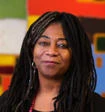
Kamari Maxine Clarke is a Distinguished Professor of Transnational Justice and Sociolegal Studies at the University of Toronto at the Centre for Criminology & Sociolegal Studies and the Centre for Diaspora and Transnational Studies. Over the past twenty-five years, Professor Clarke has conducted research on issues related to international legal domains, socio-legal studies, the politics of globalisation and race, and the anthropology of geospatial technology. She has spent her career exploring theoretical questions of culture and power and, in the field of law and power, detailing the relationship between new transnational formations and contemporary problems. She is the author of nine books and over fifty-five peer-reviewed articles and book chapters, including her 2009 publication Fictions of Justice: The International Criminal Court and the Challenge of Legal Pluralism in Sub-Saharan Africa (Cambridge University Press, 2009) and Affective Justice (Duke University Press, 2019), which was a finalist for the American Anthropological Association’s 2020 Elliot P. Skinner Book Award for the Association for Africanist Anthropology and the recipient of the 2019 Royal Anthropological Institute’s Amaury Talbot Book Prize.
During her academic career she has held numerous prestigious fellowships, grants, and awards, including multiple grant awards from the National Science Foundation and from the Social Sciences and Humanities Research Council of Canada (SSHRC), the Rockefeller Foundation, and the Wenner-Gren Foundation for Anthropological Research. Most recently, she was a recipient of the 2021 Guggenheim Prize for career excellence in Anthropology, was inducted in 2024 as a Fellow of the Royal Society of Canada Academy of Social Sciences, and in 2025 received the Social Sciences and Humanities Research Council Impact Award.
Ayça Çubukçu is Associate Professor in Human Rights at the London School of Economics and Political Science, where she served as the Co-Director of LSE Human Rights for six years (2018-2024). Before her appointment at the LSE, Dr Çubukçu taught for the Committee on Global Thought at Columbia University and the Committee on Degrees in Social Studies at Harvard University.
From time to time there are changes to event details so we strongly recommend that if you plan to attend this event you check back on this listing on the day of the event.
Whilst we are hosting this listing, LSE Events does not take responsibility for the running and administration of this event. While we take responsible measures to ensure that accurate information is given here this event is ultimately the responsibility of the organisation presenting the event.
LSE holds a wide range of events, covering many of the most controversial issues of the day, and speakers at our events may express views that cause offence. The views expressed by speakers at LSE events do not reflect the position or views of the London School of Economics and Political Science.