

Sociology of hope



In his latest book, Argentinian academic Adrian Scribano explores the sociology of hope.
It presents an overview of the concept of hope in sociology and proposes a new foundational theory of hope linked to the classical theoretical traditions of sociology, to the perspectives of its founding women, and to the reconstruction of the contributions of theories of revolution, utopia, social change, and collective action. In an attempt to understand the sociology of hope as a critical theory and a science of life, the book proposes central elements, in theoretical and epistemic terms, to establish connections between ethics, aesthetics, the politics of knowledge, and their current modifications in the study of society.
Meet our speaker and chair
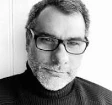
Adrian Scribano is Director of the Centre for Sociological Research and Studies (CIES estudiosociologicos.org) and a Principal Researcher at the National Council for Scientific and Technical Research of Argentina. He is also the Director of the Latin American Journal of Studies on Bodies, Emotions and Society, and the Program of Study of Bodies, Emotions and Society at the Gino Germani Research Institute, Faculty of Social Sciences, University of Buenos Aires. He is Chercheur Associé LEIRIS (Laboratoire d’études interdisciplinaires sur le Réel et les imaginaires sociaux) Paul Valéry Montpellier 3 au Département de sociologie de l’UFR 5 (Faculté des Sciences du Sujet et de la Société) and Adjunct Professor at Torrens University Australia. His main research areas are the sociology of body/emotions, social research based on creativity and expressiveness, social theory and collective action.
Dr Lois Liao is an interdisciplinary researcher at Cardiff University and a creative tech practitioner examining how people organise collective life under economic, cultural, and urban pressures. She holds a PhD in Housing Studies from UCL, a Master’s in Psychoanalysis from Birkbeck, and an undergraduate degree in Mathematics from the University of Cambridge. She has held a Fellowship in Economic Geography at the LSE and conducted visiting research at Renmin University of China and the University of São Paulo. Her current work spans mixed-methods research in children’s social care, the sociology of religion and migration, and housing and wellbeing.
Dr Felipe Hernández is a Colombian-born architect living and working in the United Kingdom. He is an Associate Professor of Architecture and Urban Studies at the University of Cambridge, and a Fellow Architect at King’s College Cambridge, where he also serves as Director of Studies in Architecture. He was the first Latin American to direct the Centre of Latin American Studies at Cambridge (CLAS) and is currently the Director of the M.Phil. in Architecture and Urban Studies (MAUS). His research explores the intersection between architecture and urbanism under conditions of 'coloniality', seeking relevant approaches to teaching and practicing architecture in the Americas.
Dr Nicolás Arenas is a Visiting Fellow at the Department of Sociology in the London School of Economics, where he was awarded a PhD in Sociology. His research examines the production of truth in contemporary society, focusing on the role of political and commercial communication in shaping discourse and people’s sensibilities. He is particularly interested in the consequences of instrumentalizing discourse and emotions in the legitimation of liberal democracies in Europe and the Global South.
Dr Sara Salem is is Associate Professor in the Department of Sociology and Co-Director of LSE Human Rights at LSE. Her main research interests include political sociology, postcolonial studies, Marxist theory, feminist theory, and global histories of empire and imperialism.
LSE holds a wide range of events, covering many of the most controversial issues of the day, and speakers at our events may express views that cause offence. The views expressed by speakers at LSE events do not reflect the position or views of the London School of Economics and Political Science.