

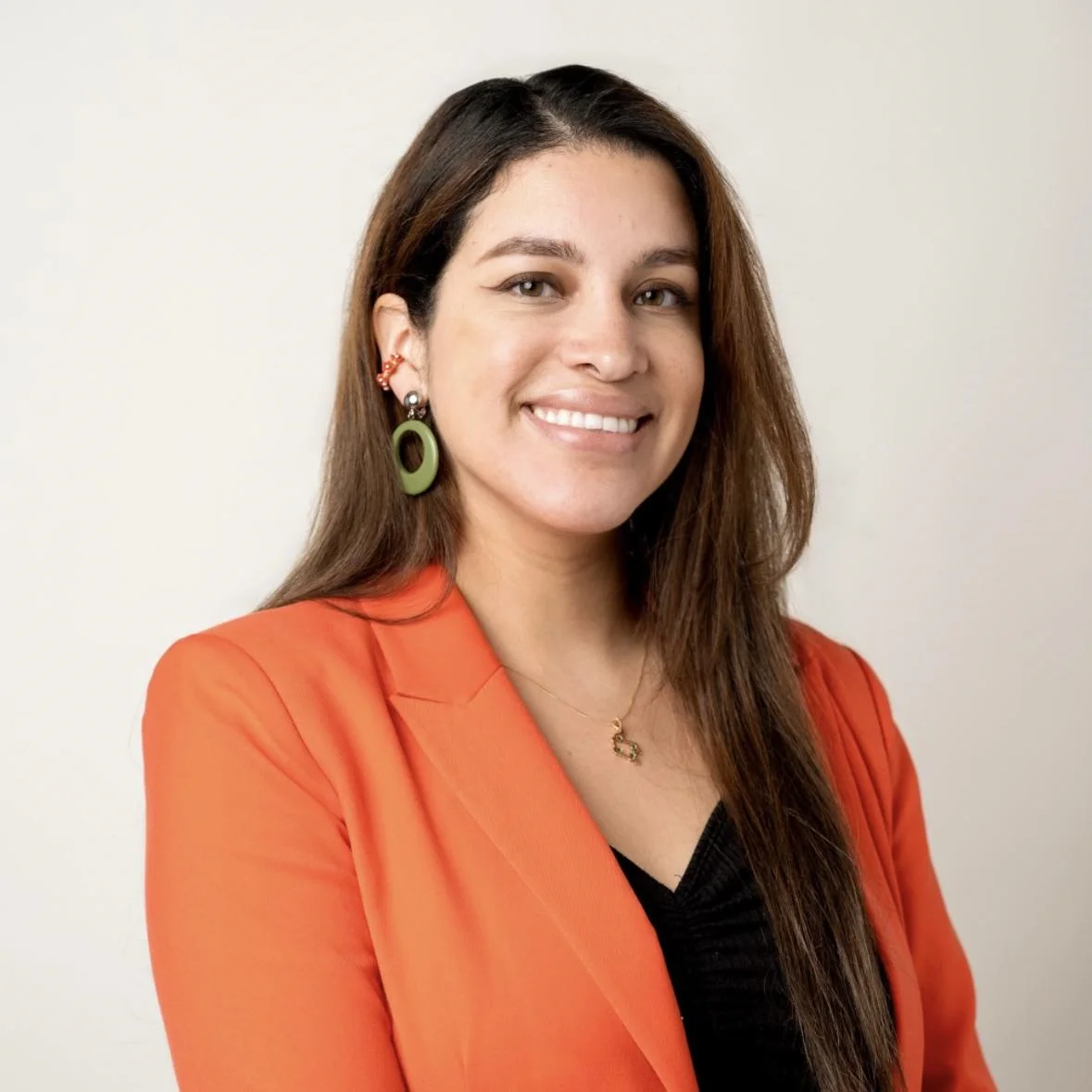
Selena Chávez
MSc Human Rights (2020)
Don’t underestimate the value you bring. Speak up, take space and lean on the resources around you. And if you’re considering applying to LSE—do it.
Tell us about your journey since graduating from LSE?
I graduated just as COVID began to reshape the world. What should have been a moment of joy instead felt unstable, frightening and deeply unclear. Still, I held onto one belief: putting my MSc in Human Rights into practice.
That decision led me into the world of social entrepreneurship in the Arab world. Through a former classmate at LSE, I was connected to Alfanar Venture Philanthropy, and with this, a new chapter began. It was my first real immersion in the Arab world, a region I had previously only encountered through a distant, often Western lens. Travelling to Egypt and Lebanon, working alongside colleagues who brought not just their skills but their full selves to the mission, reshaped how I understood community, impact and solidarity. Their passion and endurance fueled my own in ways I hadn’t anticipated.
When this chapter came to a close, I found myself in a period of transition and exploring what purpose meant to me. I contributed to initiatives like the Aspen Institute’s Project on Belonging: FOTD and I explored opportunities that enabled me to reconnect with my Colombian roots. Throughout it all, I found myself drawn by a search for meaning and a belief in our shared humanity.
That belief ultimately led me right to where it all began, my hometown of Chattanooga, Tennessee, in the US South, serving as Executive Director of Fuerza Democrats Tennessee, the state's first and only state-level PAC. In a political climate that each day becomes even more exhausting and deeply polarising, this work has tested me. But it has also grounded me. Because what I see every day—from the west, to the middle to the east of Tennessee—is loud determination. Communities organising, showing up and refusing to be defined by the narratives imposed on them.
My journey since LSE hasn’t been linear or easy. It’s been shaped by uncertainty, by moments of doubt and by constant change. But through it all, it’s also been defined by resilience—mine, and the resilience of the communities I’ve had the privilege to stand alongside. And that, more than anything, continues to give me hope.
What advice would you give to current students?
When I started at LSE, I questioned often whether I belonged there. My imposter syndrome was intense. It silenced me even when I felt a deep desire to contribute in discussions and it led to constantly comparing my lived experience to that of my peers, thinking I was somehow less than them. I wasn’t, yet it was so difficult for me to believe this back then.
I’m eternally grateful to the resources my MSc programme offered, including therapy sessions. Those one-hour sessions every other week helped me unpack and understand this controlling self-doubt I held and transform it into a new, stronger sense of self-belief.
I would advise all students to explore these services—and, more importantly, to know that you are not alone. You are not less. Your voice, your perspective and your experience carry immense power, both in seminars and beyond. Don’t underestimate the value you bring. Speak up, take space and lean on the resources around you. And if you’re considering applying to LSE—do it. I read something last week that I love: if you’re looking for reasons not to do it, do it.
How has studying in the Department of Sociology prepared you for your future?
Before beginning my journey at LSE, I had been working in grassroots efforts to amplify the voices of immigrant communities in Tennessee. I understood the power of action, of showing up and of creating change on the ground. What my MSc in Human Rights added was a new lens, an analytical framework that helped me explore the origins of human rights, the theories behind them and how justice movements have unfolded around the world.
I remember sitting in class, reflecting on the work I had done in my community and realising how much richer my understanding became when I could connect those experiences to broader theoretical debates. LSE gave me the tools to think critically about how human rights operate and how to advocate strategically for meaningful, lasting change.
What is your proudest achievement?
While I was working on my dissertation during the summer, I attended many of the Black Lives Matter protests taking place across London. There was one that forever stayed with me.
It was a hot Saturday with the sharp sun beating down on all of us. We had just finished walking from Downing Street to the US embassy and were now listening to several speakers. Among them, one activist shared her experience as a Black British woman, and the power, resilience and vulnerability in her words left a lasting impression. It was her words that later inspired the title of my dissertation: "To Be a Refuge in My Own Body".
I was incredibly proud to submit my dissertation under this title. My focus was on medicine’s historical role in undermining Black women’s autonomy—from the antebellum period through the 20th century in the United States—and how this legacy contributed to the emergence of iatrophobia. That protest, her words, and the broader movements that I witnessed in London inspired my research then and my work today.
What is your fondest memory from LSE?
I can’t choose just one memory from LSE, so I’ll share two! My first fondest memory was hearing former President Juan Manuel Santos speak. Growing up with two proud Colombian parents, I felt deeply honoured to be in the same space as him and to hear him discuss how he led the peace process with the FARC and navigated international diplomacy.
My second fondest memory was collaborating with two peers on a project for my African Development course, where we examined public investment and graduate underemployment in Benin. Beyond having an incredible group to work with, I had the opportunity to speak directly with recent graduates in Benin, hearing firsthand about the challenges they faced entering the workforce and what they wish to see change. The project was eventually published on Citing Africa, entirely in French.
In your journey from grassroots organising to leading Fuerza Democrats Tennessee, what have been the defining moments that shaped how you lead and engage with communities?
The moments that have defined my journey all revolve around listening. If you don’t take the time to hear people’s experiences, you risk acting on assumptions instead of reality.
I first learned this as an AmeriCorps VISTA with Chattanooga Neighborhood Enterprise, where my work involved conducting surveys with Spanish-speaking community members to understand how they viewed affordable housing and neighbourhood safety in Chattanooga. Listening to their experiences, concerns and ideas taught me that solutions begin with a conversation.
I carry this lesson with me today as I lead Fuerza Democrats Tennessee, the state's first and only state-level PAC of its kind, ensuring that every strategy, campaign and initiative starts with the voices of the communities we aim to serve. This approach can be challenging, especially when you’re breaking new ground, but it’s precisely because it’s often missing that it becomes so essential to uphold.
What challenges have you had to overcome in your career?
One of the biggest challenges I’ve faced in my career has been navigating management without always having the guidance and support I needed early on.
Today, as a director, I’ve learned that much of my approach to leading others comes from observing both effective and ineffective leadership. I strive to take the best lessons from those experiences and apply them in my own management style, creating the kind of support and guidance that enables a team to grow, both professionally and personally.