
Who Says It’s Undemocratic? Value Neutrality and Autocratisation in Southeast Asia

Speaker

Chair
The global phenomenon of “democratic backsliding” has challenged cherished political science assumptions, including the nature of democracy and belief in value neutral research.
Illiberal leaders claim democratic legitimacy while political scientists diagnose autocratisation. Does this not unmask what MacPherson (1965) saw as the assumption of the superiority of liberal principles hidden behind an “empirical” definition of democracy? Southeast Asia is a fitting region to consider such issues as it has recently undergone a landslide of backsliding. This has often been accompanied by nostalgia for strongman leaders who revisionist accounts portray as actually having saved democracy. The region is also home to longstanding critiques of “Western democracy” by government-linked intellectuals propounding “Asian values.”
Revisiting Weber’s influential though often misunderstood claim about the importance of value-neutral social scientific inquiry, the presentation briefly considers critiques from critical theory, interpretivist and pragmatist traditions. It then turns to the normative convergence between many observers and activists during several “democratic revolutions” in Southeast Asia. This was often followed by stark divergence between academic analyses and popular opinion with the rise of illiberal populism in the region. The presentation also considers often overlooked “vernacularised” religious-communalist conceptions of liberalism and the democratic normativity of oppositionists pushing back against backsliding in several Southeast Asian countries.
Speaker & chair biographies
Prof. Mark R. Thompson is chair professor in the Department of Public and International Affairs at the City University of Hong Kong where he previously was director of the Southeast Asia Research Centre (2011-2025). He has published 12 books as author or editor, including Towards Inclusive Social Policies: Southeast Asia after the Pandemic (Bristol, 2025, with Diego Fossati and Nicholas Thomas), The Philippines: From “People Power” to Democratic Backsliding (Cambridge Elements, 2023), Presidentialism and Democracy in Southeast and East Asia (Routledge, 2022, co-edited with Marcos Buente), China’s “Singapore Model” and Authoritarian Learning (Routledge 2022, co-edited with Stephan Ortmann), Authoritarian Modernism in East Asia (Palgrave, 2019), Dynasties and Female Political Leaders in Asia (LIT, 2013, co-edited with Claudia Derichs), Democratic Revolutions: Asia and Eastern Europe (Routledge, 2004) and The Anti-Marcos Struggle: Personalistic Rule and Democratic Transition in the Philippines (Yale, 1995). A past president of the Hong Kong Political Science Association and the Asian Political and International Studies Association, he was Lee Kong Chian Distinguished Fellow for Southeast Asian Studies at the National University of Singapore (2008) and Stanford University (2009) as well as a visiting fellow at the Center for Southeast Asian Studies (CSEAS), Kyoto University in winter/spring 2024.
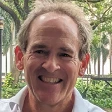
Prof. John Sidel is Director of the Saw Swee Hock Southeast Asia Centre, and the Sir Patrick Gillam Professor of International and Comparative Politics at the London School of Economics and Political Science (LSE).
* Banner photo by Clint Oka on Unsplash
LSE holds a wide range of events, covering many of the most controversial issues of the day, and speakers at our events may express views that cause offence. The views expressed by speakers at LSE events do not reflect the position or views of the London School of Economics and Political Science.