

Kumar Rajesh
Master of Public Policy (MPP) Class of 2026
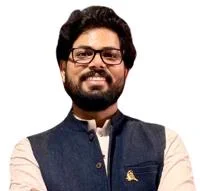
Name: Kumar Rajesh
Programme: Master of Public Policy, Class of 2026
Nationality: Indian
I hope to emerge as a more effective policy entrepreneur—someone who can not only design evidence-based policies but also negotiate stakeholder interests and make structural reforms politically feasible.
Can you tell us about your background and why you chose to study the MPP programme at SPP?
I am a Chevening Scholar from India. Over the past decade, I have worked at the intersection of public policy and human development in India with legislators, national and state-level governments, civil society organisations, and the United Nations. My work has ranged from drafting state-level policy strategies on employment generation and women's empowerment to producing India's Multidimensional Poverty Index 2023 and pioneering a citizen-generated data initiative to track SDG progress among marginalised communities.
Throughout these experiences, I repeatedly encountered gaps between policy design and implementation. Political, institutional, and fiscal constraints coupled with limited state capacity prevented even well-designed policies from achieving their desired impact. I chose LSE's MPP because its focus on the "Crafts of Government" directly addresses these challenges I have encountered.
The MPP’s interdisciplinary approach integrating political science, public management, and economics will help me develop systems-thinking to bridge my technocratic expertise with political-economy realities. Moreover, LSE's location in London and its global perspective will expose me to comparative governance approaches, particularly from high human development countries that have successfully translated economic growth into improved living standards. This is a lesson India urgently needs as it aspires to become a high-income and high-human-development nation by 2047.
What are the highlights from Welcome and your first few weeks?
Welcome Week was inspiring. I was mesmerised by the diversity of our cohort and colleagues from over 35 countries bringing experiences from ministries, international organisations, civil society, and the private sector. The SPP team ensured we felt welcomed, included, and prepared for the rigorous coursework ahead. Two sessions particularly stood out for me in Welcome Week: Professor Tony Travers's "What is Britain Like?" provided invaluable context on British political culture and governance structures that I will be studying throughout the year. The "Craft of Government" session introduced us to the programme's distinctive approach, i.e., moving beyond theory to understand how governments make decisions under constraints.
After just five weeks of lectures, readings, and seminar discussions, I am already gaining answers to structural questions I grappled with in my policy roles in India. The Political Science module is helping me understand what differently I could have done to make the adoption of policy strategies I worked upon politically more feasible. Concepts like veto players and policy windows now provide analytical frameworks I previously lacked. The Public Management module has been particularly transformative, prompting critical reflection on how I could have better fostered inter-departmental collaboration and navigated bureaucratic incentive structures in my previous government assignments. Understanding cultural theory, wicked problems, and problem structuring is fundamentally reshaping my approach to policy design and implementation.
Most importantly, the programme is training me to ask the right questions. The interdisciplinary approach, integrating political economy, public management, and quantitative methods, is fundamentally reshaping how I analyse policy challenges beyond technocratic solutions.
What have been some of your takeaways from your studies so far? How are you hoping to apply these to your career/next steps?
The most significant takeaway is learning to think about policy problems through multiple lenses simultaneously, including political, economic, and institutional. Earlier in my career, I often focused on what was optimal rather than what was politically feasible or institutionally viable, which at times left me frustrated about why well-designed policies didn’t translate into real change.
The MPP has started equipping me with the analytical tools and confidence to critically evaluate policy proposals. In my next policy role, I will be positioned to say no to well-intentioned but poorly designed proposals and back that assessment with theoretical and empirical reasoning. I will now assess policy interventions not just for their technical merit, but for their political sustainability, institutional fit, and implementation realities.
What are you hoping to achieve/what are your main objectives whilst at LSE SPP?
I hope to emerge as a more effective policy entrepreneur—someone who can not only design evidence-based policies but also negotiate stakeholder interests, build cross-sectoral coalitions, and make structural reforms politically feasible. These skills will be essential for my career plan to work in an intergovernmental organisation and eventually serve in elected office to amplify marginalised voices in policymaking structures.
Along with my academic pursuits, I am looking forward to engaging with ongoing research at SPP. For example, I am eager to work with LSE's Growth Co-Lab on inclusive growth strategies, drawing consumable lessons from high human development countries for India. Most importantly, I aim to build meaningful connections within the SPP student cohort, faculty members, and public policy practitioners at LSE and across the UK.
What are you most looking forward to?
I am looking forward to the Public Policy Applications and Philosophy for Public Policy modules in the winter term. Both speak directly to the questions I have grappled with in my career so far. The Public Policy Applications module excites me because it brings together economics, political science, and public management to analyse real-world policy problems, which is exactly the kind of integrative approach I have long felt is missing in many policy environments I have worked in.
Similarly, the Philosophy for Public Policy module will allow me to reflect more deeply on the normative foundations of policymaking, such as questions of fairness, state responsibility, and distributive justice, that underlie many of India’s policy dilemmas. Together, these courses promise to sharpen both the analytical and ethical dimensions of my policymaking practice.
What is the best thing about being an SPP student?
The SPP truly embodies LSE’s motto to understand the causes of things and for the betterment of society. This is reflected in the access SPP provides to students to leading thinkers and practitioners across diverse policy fields. For instance, in our Public Management module, the first half of the session focuses on conceptual frameworks and theories, while the second half features discussions with policy practitioners who have applied these ideas in real-world settings—from the World Bank’s Director of Human Development Practice to the former Governor of the Ukrainian Central Bank.
Additionally, the SPP’s Professional Skills Accelerator Programme offers an opportunity to reflect on the moral dimensions of policymaking. Engaging with questions like “What does it mean to be ethical in public service?” has helped me think critically about integrity, accountability, and the values that should guide effective policymaking.
Who would you recommend the programme to?
I would recommend the MPP to mid-career professionals who have spent some time working in the policy space and now want to strengthen their theoretical and analytical grounding for professional growth and intellectual enrichment. It’s also an ideal programme for those looking to pivot into new areas of policy, whether that’s climate change, technology, or philanthropy, since the electives allow you to tailor your learning to your interests and goals.
Ultimately, the MPP is what you make of it. True to LSE’s motto “to understand the causes of things,” the programme gives you the space and tools to critically reflect on your past experiences and develop a stronger framework for the kind of policymaker or public leader you want to become.
What advice would you give to anyone who is considering studying the MPP?
Come to the MPP with curiosity and a willingness to unlearn as much as to learn. The programme is intense but deeply rewarding if you approach it with openness and humility. Please don’t just focus on mastering tools or frameworks. Use the classroom to reflect on your own policy journey and what kind of public leader you want to become. Engage actively with your peers; their diverse experiences are one of the greatest learning resources at SPP. Also, take advantage of LSE’s wider ecosystem, such as public lectures, research centres, and practitioner networks, which offer incredible exposure. Most importantly, don’t worry about having a perfectly linear path.
What are your hopes or plans for your future after graduation?
When I joined the SPP, I had a fairly linear plan in mind: return to the UN, build something of my own in the policy space, and eventually run for public office. But the kind of exposure I have had at LSE has already made me rethink that trajectory. The MPP has encouraged me to look beyond institutional pathways and think more deeply about where meaningful change actually begins. I now feel drawn to returning to India and working more closely with grassroots organisations to re-understand policy challenges from the ground up. Courses in Public Management and Political Science for Public Policy have helped me appreciate how power dynamics, institutional incentives, and leadership choices shape what is feasible in the policy process. Engaging directly with communities will allow me to apply these insights in practice. In the long run, I still hope to shape policy at scale but grounded in real experience and guided by public value.
Can you describe your SPP experience so far in three words?
Reflective. Enriching. Collaborative.
Do you have any advice for applicants on how they should approach the admissions process and writing their Statement of Academic Purpose for their application?
Yes, absolutely. First, do your homework. Research the programme thoroughly through the SPP website and student handbooks. Understand what application materials are required and in what format. Note down the application deadline along with deadlines for any scholarships you are applying to. Reach out to your referees well in advance and give them a soft deadline for uploading their letters of recommendation. Keep your CV updated, direct, and highlight your achievements clearly. Use social media to reach out to programme alumni and seek their guidance on how to approach the application process.
For the Statement of Academic Purpose, think of it as answering these broader questions: Who are you? Why the MPP, and why at LSE specifically? Why do you want to pursue MPP at this juncture in your career? What are you bringing to the cohort? What do you intend to do during the programme, and what are your plans afterwards?
In answering these:
Be Authentically Grounded: Your statement should reveal not just what you have done, but why it matters to you personally. Ground your narrative in genuine motivation rather than what you think admissions committees want to hear.
Connect Gaps to Growth: Be candid about specific capability gaps you have encountered in your work and explain how the MPP will address them. Map particular modules and resources at LSE to concrete skills you need.
Balance Ambition with Credibility: Articulate a clear post-MPP trajectory that is ambitious yet believable, with each step building logically on your previous experience. Please be specific about sectors, geographies, or policy domains.
Revise Ruthlessly: Start early and seek feedback from mentors who can challenge your thinking. Every sentence should earn its place.
Remember You're Joining a Community: Show how you will enrich the cohort through your unique perspective, not just what you will gain from the programme.