

Ibrahim Al Jahwari
MPA in Data Science for Public Policy (MPA DSPP) Class of 2027

Name: Ibrahim Al Jahwari
Programme: MPA Data Science for Public Policy, Class of 2027
Nationality: Omani
You do not have to see yourself purely as a data scientist, economist or traditional policy practitioner. The value of the programme is precisely in bringing these areas together. I would also recommend it to people who are curious, comfortable being challenged and interested in learning from an international cohort.
Can you tell us about your background and why you chose to study an MPA DSPP degree?
My background is in economics, and I have always been interested in how quantitative analysis can be used to address real-world social and economic challenges. Before joining LSE, I studied Economics and Data Analytics at the University of Manchester and gained experience in health economics research and through an internship at the Office for National Statistics. These experiences strengthened my interest in using data to inform policy and decision-making, so the MPA in Data Science for Public Policy felt like a natural next step, bringing together economics, data science and public policy in a very applied way.
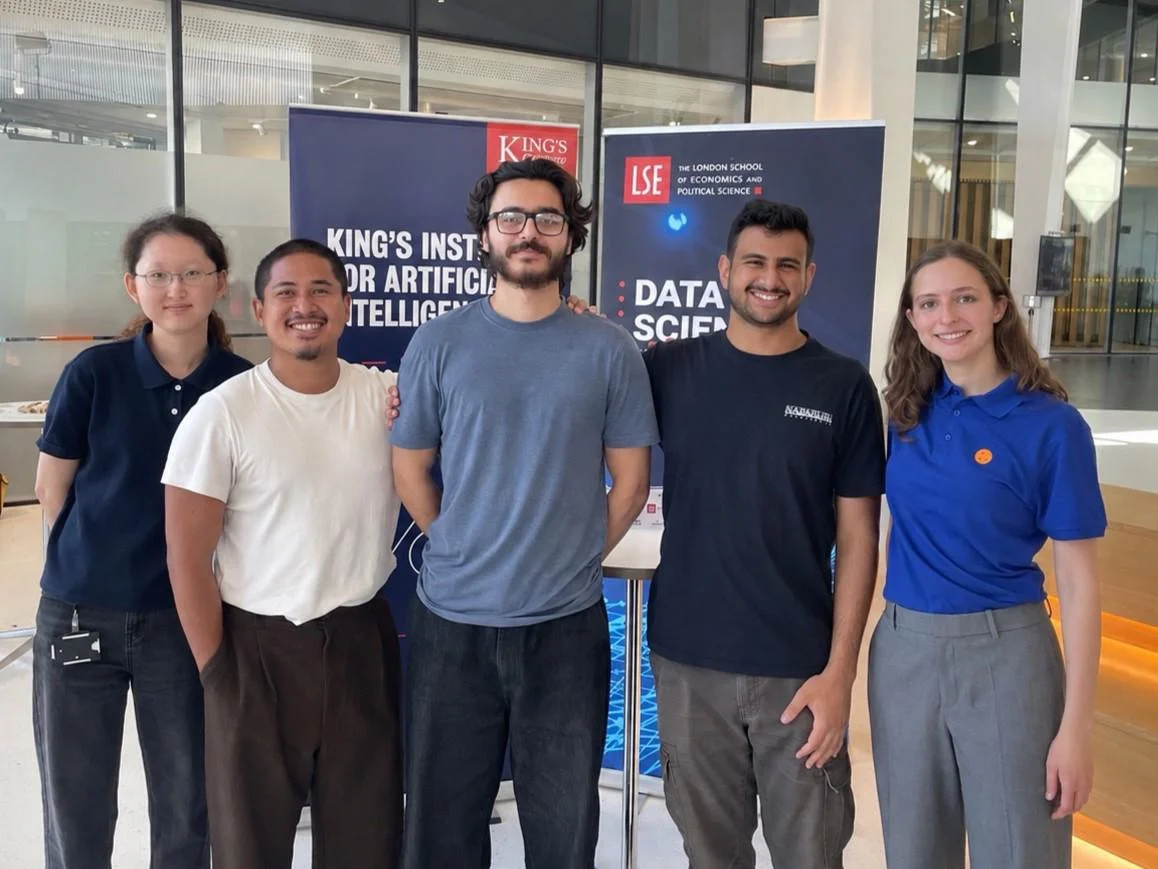
You recently took part and won at the London Data Week Hackathon! How did you find the experience and what did it involve?
Winning the London Data Week Hackathon was a really exciting experience. I first heard about the opportunity through an email from the MPA DSPP programme encouraging students to participate. The hackathon was part of London Data Week, organised by the Greater London Authority’s Data for London team, and gave participants the freedom to choose a policy issue to explore using data.
Our project focused on addressing youth unemployment across London boroughs. We developed a data-driven analysis combining geographic analysis with policy simulations to explore the potential impact of different education and employment interventions.
The course on Data Science for Public Policy in particular gave me the skills to access, clean, analyse and visualise the data, and then communicate our findings clearly to a wider audience. Working under the time pressure of a hackathon really showed me how valuable those practical skills are when tackling a real-world policy problem.
What have been some of your takeaways in your studies so far? Any highlights from your first year?
One of my biggest takeaways has been that good public policy requires much more than technical ability. Data and quantitative methods are extremely powerful, but they have to be combined with institutional understanding, careful policy design and an awareness of the people ultimately affected by a decision.
A highlight of my first year has been being able to work across disciplines and learn alongside people with very different professional, academic and international backgrounds. I have also really enjoyed developing my technical skills and seeing how methods that can seem quite theoretical in the classroom can be applied to genuine policy challenges.
What are you looking forward to most in your second year?
I am especially looking forward to the Capstone project, as it will be a chance to apply the skills I have developed so far to a substantial real-world policy challenge. I am also looking forward to having more flexibility to take courses across different departments at LSE and explore subjects that complement my interests in economics, data and public policy.
What is the best thing about being a SPP student?
One of the things I have appreciated most is being taught by people who are not only experts in their fields academically, but who also have significant experience as practitioners. A lot of my professors have worked directly in government, international organisations and other policy settings, so the teaching often goes beyond theory.
Who would you recommend the programme to?
I would recommend the programme to people who enjoy working across disciplines. You do not have to see yourself purely as a data scientist, economist or traditional policy practitioner. The value of the programme is precisely in bringing these areas together. I would also recommend it to people who are curious, comfortable being challenged and interested in learning from an international cohort.
What advice would you give to anyone who is considering studying the MPA DSPP?
I would say not to be intimidated by the interdisciplinary nature of the programme, or worry if you do not already have an academic or professional background in every one of its core components. The MPA DSPP brings together economics, political science, quantitative methods and data science, and people arrive with very different strengths. I came into the programme with no prior background in political science, but the programme is designed for people with different strengths, so I think the most important thing is being willing to learn outside your existing area of expertise and from the people around you. I would also encourage students to make the most of opportunities beyond the classroom, whether through projects, competitions or events across LSE.
What are your hopes or plans for your future after graduation?
After graduation, I hope to work in a role where I can use economics and data science to support better public decision-making. This may sound vague… and that is by design! One of the things I value about the MPA DSPP is that it has exposed me to a wide range of policy areas and career paths, so I am still open-minded about exactly where that might lead me.
What I do know is that, in the longer term, I am particularly interested in contributing to data-informed policymaking in Oman. Issues such as economic diversification, healthcare access, labour-market reform all require strong evidence and careful policy design, and I would like to play a part in addressing them. Ultimately, I hope to build a career where data is not simply used to describe problems, but to help governments design more effective and equitable solutions.
What is your favourite thing about living and studying in London?
London is an exciting place to study public policy because there are always talks, events and people working on major political and economic issues happening around you. I am also a big football fan, so living in London has been particularly enjoyable for that. I have been able to watch everything from Champions League to non-league football!
Can you describe your SPP experience so far in 3 words?
Collaborative. Practical. Diverse.