


Why is religion important when talking about climate change?
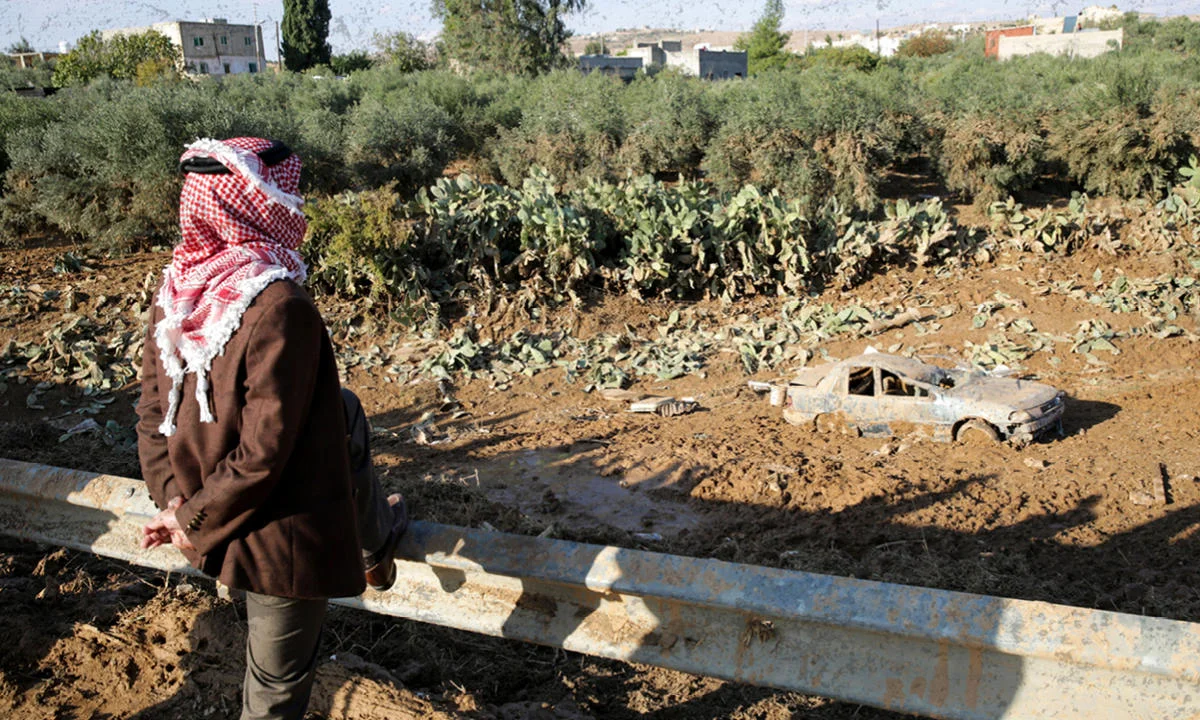
When 21 people, mostly children, were killed by a flash flood near the Dead Sea in Jordan in 2018, shockwaves went through the country. The disastrous consequences of climate change had become all too real for the people of Jordan.
The impact of climate change on people’s lives is something researcher Dr Hanane Benadi from the Religion and Global Society Unit at LSE hears about frequently in her fieldwork in the Middle East, where she was recently involved in a project exploring climate change and interfaith relations.
After speaking to people on the ground in Egypt and Jordan, Dr Benadi discovered a disjuncture between the language used by the Global North about the climate crisis and the conversations emerging in the Middle East around people’s lived experience of the issue.
People in the West are developing the narrative around climate change ... and the rest of the world is left out.
Climate narratives must be global: why language matters in the Middle East
“People in the West are developing the narrative around climate change and how we think about it and respond to it – and the rest of the world is left out,” she says. “They're expected to be receivers of that knowledge rather than producers of it. We have to bring these people, who are at the forefront of the problem, into the conversation.”
Part of involving people in the conversation is framing it in a way that is relatable, and which connects with their experiences and understandings of climate and weather. “When you only talk about climate change in scientific and technical terms, people don't see how that’s connected with them. They don’t see themselves as the addressees of that narrative. Instead, they feel it’s something the government must deal with,” says Dr Benadi.
She describes how terms like “carbon footprint” are completely inaccessible to the average person in places like Egypt and Jordan (and can be to many people in places like the UK too). “The majority of people have never been on a plane, they don’t eat meat every day, they don’t own cars, so terms like ‘carbon footprint’ are meaningless …But when you start talking about changes in the weather and the heatwaves and flooding and rain, it becomes a concern to them. They can identify with what’s happening.”
People need a moral reason or purpose to make those changes, not just economic or scientific information.
People care about the moral meanings of extreme weather
One of the prime ways people make sense of the weather is through religion, continues Dr Benadi. For example, in Christianity and Islam, rain is very much connected to faith because it’s seen as either a blessing or a curse from God.
Dr Benadi shares a conversation she had with a Christian preacher in Egypt during her fieldwork, where he said his congregation would often come to him and ask what God was trying to say through the extreme weather they had been experiencing. They wondered if God was upset with them or trying to punish them.
“People accept the scientific part of climate change, but they also care about the moral meaning of it. I think it’s important not to downplay that but to give it space in the conversation around climate change as you’re asking people to change the way they live in the world and the choices they make,” says Dr Benadi. “People need a moral reason or purpose to make those changes, not just economic or scientific information.”
Using the example of talking to people about preserving wildlife and biodiversity, Dr Benadi explains how using language around “animal rights” would not be as effective in many cases as talking about caring for God’s creations.
Why research in the Middle East matters for the UK
With 75 per cent of the world’s population identifying as religious or professing to belong to a faith, how religion impacts people’s understandings of climate change is certainly not something which should be overlooked.
And these findings are not just relevant to the Middle East. According to the 2021 census, approximately 60 per cent of Londoners said they were religious, highlighting the fact that religion is still very much a part of people’s identity in the UK.
Kristian Noll works with Dr Benadi in the Religion and Global Society Unit. He looks at Dr Benadi’s findings and asks why these matter in the West and how they can be useful when hosting discussions about climate change in the UK.
“If religion is shaping how people make sense of the climate crisis in Egypt and Jordan, then it will impact how Egyptian and Jordanian communities, and other communities, based in London may also think about it.
“The political context that we operate in is very secular and there’s a hesitancy to engage in that religious debate. So, my work has been to communicate why we should be paying attention to these narratives and why they matter in the UK,” he says.
If you look at what levers you have to pull to address climate change, we're talking about land management, buildings, finance. Faith communities have a lot of capital within those sectors that's not often talked about.
The link between climate change and religion can’t be ignored
Part of Kristian’s role involves working with policymakers in the UK and providing them with the tools and appropriate language to speak to communities in their constituencies about climate problems and how they can be addressed.
“If you look at what levers you have to pull to address climate change, we're talking about land management, buildings, finance. Faith communities have a lot of capital within those sectors that's not often talked about. For example, faith communities own around 10 per cent of the world’s total financial investment,” he says.
Statistics suggest faith communities own about 8 per cent of habitable land and 5 per cent of commercial forests as well as millions of buildings around the world including churches, mosques, synagogues and temples. In addition, almost half of the world’s educational institutions are owned or operated by faith communities, which has an impact on climate change education. Faith-based charities and international organisations are often heavily involved with disaster relief and are often on the frontlines of the climate crisis in terms of responding to natural disasters.
When all this is considered, it’s very hard to ignore the link between climate and religion. “There are a lot of connections that are quite explicit and go beyond just how people perceive things,” says Kristian. “These are often not picked up on because religion is often seen as a private matter, whereas for a lot of places in the world it's actually pretty public.”
As the climate crisis gets more and more urgent, thinking about how different people understand and engage with climate and weather is crucial for creating solutions and changing behaviour.
Dr Hanane Benadi and Kristian Noll were speaking to Charlotte Kelloway, Senior Media Manager at LSE.
Subscribe to LSE Research for the World
The London School of Economics and Political Science (LSE) is a world-leading university, specialising in social sciences and ranked top in the UK by The Times and Sunday Times Good University Guide 2026. Based in the heart of London, we are a global community of people and ideas that transform the world.
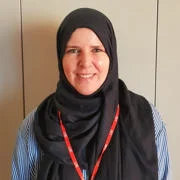
Kristian Noll

Related content
Why climate action is the economic opportunity we must seize
Can belief in God increase cooperation between different religious groups?
Why are climate action cases rising?
