


Recommended reading on the future of world trade

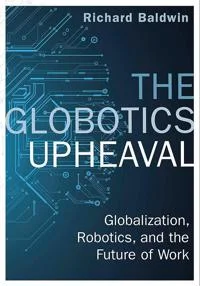
The Globotics Upheaval: globalization, robotics, and the future of work. Richard Baldwin (Oxford University Press, 2020)
Richard Baldwin argues that the recent upheaval in trade focuses on services rather than goods, as AI, remote work and outsourcing allow white-collar jobs to be performed from anywhere. This is an excellent book for understanding how digital technology will create a new wave of globalisation, disrupting professions once considered protected from foreign competition. There is a review of the book by an LSE colleague on LSE Review of Books.
Recommended by Dr Jose P Vasquez, Assistant Professor of Managerial Economics and Strategy, Department of Management at LSE.
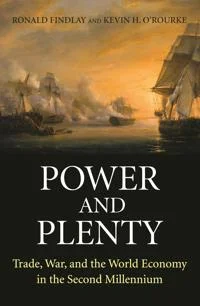
Power and Plenty: trade, war, and the world economy in the second millennium. Ronald Findlay and Kevin H O’Rourke (Princeton University Press, 2007)
Power and Plenty by Ronald Findlay and Kevin O’Rourke is a must-read for anyone interested in the global economy. A magisterial account of the last thousand years of international trade. It highlights how technologies and geopolitics shape trade patterns and reminds us that war and trade have always been interlinked.
Recommended by Dr Thomas Sampson, Associate Professor of Economics, Department of Economics at LSE.

World Politics: interests, interactions, institutions (Sixth Edition). Jeffry A Frieden, David A Lake, Kenneth A Schultz, Susan D Hyde and Stephanie J Rickard (W. W. Norton & Company, 2026)
This revised edition of World Politics provides a compelling analytical framework to analyse and understand international trade and finance, as well as other global events.
Recommended by Professor Stephanie Rickard, Professor of Political Economy, Department of Government at LSE.

Why Politicians Lie About Trade … and what you need to know about it. Dmitry Grozoubinski (Canbury Press, 2024)
Why Politicians Lie About Trade, written by former trade negotiator Dmitry Grozoubinski, explains the reality of politics in international trade, and trade negotiations. It makes for a nice complement to academic texts like World Politics.
Recommended by Professor Stephanie Rickard, Professor of Political Economy, Department of Government at LSE.
Australian trade negotiator Dmitry Grozoubinski’s prescient Why Politicians Lie About Trade, published before the April 2025 “liberation day” Trump tariffs, observed the tendency of politicians to misrepresent the realities of international trade. Contrary to how they were framed, the tariffs are mainly a tax on Americans, with knock-on effects among US trading partners. The book demystifies negotiations, agreements, technical terminology, institutional processes, and the role of World Trade Organization rules, all delivered with wry humour.
Recommended by Professor David Luke, Professor in Practice and strategic director at the Firoz Lalji Institute for Africa at LSE.
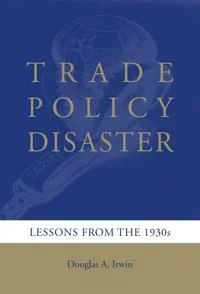
Trade Policy Disaster: lessons from the 1930s. Douglas A Irwin (MIT Press, 2011)
The Trump administration has increased US tariffs to levels not seen since the Great Depression of the 1930s. But what role did tariffs play in the Great Depression? In Trade Policy Disaster, Doug Irwin provides a succinct account of what happened the last time America chose protectionism over free trade.
Recommended by Dr Thomas Sampson, Associate Professor of Economics, Department of Economics at LSE.
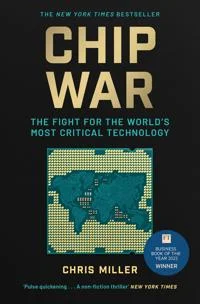
Chip War: the fight for the world's most critical technology. Chris Miller (Simon & Schuster, 2023)
Much of the current trade tensions between the US and China have computer chips at their centre. This book illuminates the importance of computer chips for today's modern economy, and the ongoing battle to control this industry.
Recommended by Professor Stephanie Rickard, Professor of Political Economy, Department of Government at LSE.
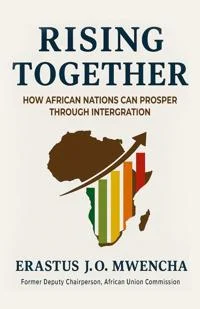
Rising Together: how African nations can prosper through integration. Erastus J O Mwencha (Action Wealth Publishing, 2025)
Rising Together by Kenyan economist Erastus Mwencha draws on his five decades at the frontline of African trade policy and economic diplomacy. He proposes “12 pragmatic steps” for African prosperity, including economic integration, more production and trade in high-value goods and services, and redistribution, including through better nutrition, healthcare and education. Mwencha calls for a return to the ambition of the pan-African leaders who sought to establish Africa as an equal partner in global affairs through systematic continental economic integration.
Recommended by Professor David Luke, Professor in Practice and strategic director at the Firoz Lalji Institute for Africa.
Trade and Investment in Africa: a research companion. Benedict Okey Oramah and Oyeyemi Kale (editors) (Routledge, 2026)
Edited by the former president of the African Export-Import Bank and its current research director and chief economist, Trade and Investment in Africa is a valuable literature review and research guide. Its preface by Jeffery Sachs offers an illuminating perspective. He points to China and India, asserting that large populations integrating into the global economy through trade, investment, industrialisation and innovation can achieve profound transformation. But African unity will be essential to the continent’s economic rise.
Recommended by Professor David Luke, Professor in Practice and strategic director at the Firoz Lalji Institute for Africa.

Six Faces of Globalization: who wins, who loses, and why it matters. Anthea Roberts and Nicolas Lamp (Harvard University Press, 2021)
Anthea Roberts and Nicolas Lamp’s Six Faces of Globalization engages in an in-depth analysis of six narratives of globalisation, uncovering their origins, constituent elements and far-reaching implications. In the authors' own words, “Each narrative distils a certain set of experiences and tells part of the story; none tells the whole”. As the trade law system is confronted by new challenges and pressures, this book is as topical today as it was when it was originally published.
Recommended by Dr Giulia Claudia Leonelli, Assistant Professor of Law, LSE Law School.
Straight Talk on Trade: ideas for a sane world economy. Dani Rodrik (Princeton University Press, 2017)
Dani Rodrik argues that countries must strike a balance between openness to trade and globalisation, and maintaining domestic social protections. The book clearly explains why and how globalisation creates winners and losers, and how trade policy can be redesigned to benefit more segments of society than it currently does.
Recommended by Dr Jose P Vasquez, Assistant Professor of Managerial Economics and Strategy, Department of Management at LSE.
Subscribe to LSE Research for the World
The London School of Economics and Political Science (LSE) is a world-leading university, specialising in social sciences and ranked top in the UK by The Times and Sunday Times Good University Guide 2026. Based in the heart of London, we are a global community of people and ideas that transform the world.
LSE Review of Books

Related content
Recommended reading on AI and technology

Recommended reads for understanding the economy today
Recommended reads on race equity
