


What makes a good judge – and why it matters now
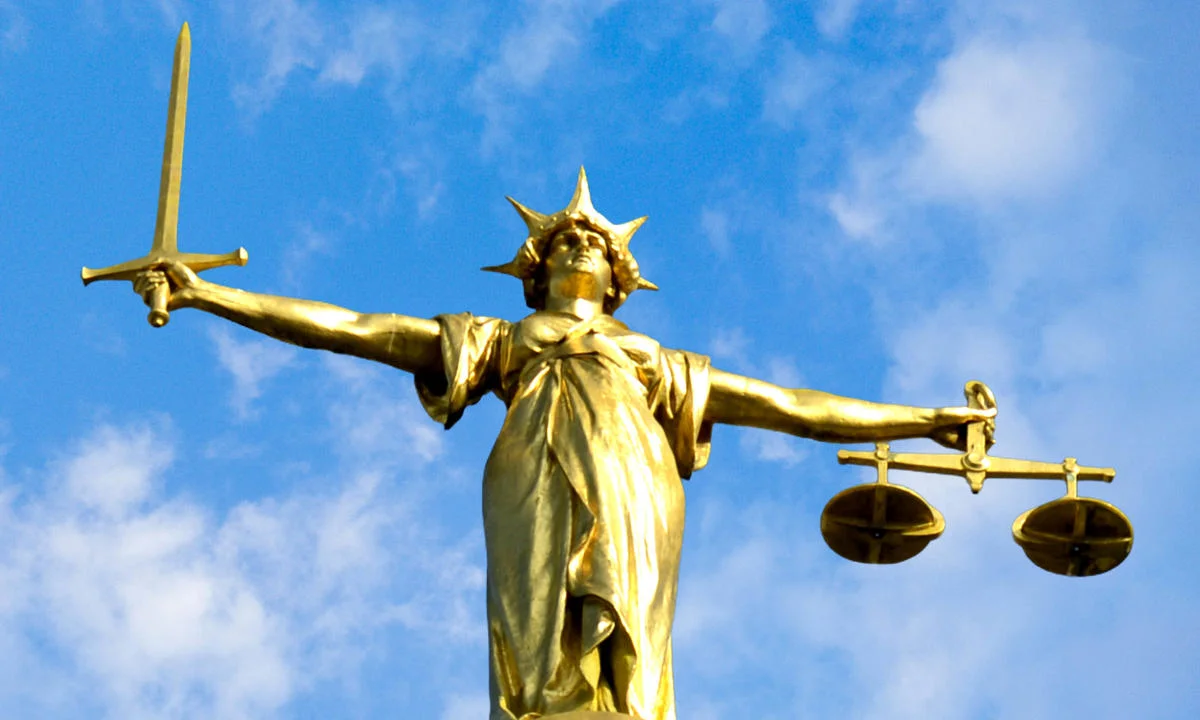
Justice has never run fast, but when the UK Government put forward proposals to restrict jury trials in late 2025 as a “necessary” means to reduce the backlog of cases, the subsequent debate put a spotlight on the role of judges in the justice system. While questions continue as to the exact future role juries will play in the UK, any reduction of their use will inevitably shift even greater responsibility onto judges. This makes the craft of judging – based on the fundamental values of independence, impartiality and integrity – more crucial than ever.
These values are at the heart of Professor Sir Ross Cranston’s new book, Judging. A Professor of Law at LSE Law School, Professor Cranston draws on his extensive experience as a judge of the High Court sitting mainly in the Administrative Court and the Commercial Court as well as his time as an MP (1997-2005) and as Solicitor General for England and Wales (1998-2001). The book provides an accessible account of what it means to be a judge in the senior courts but also when dealing with smaller claims.
When Professor Cranston returned to LSE after stepping down from the bench, he realised there was a striking gap in legal scholarship: “No one really writes about judging as what ordinary judges do,” he says. “The focus tends to be on the apex court – in our case the UK Supreme Court and, to a lesser extent, the Court of Appeal – and on theoretical literature about legal systems, but nothing about what judges do on a day-to-day basis.”

The values behind judging
For the first part of the book, Professor Cranston’s focus is on the core values that underpin judicial work – those contained in the conventions of judging, codes of practice, structural protections for judges and behavioural standards for judges when both in and out of court. Part Two examines the legal and policy framework for judging, judgecraft, and social science explanations of judging, concluding with another value that is vital for a socially just judiciary: fidelity to law.
“Judicial responsibility is built around these values of independence, integrity and impartiality,” explains Professor Cranston. “You've probably seen criticisms of judges as activists, but judges have to follow the conventions of judging. They aren’t completely confined but there are boundaries within which they have to operate, so fidelity to law, which I cover towards the end of the book, is also key. There is discretion in terms of how to decide cases but ultimately judges have to apply the law.”
How does Professor Cranston respond to concerns that judges may appear partial when unpopular decisions make headlines? “I try to explain how, for example in statutory interpretation, there are particular rules for judges as to how they form their judgment,” he says. “You have to look at what the words say, and you then examine their context, and the purpose or the intention behind them. There are similar rules in making common law decisions where you have to follow precedent.”
His book draws examples from across the common law world, including India, Australia, Canada and the United States. In the US, ideological divisions in judicial appointments – as well as pressures on judges from politicians and social media – raise concerns about judicial independence. “What’s happening in the United States is worrying,” he notes. “Appointments are now made on a political basis, which creates ideological cleavages, and that’s coupled with political pressure on judges to reach decisions favourable to the executive.”
There is a debate about how activist judges should be, but ... there is also strong community support for an independent judiciary that doesn't operate in an ideological way.
Political activism and judgecraft
Despite the obvious importance of independence and impartiality, external pressure has grown recently for judges to take more ideological stances on issues. When asked if his concern extends to the UK’s judiciary, Professor Cranston’s response is robust. “There are these pressures,” he says, pointing as an illustration to the prominent Daily Mail front page of 2016, which attacked the judges who had ruled that the UK Government needed Parliament’s approval to trigger Article 50 for Brexit. “But as that campaign highlighted, there are social and cultural protections in our system which enable the judges to push back against that sort of tendency.
“These trends are worrying, however, in the sense that they place enormous pressure on the judges themselves. But our protections have so far proved sufficiently strong, and we don't have the situation as in America where judges are appointed for ideological reasons. There is a debate about how activist judges should be, but our judges act with self-restraint, and there is also strong community support for an independent judiciary that doesn't operate in an ideological way.”

The reality and rewards of judicial work
Social media adds yet another layer of scrutiny, amplifying criticism and fuelling public debate about judicial decisions. Yet despite these external pressures, Professor Cranston argues that the greater challenge lies elsewhere: in the sheer volume of cases and resource constraints. “The major issue at present is the huge pressure of the caseload,” he explains. Delays in criminal and civil courts have forced procedural changes, such as deciding more cases on paper rather than through oral hearings. These shifts demand new skills – what Professor Cranston calls “judgecraft’’.
While government intervention may be needed to address the pressure of an increasing caseload – an issue that Professor Cranston stresses is not just limited to the UK judiciary – there are changes that the judiciary could implement to help here.
"There are ways we could be working more efficiently,” he explains. “In the High Court, we really do provide a Rolls-Royce service, and that's good. But one quite frequent complaint is that our written judgments have become far too long – and there's no doubt they have, for a number of reasons – issues are more complicated, and counsel can raise a whole range of points which all have to be addressed.” The case for shorter judgments needs support from appellate courts.
Nevertheless, he argues, judges can adapt to an extent to the pressure by giving extempore – or oral – judgments, writing concise explanations for paper decisions, and strengthening intuitive decision-making by remaining open to contrary arguments. “Writing things down is a good discipline,” he says. “It forces you to test whether your reasoning really holds.”
Despite the workload and scrutiny, Professor Cranston is quick to highlight the benefits of life on the bench. “Intellectually, judging is very challenging,” he reflects. “You’re constantly having to make decisions, addressing problems and so on.” Compared to private practice, judging offers a different kind of freedom: “You don’t have the pressure of clients who want you to win – you’re deciding the case impartially.”
While some judges will develop a career that focuses them on one particular area of the law, for others the role remains particularly wide-ranging. “You develop expertise on the job as it were,” says Professor Cranston. “This is one of the great benefits of our system, because generalist judges don’t become battle-hardened. You’re not always doing crime, for example – you can take on other areas, and that keeps you mentally fresh.”
Judging in the future: challenges and opportunities
While the way that the UK Government’s proposals for the criminal justice system will evolve remains to be seen, one thing is evident: the significant role of judges – and the values that underpin their work – is only going to grow. Although the additional workload this creates will need to be addressed, Professor Cranston is clear: despite the pressures, judging offers deep rewards, requiring problem-solving and a deeper understanding of society – qualities that, in his view, combine to make it “a job with a lot of personal and social satisfaction’’.
Professor Sir Ross Cranston was speaking to Jess Winterstein, Deputy Head of Media Relations at LSE.
Subscribe to LSE Research for the World

The London School of Economics and Political Science (LSE) is a world-leading university, specialising in social sciences and ranked top in the UK by The Times and Sunday Times Good University Guide 2026. Based in the heart of London, we are a global community of people and ideas that transform the world.

Related content
How can offender rehabilitation help address prison overcrowding?
Music on trial: challenging the use of rap as evidence in criminal courts

Why it’s time to allow researchers access to jury deliberations
