

Kelly Patricia Villa Tejada
MSc Behavioural Science
2025/26
Learn more about Kelly's background and experience as an AKO scholarship holder in the Department of Psychological and Behavioural Science (PBS).
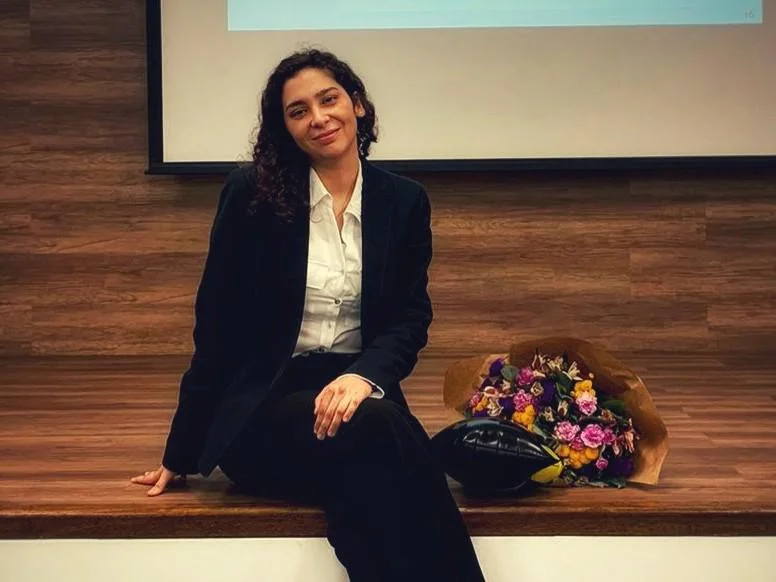
The AKO scholarship provided the financial support that made this degree possible, but its impact went far beyond that. Knowing that an organisation such as the AKO Foundation believed in my potential feels like a vote of confidence. Their generosity has reinforced my sense of purpose and motivated me to keep working towards creating the meaningful impact they foster.
Hi Kelly! Could you tell us about your background and what brought you to this point in your studies?
I am originally from Lima, Peru, where I first studied law. During my studies and later in practice, I came to recognise the law’s potential to drive societal change, but I also became aware of a recurring blind spot: too often, lawyers assume that once a rule is in place, compliance will follow simply because “it is the law”, overlooking whether people understand it, perceive it as legitimate or have the means to comply. To address this gap, I pursued a second degree in psychology. Rather than simply adding another qualification, my goal was to complement my legal training with a deeper understanding of how people think and make decisions. This interdisciplinary perspective shaped the work I went on to do. I had the opportunity to collaborate with decision-makers and research teams to understand why people fail to comply with regulations, examine what makes people susceptible to misinformation and how to counter it, and analyse patterns across legal decisions to improve legal practice. Across these projects, I kept coming back to the same question: how can evidence about human behaviour help us design better policies and institutions? That question ultimately led me to the MSc in Behavioural Science at LSE.
Why was LSE, and this MSc, the right choice for you?
My interest in LSE began long before I applied. When I was an undergraduate, I was fortunate to learn from LSE graduates who returned to Peru as professors. I could see how their training shaped their ability to work across disciplines, challenge conventional thinking, and apply rigorous social science to real-world problems. That approach resonated with me, and LSE stayed in my mind over the years. By the time I decided to pursue a master's, I was looking for a programme that could build on the interdisciplinary background I had developed and strengthen it with methodological tools to translate behavioural evidence into effective interventions. The MSc in Behavioural Science stood out to me because it draws on the intersection of different disciplines to obtain behavioural insights that can inform better decision-making. It was a perfect match.
What has being an AKO Scholar meant for you?
The AKO scholarship provided the financial support that made this degree possible, but its impact went far beyond that. Knowing that an organisation such as the AKO Foundation believed in my potential feels like a vote of confidence. Their generosity has reinforced my sense of purpose and motivated me to keep working towards creating the meaningful impact they foster. By removing the financial burden of pursuing my degree at LSE, the scholarship also gifted me the opportunity to be truly present throughout this experience. I could focus wholeheartedly on my studies, dedicate time to my research, pursue ambitious projects, connect with an inspiring community, and embrace every opportunity for personal and professional growth LSE had to offer. To me, that is the legacy of the AKO Foundation. It not only funds education; it enables scholars to make the most of this transformational experience, so they can, in turn, create lasting impact in society.
When you look back on this year, what are you most proud of?
I am most proud of the way I challenged myself to make the most of every module and assignment. Whenever I had a choice, I took the path most aligned with my goals, values and the kind of work I seek to pursue in the future, even when it meant taking on something more ambitious or riskier. I asked myself: if I am here, in this environment, with access to these opportunities, why not aim higher? That mindset pushed me to take on challenges that allowed me to grow both academically and personally. My dissertation is a good example of this. I designed and tested an intervention to reduce electoral misinformation during an ongoing electoral campaign. This meant delving into the evidence on effective debunking techniques and then developing original materials for the intervention. The results were very encouraging: The intervention not only improved participants’ ability to distinguish between true and false information, but also had positive effects on broader attitudes, including trust in electoral institutions.
What are you hoping to do next, and how has your time at LSE helped prepare you for this?
Going forward, I am particularly interested in roles where I can use evidence about human behaviour to help design, evaluate and improve interventions, policies and institutional practices. This builds naturally on the work I was already pursuing before coming to LSE, but the MSc has allowed me to develop a stronger understanding of the mechanisms behind behavioural change and methodological skills to find out what actually works in practice. I am now much better equipped to pursue this kind of work with greater rigour.
What is one piece of advice you would pass on to future AKO Scholars?
First, apply. I am speaking to anyone haunted by imposter syndrome: chances are you already have what it takes to compete for the scholarship. So, give yourself the chance. Regardless of the outcome, the process is incredibly introspective and will give you new insights for your journey. Second, make the most of LSE resources. There are so many. Do a little research so you can access the tools, programmes and support you need early on. But also, be selective; pursuing too many activities can be overwhelming rather than helpful. Third, build a community. Make time to engage with your cohort. In my programme, we had field trips and discussion sessions, which helped us bond beyond the classroom. Your classmates are brilliant; having the chance to pick their brains will benefit you tremendously and lead to long-term friendships. Lastly, use office hours. Professors are generous with their time and available to offer guidance in academic and career inquiries.