

James Oppong-Ankomah
MSc Social and Cultural Psychology
2025/26
Learn more about James's background and experience as an AKO scholarship holder in the Department of Psychological and Behavioural Science (PBS).
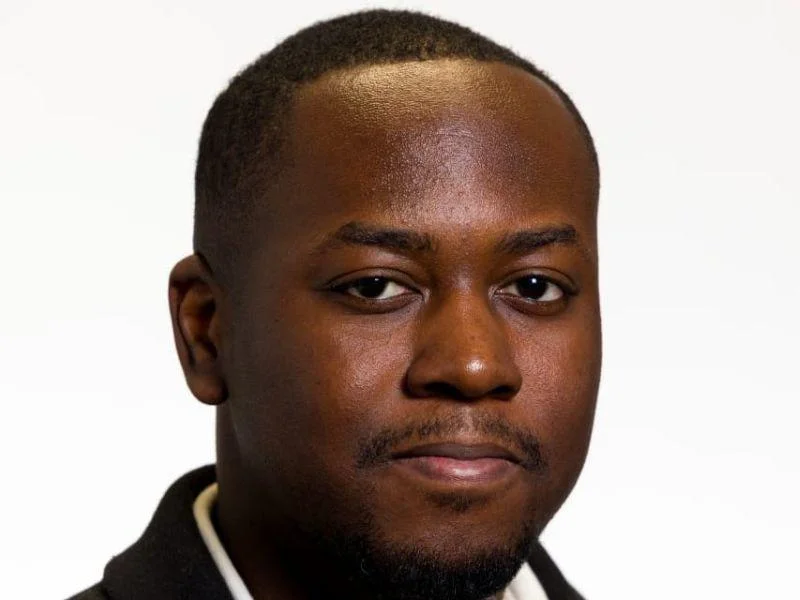
LSE brings together people from incredibly diverse backgrounds, and some of the most valuable learning can happen through conversations with people whose perspectives differ from your own.
Hi James! We’d like to get to know you a little. Can you tell us a bit about your background and your path to LSE?
My academic journey has been shaped by a longstanding interest in understanding how people make sense of themselves as well as the world around and within them. Through my psychology background, I became increasingly interested in the ways that social attitudes, beliefs, and collective understandings influence experiences and opportunities. This led me to develop a particular interest in social and political issues and in how psychological research can contribute to addressing inequalities.
My path to LSE was therefore a natural progression of these interests. I was drawn to the opportunity to study psychology within an institution that encourages rigorous research while also engaging with some of the most pressing social issues facing societies today.
What appealed to you most about LSE and your MSc programme?
What appealed to me most about LSE was the combination of academic excellence, its interdisciplinary environment and its engagement with real-world social and political issues. I was particularly drawn to the opportunity to study psychology in an environment where psychological questions can be considered alongside broader contexts.
My MSc programme in Social and Cultural Psychology also offered the opportunity to deepen my understanding of research rudiments and develop the skills necessary to investigate complex social phenomena. I was especially interested in being able to explore questions about binding social rules and expressions that we take for granted. As much as we are our own individuals, we owe so much of who we are to who we are not (if that makes sense).
LSE felt like the right environment for me because it would allow me to develop as a researcher while challenging me to think critically about how psychological knowledge can be applied beyond academia.
If you could say one thing to the people who make the AKO Master’s Scholarship possible, what would it be?
I would say thank you for investing in myself and several others, giving us the opportunity to pursue an education that we would otherwise struggle to access. The scholarship is more than financial support - it represents a belief in the potential of students to contribute meaningfully to their communities and to the wider world.
The support of the AKO Foundation allowed me to focus more fully on my studies and personal development at LSE. I am deeply grateful for the opportunity and for the confidence that the scholarship represents. I hope to honour that investment by using the knowledge and skills I gain to contribute to advocacy and positive social change.
What experience in PBS has had the greatest influence on your learning or outlook?
The social events were great. Don’t get me wrong, I enjoyed events that were academic and career-tailored as well, but there’s something invaluable to be taken from a good, honest, in-person conversation. There are so many perspectives I was exposed to which would not have been necessitated by a strictly formal setting. This has strengthened my belief in the importance of research that takes people's lived experiences seriously while also examining the broader social forces that shape them.
What impact do you hope your LSE experience will have on your future plans?
Hopefully I want to continue developing my research interests in social psychology and related areas, particularly around social representations, prejudice, discrimination, and the experiences of marginalised groups.
I want my work to help generate evidence that can challenge harmful assumptions, improve understanding of marginalised communities, and support more informed approaches to addressing social inequalities. I am particularly interested in investigating queer phobia suffered by already vulnerable populations.
Essentially, I hope that the knowledge, research skills, and perspective I've gained at LSE will enable me to contribute not only to academic discussions, but also to efforts to create more inclusive and equitable societies.
What advice would you give to new AKO Scholars about making the most of their time at LSE?
My advice would be to embrace every opportunity to learn, connect and step outside your comfort zone. LSE brings together people from incredibly diverse backgrounds, and some of the most valuable learning can happen through conversations with people whose perspectives differ from your own. I will say, some conversations may leave you bewildered, frustrated even, but in my experience those are some of the ones you tend to learn the most from.
I would also encourage new AKO Scholars to make the most of the wider LSE community rather than focusing exclusively on their academic work. Attend events, engage with different ideas, build relationships and take advantage of opportunities that may initially seem outside your immediate interests. There are also a ton of cool clubs you should check out - I loved the music-centred ones!
Most importantly, I would encourage them to remember that they belong here and to never let anyone tell them different. You deserve to be here and you’ve got this.