

Rewiring the state and the future civil service: Dame Antonia Romeo delivers the Cabinet Secretary’s Annual Lecture at LSE
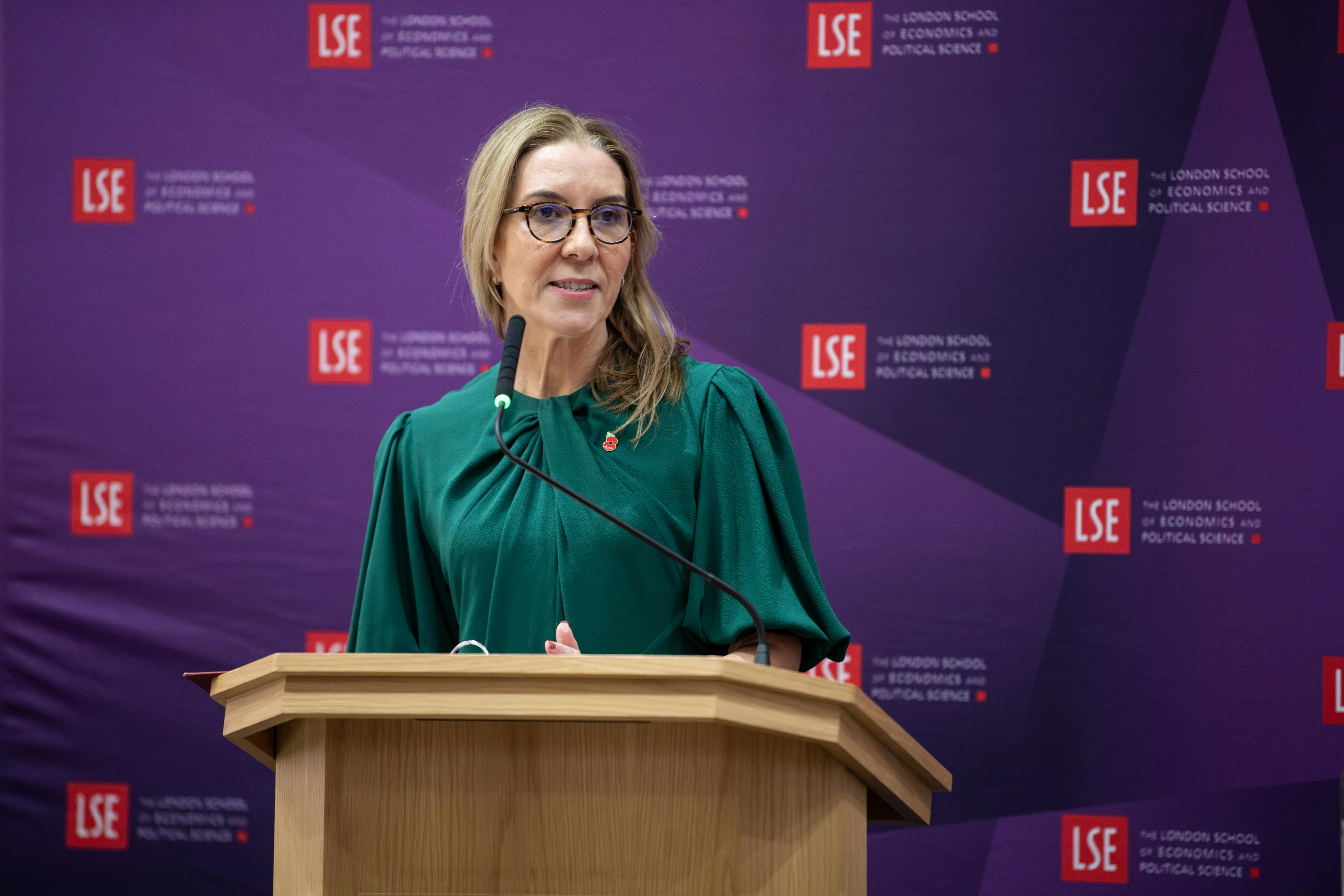
Cabinet Secretary and Head of the Civil Service, Dame Antonia Romeo, visited the School this week to deliver the Cabinet Secretary’s Annual Lecture, Rewiring the state and the future civil service.
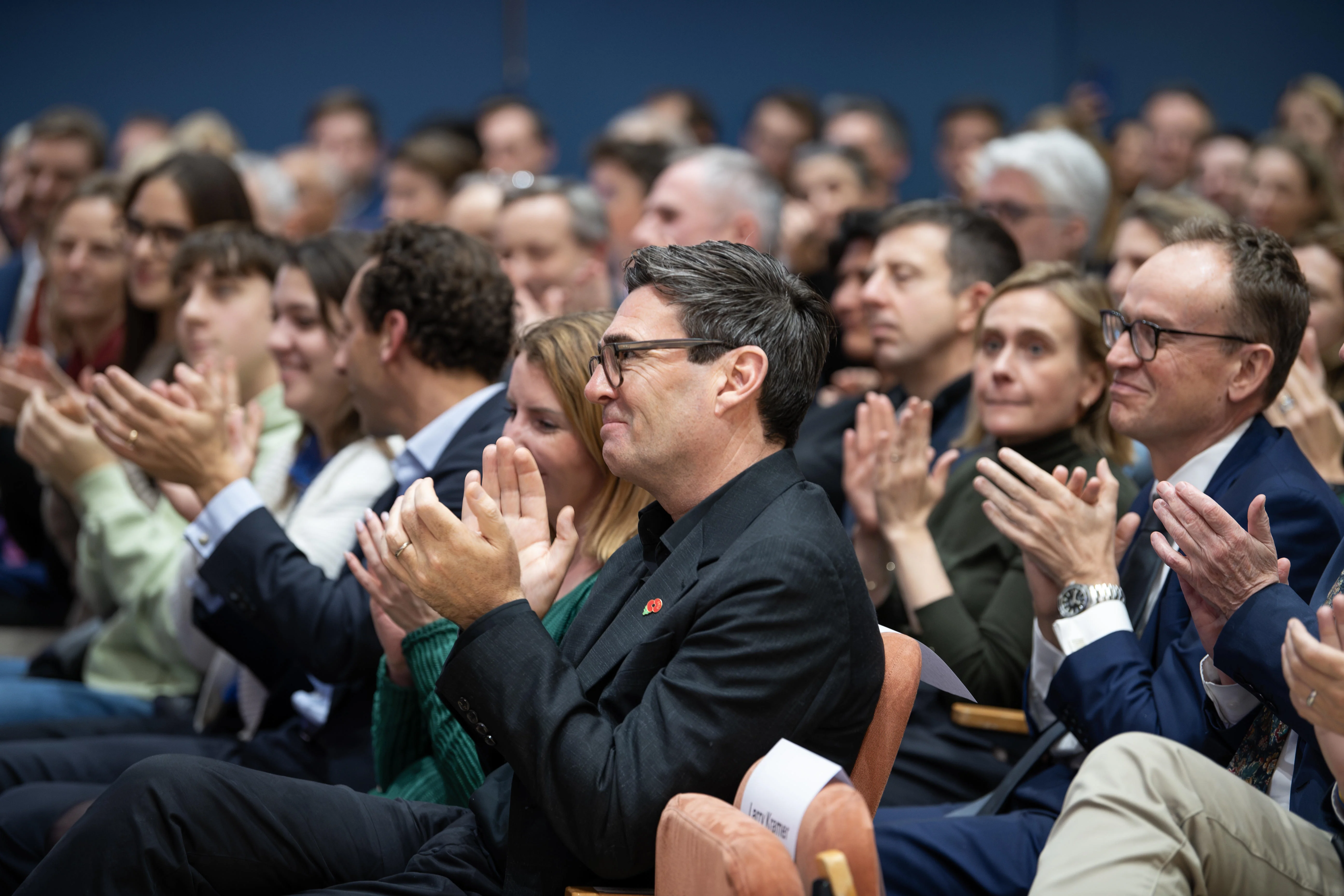
The event was chaired by LSE President and Vice Chancellor Professor Larry Kramer, and was attended by Prime Minister Andy Burnham and First Secretary of State Louise Haigh.
An alumna of the School, Dame Antonia reflected on her time at LSE, where she studied for an MSc in Economics before joining the Civil Service. She described LSE as a "magnet for top students globally", and her degree as "a fantastic basis for a career in public policy, describing the way humans and organisations behave under different incentives and conditions."
A “burning platform” for change
The lecture opened with an assessment of the pressures facing the state, with the Cabinet Secretary arguing that the Civil Service now stands on what was described as a “burning platform”.
“We are in a time of extraordinary global uncertainty. Global tensions are the new normal, technology is radically changing everything, and trust in institutions is on the wane.” Dame Romeo identified five converging imperatives: the advancement of AI, new global threats facing the UK, declining public trust in institutions, the need to improve public service productivity, and the Prime Minister’s “devolution by default” agenda.
“Each of these five factors alone that I’ve described would be an imperative for change, but the unprecedented convergence of all five has brought us to a unique and historic moment requiring major transformation in the Service”, she stressed, adding “we are no longer unequivocally considered to be the best in the world”, pointing to a 2024 Blavatnik Index in which the UK was “joint 6th overall. I want us to be first”.
AI and the future of public services
Artificial intelligence was presented as both the defining opportunity and a major risk for the state. The Cabinet Secretary said that “AI presents us with the defining opportunities and challenges of this generation, and therefore also for the state”, and that its use “will radically rewrite all of the domains in which the Civil Service operates”.
“AI potentially represents the most profound paradigm shift in modern governance. For the first time in history, the efficacy of public service no longer has to be artificially constrained by the limits of human bandwidth”, she argued, adding that “AI can help us make public services more human”. Examples from across government included HMRC, which “protected and recovered £10 billion in tax revenue during the last tax year alone, by applying machine learning”, and MHCLG’s use of AI to “help halve processing times for routine householder applications”.
The Cabinet Secretary also acknowledged significant risks, from “economic disruption, to misinformation, or loss of agentic control”, and stressed that “ethical and transparent deployment of AI with appropriate guardrails must be our overriding principle”.
Changing the system, not just behaviour
The Cabinet Secretary argued that familiar criticisms of the Civil Service are products of the system rather than of individuals. She acknowledged that the Service is seen as “tame and risk-averse”, “reactive, not strategic” and “siloed, not working across boundaries”, adding: “I am determined to fix them.”
“These behaviours are a function of the system”, she said. “They are set in what is incentivised, what is rewarded, and what is expected. So if we want to change behaviours, it follows that we need to change the system.”
Devolution and a leaner, more strategic Civil Service
The lecture placed the Prime Minister’s “devolution by default” agenda at the heart of the Future Civil Service. Dame Romeo said it would require “a fundamental rewiring of the way the state works, and a major shift in powers and resources from Westminster to communities and regions”.
“It represents a radical change to central government - genuinely devolving power, not just delegating it”, she explained. “It will mean a more streamlined and strategic Civil Service, focused on the things that can only be done at a national level and working collaboratively with regional and local government to build capability and deliver outcomes.”
Looking ahead, the Cabinet Secretary pointed to the Review into the Organisation, Performance and Transformation of the Permanent Civil Service, which will report to the Prime Minister before next summer and “will confront the tough questions”. These include “what AI and devolution by default mean for Civil Service boundaries, and accountability” and “how to build the capabilities needed for the future, at national, regional and local level”. Concluding the lecture, Dame Romeo was clear about the scale of the ambition: “This is not a time for incremental change . . . We have to do it, we can do it, and we will do it.”
A full transcript of Rewiring the state and the future civil service is available here.