

LSE academics awarded European Research Council Starting Grants
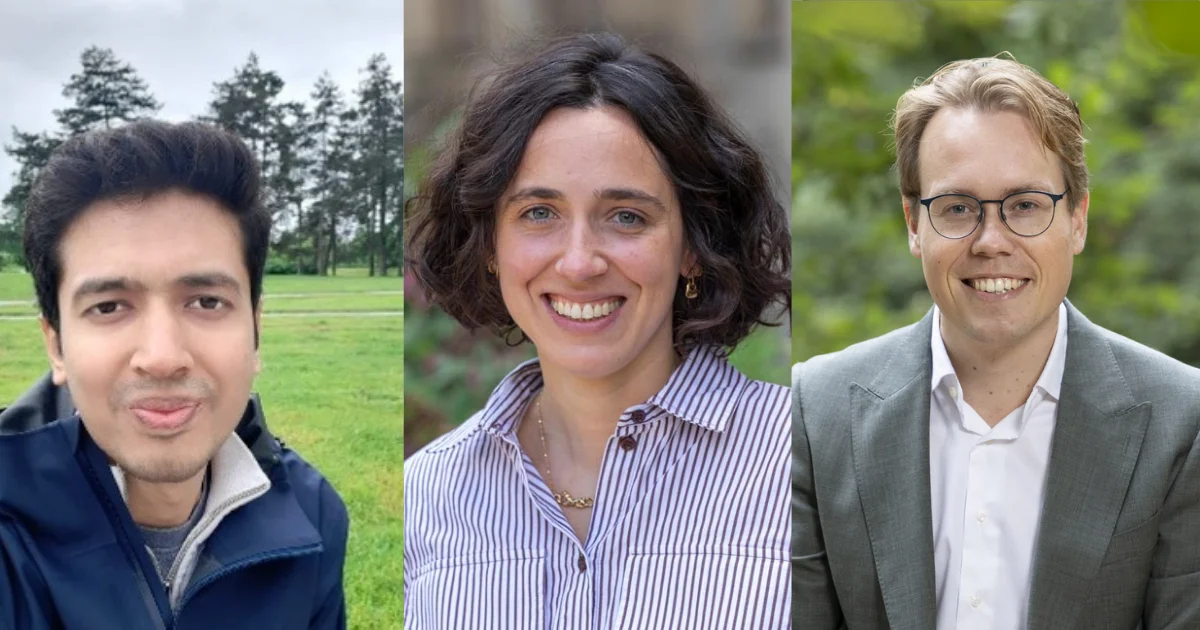
European Research Council Starting Grants have been awarded to Assistant Professor Mobarak Hossain from the Department of Social Policy, Assistant Professor Paula Onuchic from the Department of Economics and Assistant Professor Maarten De Ridder, also from the Department of Economics.
The highly competitive grants are awarded to researchers to help develop ambitious ideas, build their own teams and establish their independence at a pivotal stage in their careers. In 2026 Starting Grants worth a total of €705 million will go to 421 early-career researchers across Europe.
Assistant Professor Mobarak Hossain of the Department of Social Policy will receive his award for his project: Life Chances and Education Systems in LMICs.
Assistant Professor Mobarak Hossain commented: “I am very pleased to have received this ERC grant to work on how and to what extent education systems influence educational and employment outcomes.”
Project summary: Across low- and middle-income countries (LMICs), enrolment has expanded and gender gaps have narrowed. Yet, substantial inequalities remain in learning and labour market outcomes.
This project argues that institutions are the missing link: the same years of schooling lead to different skills and returns depending on how education systems are organised. It will build a harmonised longitudinal dataset of education system institutions across LMICs spanning over four decades. These institutional data will be combined with individual-level survey data and derived measures of inequality and intergenerational mobility. Reform episodes will be used to test whether institutional change narrows or widens inequalities in outcomes. A subnational study of Bangladesh will then examine how a common national system produces divergent opportunity structures.
By combining cross-national breadth with subnational depth, the project aims to show how education systems influence inequality across the life course and when reforms can equalise rather than reproduce social (dis)advantage.
Assistant Professor Paula Onuchic from the Department of Economics will receive her award for her project: Building Reputation in Groups: Attribution Biases and Strategic Responses.
Assistant Professor Paula Onuchic commented: “I am thrilled to have the ERC’s support to continue pursuing my theoretical and experimental research agenda on reputation formation in collective settings. Over the next five years, I look forward to deepening our understanding of how reputational dynamics shape incentives, power, and collaboration within groups.”
Project summary: Most major economic, political, and creative outcomes arise from collective decisions rather than individual actions. Committees, research teams, firms, and artistic collaborations all produce outcomes that observers must interpret when assigning credit and blame to individual participants. This proposal investigates how reputations are built within such groups – and how systematic misperceptions in this collective inference problem shape incentives, power, and efficiency.
The project combines theory and experiments to analyze how audiences’ beliefs about group decision rules influence behavior within and across teams. Part 1 develops a model of group communication in which actual versus perceived power over group decisions jointly determine reputational outcomes, effort incentives, and project selection. Part 2 tests these mechanisms experimentally, documenting systematic biases in how collective decisions are interpreted and how informal deliberation distorts formal rules. Part 3 extends the analysis to group formation, showing how reputational externalities inherent to biases in the collective inference problem can endogenously generate inefficient collaboration patterns and talent allocation.
Together, these studies build a unified theory of how reputational dynamics operate in collective environments, showing how misperceptions of power and responsibility shape real outcomes in organizations, and offering a blueprint for designing institutions that foster efficient, accountable collaboration.
Assistant Professor Maarten De Ridder from the Department of Economics will receive his award for his project: Fragile Growth: Innovation, Productivity, and the Macroeconomy.
Assistant Professor Maarten De Ridder commented: "I am delighted and very grateful to the ERC for supporting this research agenda. We understand a great deal about what drives firms to invest in innovation, but surprisingly little about what those investments actually deliver for economies as a whole. Productivity growth has slowed across advanced economies even as R&D spending has risen, and Europe in particular urgently needs to understand why. GROWTH will develop new theory and evidence on how rare, transformative innovations emerge, diffuse across firms and borders, and shape growth, inequality and the global economy. I am excited to take this work forward at LSE."
Project summary: Economic growth in advanced economies is primarily driven by productivity improvements, and productivity growth depends on technological progress arising from innovative investments by firms and governments. Yet since the mid-2000s, productivity growth has slowed sharply across advanced economies even as R&D investments have risen.
This research agenda aims to spearhead a new understanding of how innovative investments translate into economic growth and shape macroeconomic outcomes. While we know much about what drives firms' incentives to innovate, we know far less about what those innovations achieve – both for aggregate productivity and for the distribution and diffusion of economic gains.
A first theme will develop new theory and evidence on growth as "fragile" – driven by rare, transformative innovations that diffuse slowly through the economy – and use administrative micro data to estimate the relationship between innovative investments and productivity, including whether short-run shocks such as recessions permanently scar long-run growth. The second theme studies the broader macroeconomic consequences of innovation: how transformative innovations shape the distribution of wealth, how wealth taxation affects inequality, innovation and growth, and how trade and financial imbalances shape frontier innovation and the diffusion of technologies across borders.
President of the European Research Council Professor Maria Leptin said: “The creativity and ambition of this new generation of grantees are inspiring. Over 50 nationalities are represented amongst these researchers who will carry out their work across Europe. ERC Starting Grants will give them independence and support early on in their careers, needed for them to push scientific boundaries. This is the best investment we can make to further strengthen our research base and Europe’s future.”