

Countries exposed to extreme weather are more likely to receive poor credit ratings, driving up costs for climate-adaption, new study finds
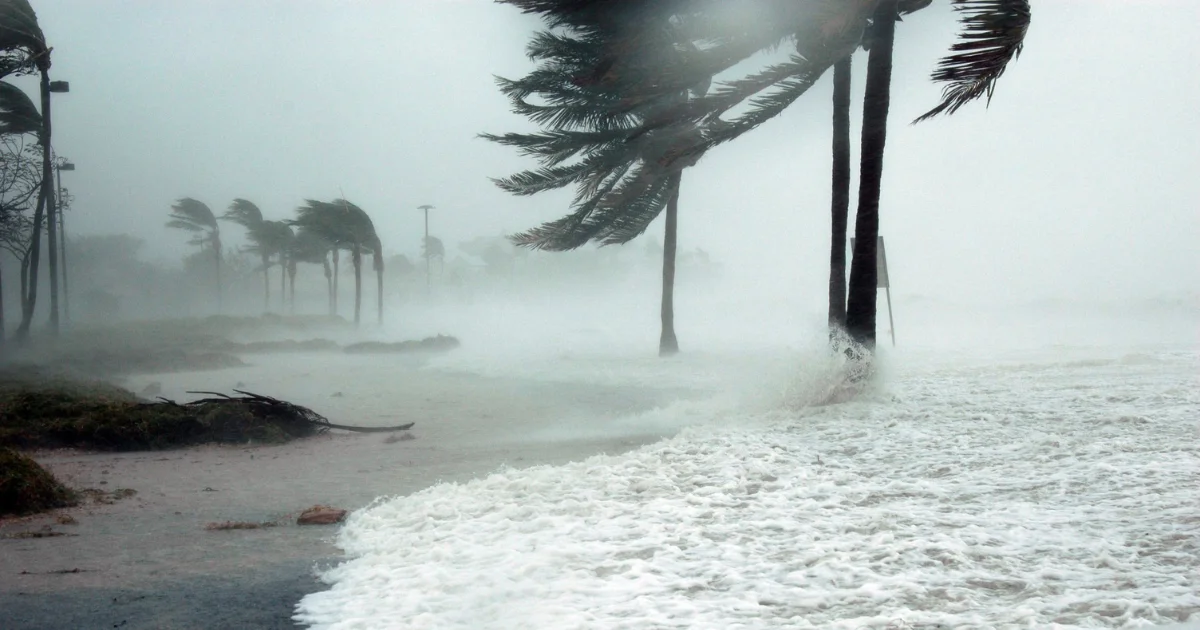
Counties most exposed to extreme weather events such as tropical cyclones are more likely to receive speculative sovereign ratings, making borrowing for climate adaption and mitigation projects harder and trapping climate-vulnerable countries in a vicious cycle.
This is the key finding in a new study from the London School of Economics and Political Science (LSE) and Stanford University published in PNAS.
Addressing climate change through mitigation and adaptation is anticipated to require more than $6 trillion in global investment annually by 2035. However, many countries face significant barriers to accessing this finance, due to low or absent credit ratings, large debt burdens and high borrowing costs.
After reviewing data on countries that have been exposed to tropical cyclones between 1980 to 2019, the researchers found these events can have significant long term economic impacts. They estimate that on average, about 20% of debt burdens in these countries are attributable to tropical cyclones.
Across the countries, GDP levels are on average 12% lower than they would have been without the effects of tropical cyclones and rising temperatures.
Small island states such as Jamaica, Barbados, and Grenada are particularly vulnerable. Due to their small land area, high population density, coastal infrastructure and exposure to sea level rise, a small island state’s entire economy can be exposed to the impacts of a single tropical cyclone. Small island states also face higher reconstruction costs and significant constraints in mobilising post-disaster financing due to their remote locations.
Among small island sovereign states, on average 32% of the public debt burden from 1980 to 2019 is attributable to tropical cyclones and GDP levels are 21% lower due to the combined impact of tropical cyclones and country-level warming.
In a separate machine-learning analysis of 181 countries, including those who have never received a credit rating, the researchers found that hotter countries are more likely to have poor credit ratings, making them appear riskier to lenders and borrowing more expensive. This is particularly the case in countries that are highly vulnerable to extreme weather, with credit risk premiums of at least one basis point in 64 countries and five basis points in highly exposed countries.
In the paper, the researchers note: “Our findings show that exposure to baseline TCs [tropical cyclones] and warming temperatures are associated with higher credit risk, which in turn affects the borrowing costs and availability of capital for many countries.
“As financing from global capital markets becomes more costly, countries are likely to become further trapped in a “vicious cycle” of debt, unable to access the upfront finance needed to reduce climate impacts in the first place. Ultimately, these results underscore the urgent need to address the growing financial costs borne by countries that have contributed least to historical emissions yet face the greatest impacts of climate change.”
Lead author Dr June Choi, who worked on the first submission of this paper as a PhD student at the Stanford Doerr School of Sustainability and is now at LSE’s Global School of Sustainability, said: “The persistent climate risk premium we attribute to countries’ exposure to tropical cyclones and warming temperatures can range up to 50 basis points in small island states. This can translate to a substantially higher cost of capital, especially on long-tenor loans.
"However, it is also important to recognize that the magnitude of these impacts is relatively small compared to investors’ overall perception of risk in emerging markets and developing economies. Unless we can address the high cost of capital in climate vulnerable countries, investing in climate mitigation and adaptation will continue adding to countries’ debt burdens.”
A pre-print of this paper was published online earlier this year.