

Award-winning LSE video series brings social science to the AI debate
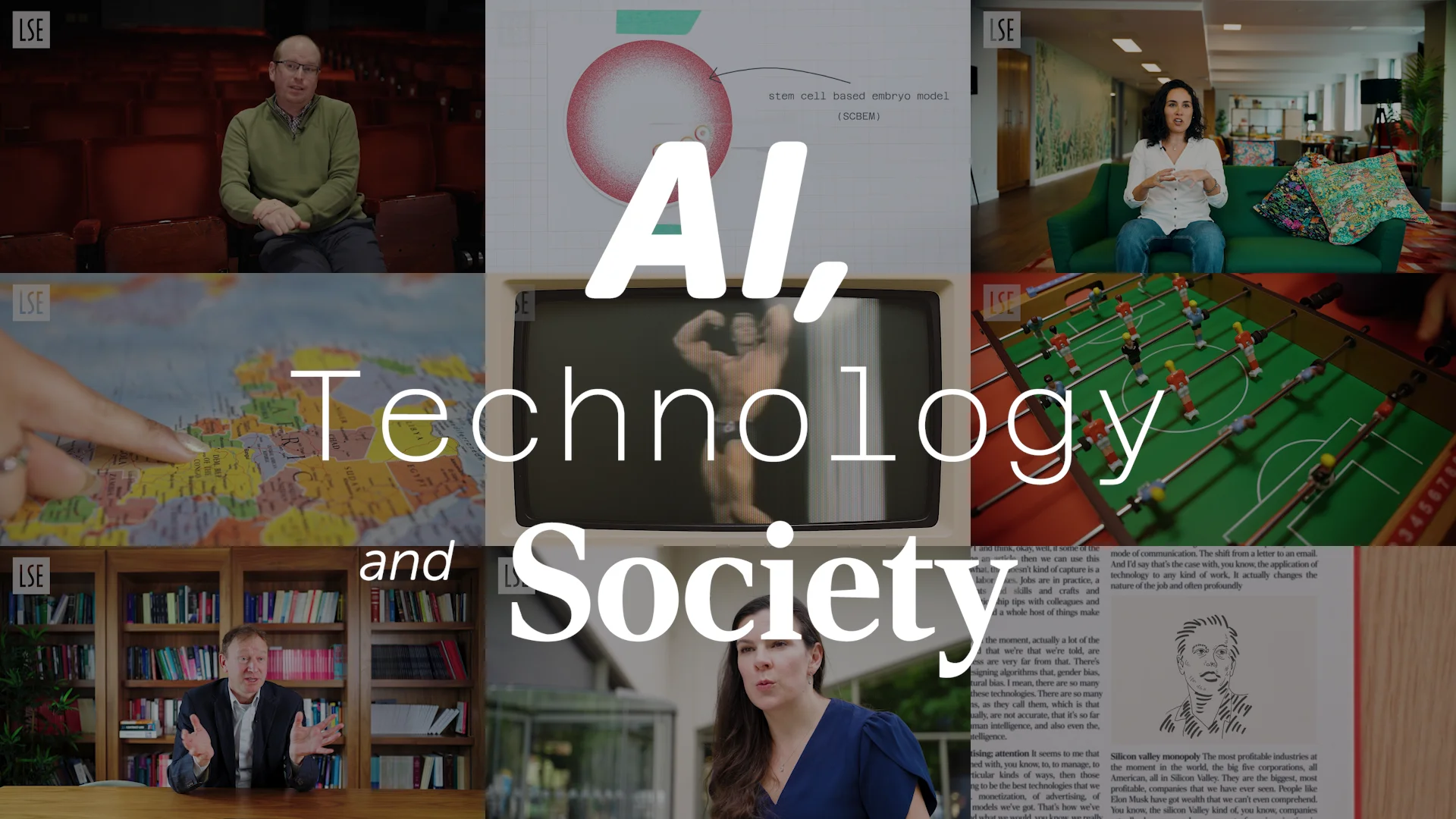
A flagship video series putting LSE and the social sciences at the heart of the global conversation about AI has been recognised with a Lovie Award for European digital excellence.
Created entirely in-house, by LSE's Film and Audio team, the series turned complex research into engaging films for wider audiences. Reaching more than 1.26 million viewers, it has become LSE's most-watched YouTube series and was awarded Bronze in the Lovie Awards’ ‘Video & Film: Series’ category.
Sophie Mallett, acting head of LSE's Film and Audio team said: "AI, Technology and Society demonstrates how LSE content can build trust, engage new audiences and extend the reach of our research, even in crowded media landscapes."
In one of the most watched films, Is AI really taking our jobs? The future of work explained, Professor Judy Wajcman cuts through the hype to separate myths about AI from reality.
In What if AI is already conscious?, Professor Jonathan Birch explores whether increasingly advanced AI could develop new forms of awareness and the profound ethical questions this raises.
The story-led films were produced for YouTube, LinkedIn and Facebook, helping LSE research reach beyond academia. To reach younger audiences on YouTube Shorts, TikTok and Instagram, the series was adapted with student voices, playful ideas and on-screen captions.
The series was at the heart of a wider campaign, featuring more than 100 blog posts attracting over 180,000 views and a public festival featuring 30 events and more than 12,700 attendees.
Sophie Mallett said: "This series shows what's possible when audience insight, creative storytelling and academic expertise come together. LSE's Film and Audio Team collaborated with its Social Media, Design and Research Communications teams to deliver high-quality work entirely in-house, showing how creative content can inform, entertain and bring academic research into wider public conversations.”