

Chandni Chopra
From programme design to systems change: Chandni Chopra's EMSBE journey
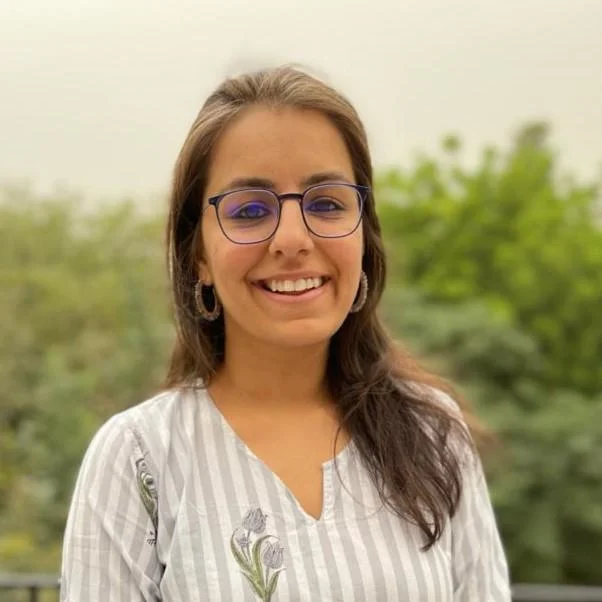
Job title: Co Founder and Chief Program Officer
Organisation: Simple Education Foundation (SEF)
Focus: Education, teacher development, systems change, non-profit leadership
Nationality: Indian
Year of graduation: 2026
Marshall Institute Scholar | Executive MSc Social Business and Entrepreneurship (EMSBE)
As Chief Program Officer at the Simple Education Foundation (SEF), Chandni Chopra leads teacher development initiatives embedded within government education systems across Delhi, Punjab and Uttarakhand. Today, SEF's work reaches more than 150,000 teachers and 4 million children, supporting its mission to develop one million highly skilled and compassionate teachers by 2030.
After more than fifteen years working in education and the non-profit sector, Chandni had grown from being a practitioner in schools to leading an organisation. But as both her role and her ambitions evolved, she realised experience alone was no longer enough. She wanted the technical knowledge, strategic thinking and academic grounding to help scale both her own leadership and her organisation's impact.
Joining the Executive MSc Social Business and Entrepreneurship as a Marshall Institute Scholar allowed her to continue leading SEF while immediately applying new ideas in practice. Along the way, the programme transformed not only how she leads an organisation, but how she thinks about creating social change.
"That's why the master's was so important, and I've got exactly what I wanted."
Why did you decide to pursue the Executive MSc Social Business and Entrepreneurship?
For Chandni, the Executive MSc offered something she couldn't find elsewhere: the opportunity to continue leading her organisation while learning alongside practitioners from around the world.
"I chose the Executive Master's course at 35, which is usually not when people get their master's. I thought it was really important for me to blend it with my practice and that's why I chose the executive style."
Gaining a lot of experience in the past 15 years, I've grown a lot in my position, grown from just a practitioner in a school setting to leading an organisation. I felt like I needed a new set of skills. I've learned everything from experience, but I felt like I was missing technical clarity, which was going to reset the organisational growth, my professional growth, make my organisation bigger and have a greater impact.
I felt like it was very important at this stage of my career to get this master's, progress my own impact and organisational impact, and to be able to add that academic rigour and expertise to the practical work that I've been doing. That's why the master's has been so important — and I've got exactly what I wanted."
How have you balanced studying alongside leading a non-profit organisation?
Studying while leading a growing organisation has been demanding, but Chandni believes remaining in practice throughout the programme has been one of its greatest strengths.
"Is it challenging? Yes, it's extremely challenging, because I'm working a full-time job and getting the master's at the same time. It's extremely challenging, but it's extremely worth it.
Because I get to apply everything I learn directly into my organisational practice, which I wouldn't have had if I took a full break. It also keeps me rooted to the world that I'm so passionate about, my social mission, and I can stay dedicated to it while developing my expertise.
It's been incredible. I got to learn from peers from all over the world. It is just incredible to have that space, as well as the professors and the content and learning, which is so new compared to my own experiences."
What did receiving a Marshall Institute Scholarship mean to you?
For Chandni, receiving a Marshall Institute Scholarship was fundamental in making her studies at LSE possible.
"The scholarship was one of the key decision factors of me being able to come to LSE. I work in a non-profit, so of course there is a financial element, having access and being able to come versus folks who work in a for-profit space.
As non-profit, growing organisations, we need technical tools and expertise. And if you are from a developing country, you might not have the financial capability to have access to such amazing courses.
I do really think that the scholarship gives me that access and being able to come here to pursue that academic learning that I wanted to do without feeling constrained or restricted to doing that."
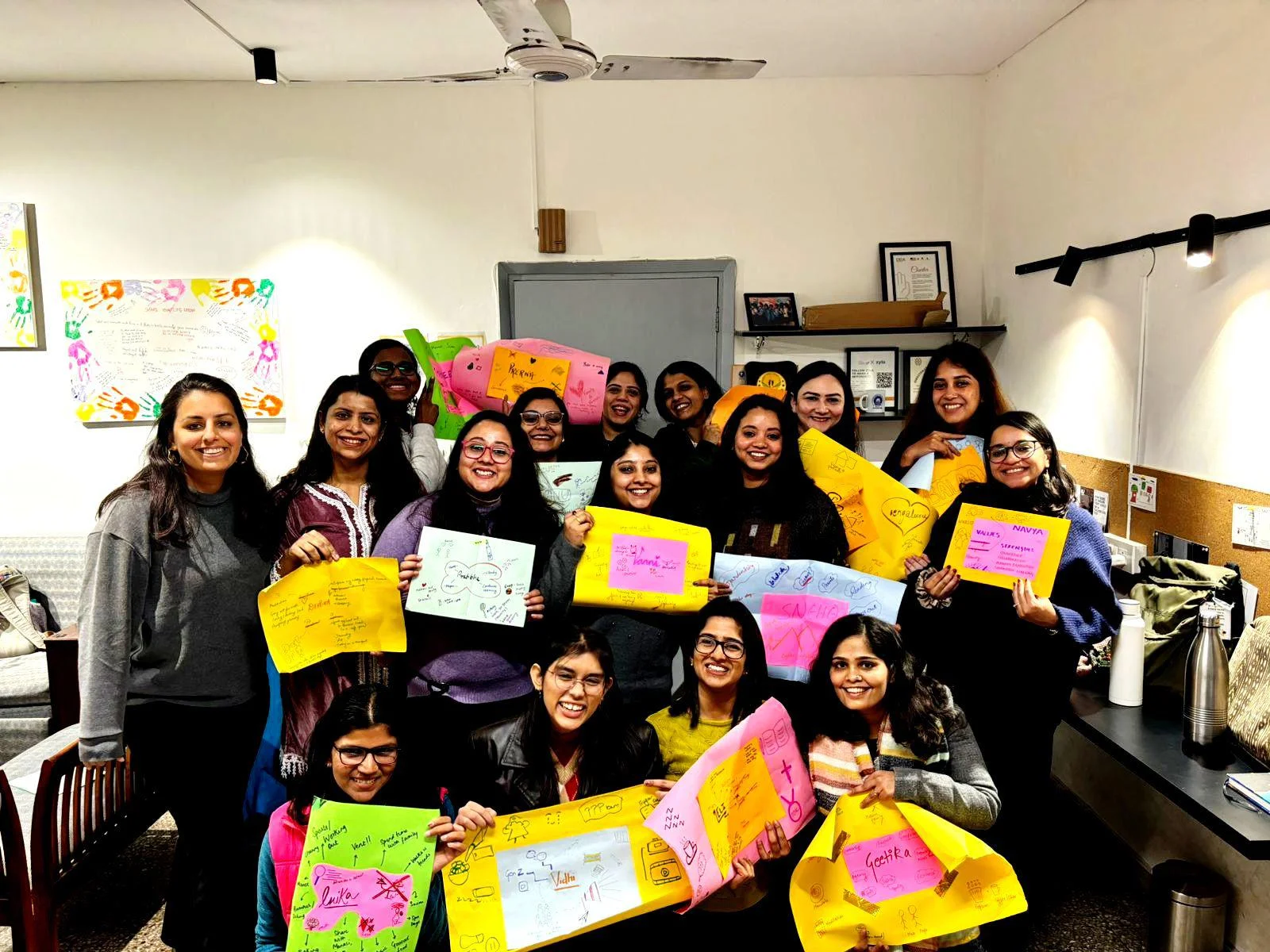
Pictured: Chandni Chopra leading a workshop on personal leadership and resilience for staff from one of the Foundation's partner organisations and the Simple Education Foundation team.
What has been the most remarkable moment during your master's?
For Chandni, the greatest transformation wasn't learning a new framework or tool. It was fundamentally changing how she thinks about social change itself.
"What's been the most remarkable for me is the shift in my own thinking. I come from a very disciplined background. My professional life has completely been focused on the non-profit sector, and my professional learning experience has also been exposure to non-profit leaders and that kind of sector.
For the first time, I got such intense interaction and started to think about how the for-profit world, the non-profit world and the government sector can come together. The people in the class also represent these different sectors.
I think, for the first time, my professional learning journey has opened up so much beyond the things that I already knew or the expertise that I already had. I've pushed my thinking about the possibilities of the non-profit sector interacting with the for-profit and government sectors, what roles they are playing, and how that redefines the economic value of our countries and systems.
My own thinking has broadened, and my own perspectives have changed. I've grown through things that challenged me, and I've accepted those things as well. I've understood them from a place of deep understanding of how these elements happen, connect and work together, which is very exciting."
Has the programme changed the way you approach leadership?
One of the biggest shifts for Chandni has been moving beyond programme delivery to thinking about the wider systems that enable lasting social change.
"I work deeply in India, and my role was always to design programmes very deeply, and I would just think that that is the benchmark of excellence. Really good quality programmes are excellent.
I didn't focus so much of my time thinking about the other factors, like finance, or marketing, or organisational health, and also what role your organisation needs to play in the ecosystem. How does your organisation need to interact with market players or the government? What does deeper collaboration look like? What are our failures that we must recognise from the non-profit ecosystem?
Those are things where I was like, 'Wow. I've never worried about that.' Or I felt like those things are important, but they're not that important. My belief was always that if you deliver good quality work, that's fine.
But there is much more to that. There is much more to just putting your head down to your good quality work. It's also about how you make these things, how you transfer those learnings, and how to move the entire ecosystem together.
That is what shifted for me. How much I focused my energy on just one thing versus thinking of the entire ecosystem of influence. It is my responsibility to think about many things at the same time."