

Professor Youngjin Yoo
About
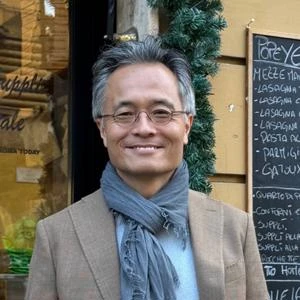
Youngjin Yoo is Professor of Information Systems and Innovation and Faculty Group Lead for the Information Systems and Innovation Faculty Research Group in the Department of Management at the London School of Economics and Political Science. He is also Academic Director of LSE Lifelong Learning Digital.
As a leading voice on digital innovation, he has published over 170 peer-reviewed articles, cited more than 33,000 times, in MIS Quarterly, Information Systems Research, Organization Science, the Academy of Management Journal, Harvard Business Review, and Communications of the ACM. His 2010 paper on layered modular architecture is the most-cited work in the field of digital innovation.
A Fellow of the Association for Information Systems, Professor Yoo serves as Senior Editor at Information Systems Research and previously at MIS Quarterly, Journal of Information Technology, Journal of the AIS, and Journal of Strategic Information Systems. He was Program Co-Chair of ICIS 2017. His research has attracted over $10 million from the US National Science Foundation, NASA, the Knight Foundation, the Walmart Foundation, and Samsung Electronics.
Beyond academia, Professor Yoo served as Chief Innovation Architect at University Hospitals Cleveland and has collaborated with Samsung Electronics, LG, Goodyear, Penske, Progressive Insurance, Key Bank, Sotera Health, Sherwin-Williams, and American Greetings. He co-founded Halo Harbour, a privacy-preserving AI platform.
Professor Yoo is member of the Information Systems and Digital Innovation Faculty Research Group.
Follow Professor Yoo on Substack.
Research
Professor Yoo studies how digital technology changes the way organizations innovate and create economic value. His research combines qualitative, quantitative, and computational methods, drawing on information systems, design, organization theory, and organizational economics.
His 2010 paper on layered modular architecture laid the foundation for the contemporary study of digital innovation and remains the most-cited work in the field. It showed how the layering of content, service, network, and device creates the conditions under which digital technologies generate unanticipated new uses.
Over three decades, his empirical work has spanned the design
practice of Frank Gehry’s architectural studio who transformed the construction
industry through his use of advanced 3D design tool; the decade-long evolution
of the WordPress platform, through computational analysis of its codebase; the
diffusion of AI across open-source communities, automotive software, and
industrial patents; the architecture of decentralized, privacy-preserving AI
systems through the Halo Harbour project; and design as an organizational
capability at leading design firms.
His current program develops the theoretical foundations of the generative economy, focusing on computational value, endogenous utility, and generative externality.
Discover more about Proefssor Yoo's research on Google Scholar.
Teaching
Engagement and impact
Professor Yoo works with governments, corporations, and policymakers to translate research on digital and AI innovation into strategy and institutional design. He currently advises leading global firms, tech startups, and governments on digital strategy, AI adoption, and computational sovereignty.
His policy consulting includes work on digital platforms for e-government with the UK Department for Business and Trade. His research has influenced corporate practice at Samsung Electronics, where he worked on digital design strategy, featured in Harvard Business Review (2015); at LG, where he consults with LG Academy and has taught digital strategy since 2018; at University Hospitals Cleveland, where he led digital transformation as Chief Innovation Architect; and at Goodyear, Penske, Progressive Insurance, Key Bank, Eaton Corporation, Sotera Health, Sherwin-Williams, and American Greetings -- the leading American firms whose digital strategy he guided through through xLab that he founded.
With support from the US Chamber of Commerce and the Walmart Foundation, he demonstrated how privacy-preserving verifiable credentials can transform labor markets through portable learning and employment records. As co-founder of Halo Harbour, he is building a privacy-preserving AI platform currently in commercialisation. In Philadelphia, with support from the Knight Foundation and the US Economic Development Administration, he founded Urban Apps & Maps Studios, a civic start-up programme for urban high-school students.
He welcomes corporate advisory, executive education, and policy consultation in digital innovation and AI strategy.
Resources
Professor Yoo’s research has produced a set of conceptual frameworks now used across information systems, innovation management, and digital strategy: layered modular architecture, digital-first strategy, digital capability maturity model, digital-first readiness assessment tools, and halo harbor digital architecture.
Books and edited volumes. Handbook of Digital Innovation (Edward Elgar, 2020), which he co-edited, is a reference collection for scholars entering the field. Writing for practitioners and policymakers. Professor Yoo writes the English-language Substack newsletter The Digital First, contributes monthly columns to Monthly Chosun and the Hunet CEO Column in Korean, and has published executive-facing articles in Harvard Business Review (on Samsung’s design transformation, 2015) and California Management Review (on human-machine designer ensembles, 2023). Executive education. His online course Digital-First Strategy, developed for LG Academy, is available on Udemy. Talks and media. Selected keynotes, interviews, and public lectures, including TEDx Philadelphia (“A City as a Computing Platform”) and NPR’s Academic Minute, are available through his YouTube channel (@yxy23yoo).
Academic profile and publications. Full CV, publication record on Google Scholar and the AIS eLibrary; working papers on SSRN. Web and social. youngjinyoo.com, LinkedIn, Twitter/X (@youngjinyoo).