

Dr Sandra Núñez undertakes new fellowship and secures two project grants
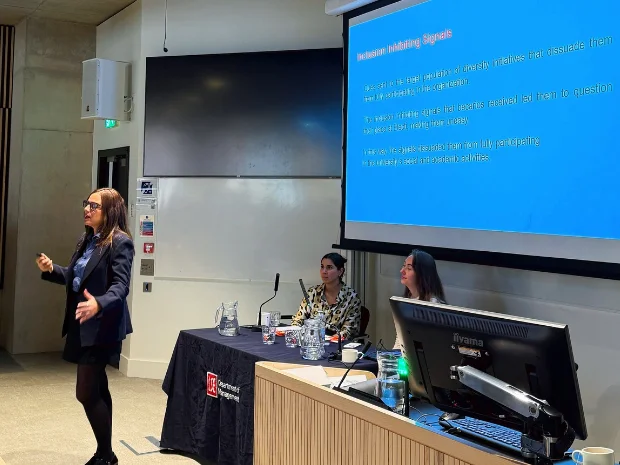
We are excited to share that Dr Sandra Núñez, Assistant Professor of Management, has been selected for the 2026/27 American Sociological Association Policy Outreach Program Fellowship, and secured funding for two of her projects: on Immigrant Entrepreneurship through the LSE-NYU joint fund and Labor Inequality through the Atlantic Equity Challenge.
Dr Núñez said, “I am committed to producing work that examines the mechanisms that perpetuate social and economic inequality and to understand what motivates the communities negatively affected by it find meaning and dignity amidst their circumstances. I am pleased that these three organisations see value in my work”.
As part of the ASA Fellowship, Dr Núñez has been paired with the Washington Center for Equitable Growth. She will receive specialised media training and develop policy briefs around issues on undocumented entrepreneurship and organizational diversity initiatives. As past of her plan, the Center will also facilitate partnerships between Dr. Nunez and actors in Capitol Hill and in the Mamdani office in New York City. She will also attend the Advocacy Day on Capitol Hill with the Consortium of Social Science Associations.
For her LSE-NYU joint fund project, “Sheltered Entrepreneurship: Rethinking Migrant Shelters as Hubs of Innovative Entrepreneurial Strategy”, Dr Núñez will continue developing her research agenda on immigrant entrepreneurship, collaborating with Dr Andrew Foley, Stern School of Business, NYU.
Finally, Dr Núñez’s ASFEE project, “Modern Slavery in Pakistan: How Workers and Their Families Live in and Strive Against Debt-Bondage” was selected as part of the third round of the Atlantic Equity Challenge (AEQ) research grant. It will aim to offer insights into the lived experiences of workers and their families struggling under the coerced labour of debt-bondage in Pakistan and was selected on its potential to generate valuable insights into alternatives and solutions that reduce inequality alongside the important work involved in understanding its causes and consequences.