

2026 Winter Term Week 9

Welcome to the last Newsletter of this academic year. We hope you have had a good term so far and are enjoying the first signs of Spring. In this edition, following the launch of her new book 'Harmony in Differences', Dr Catherine Xiang discusses the diplomacy of seating and what the recent Xi–Starmer meeting reveals about politeness. We have a new alumni section, and the Spotlight will be on Language Centre alumna Areen Taher.
Bring a little laughter to the Huddle with your best joke to share on April Fools' Day, Wednesday 1st April. We will provide the chocolate - it's nearly Easter after all!
Hop to it! 🐰🐣
Helen Mayer
Language Community and Communications Manager

Key Dates and Events
Careers Drop-ins with Dr Alex Free 📚
Last drop-in this Friday 20/03/26, 2-5pm: The Little Huddle
Language Centre students on campus
- After this you are welcome to book appointments with Alex directly using the CareerHub platform or contact him via email.
Friday Social Special - with Pizza! 🗣️🍕
27/3/26 from 4pm: The Huddle
Language Centre students on campus
Language Community Volunteer End of Year celebration 🗣️
Wednesday 25/03/26, 3-4pm: Hall-Carpenter Room, SAW.3.02
Language Community Volunteers
It's no Joke - April Fools' Day 🐰🍫
Wednesday 01/04/26, All day, The Huddle
Language Centre students on campus
GO LSE: Preparation for Outward Study Abroad in China 📚
Wednesday 06/05/26, 3-5pm: The Chinese Embassy, 50 Portland Place, London, W1B 1NQ
1st and 2nd year Language Centre students potentially studying at Fudan University
Language Centre End of Year Celebration 🗣️
June - date to be confirmed
Language Centre students on campus
LSE Sports Day 🏃♂️➡️
Mid-June: date to be confirmed
All LSE Students
Ongoing
Bitesize Speaking, Tandem Learning 📚
LSE Language Community
All LSE Students
- Volunteer for the Language Centre: would you like to volunteer for the LSE Language Community? If you are on campus next year, you can apply to become a volunteer leading Conversation Circles or Bitesize Speaking sessions - past volunteers have found this to be a very rewarding experience and a great way to meet a diverse group of students.
- Year Abroad Content Creators: We welcome content from students on their year abroad about their experiences in their host countries, such as this one about a typical day in Shanghai made by Somtolise Elumogo, BSc Ir and Chinese. Send us a reel for a £25 Amazon voucher or become an LSE Content Creator (see below).
- LSE Student Content Creator Roles: this is a paid role with LSE Student Marketing - you will be able to create content for the Language Centre and/or more general content for LSE. Be sure to apply next year - in the meantime here is some info.
- Casual Content Creators: we welcome content from students for the Language Centre's Instagram account; interview a fellow student, make a reel about your LSE experience or anything you wish - we offer £25 Amazon vouchers for any content we can use!


Sun Yat-sen University’s 2026 International Summer Programs is pleased to offer one complimentary participation slot for a student from LSE. The nominated student may choose any program of interest and will only need to cover international airfare, visa, and insurance, while tuition and accommodation during the program will be fully covered by our university.
The 2026 Summer Programs feature more than ten programs centered on five major themes: cutting-edge technology, health China, cultural exchange, green future, and smart society. These programs aim to provide students with a summer learning experience that combines academic depth with rich cultural immersion.
For example, the School of Foreign Languages will offer the program “2026 Society, Language, and Arts,” which includes courses on Chinese language, history, calligraphy, traditional opera, fine arts, poetry, philosophy, and martial arts.
For more detailed information about the programs, please visit their website.
How to apply: students should send their CV and personal statements directly to Yang Yuanhui. For the email subject and file names, it would be helpful to follow this format: Name – University – Programme of Interest (e.g., David – LSE – 2026 Society, Language, and Arts).”

Features
The Diplomacy of Seating: What the Xi–Starmer Meeting Reveals About Politeness
Seating Is Communication
During the United Kingdom Prime Minister’s recent visit to China, much attention focused on the political and economic outcomes of the trip. But an interesting detail emerged from a private one-to-one meeting between President Xi Jinping and Prime Minister Sir Keir Starmer.
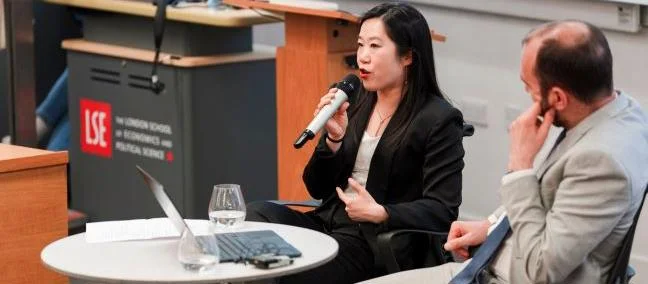
I was recently invited to attend a closed-door debriefing organised by the China–Britain Business Council (CBBC), where a small group of participants heard reflections on the visit. During the discussion, the UK Ambassador to China, Sir Peter Wilson, drew attention to something many observers might easily have missed: the symbolic significance of the seating arrangement during the leaders’ meeting.
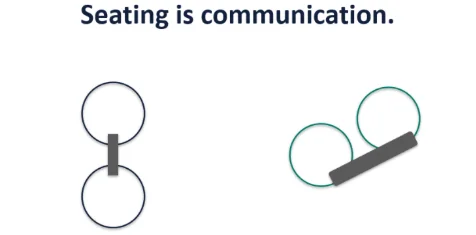
Rather than sitting directly opposite each other across a table — a layout that is not uncommon — the two leaders were seated at a slight angle. This positioned them side by side rather than face to face, subtly signalling cooperation rather than confrontation.
To many people, seating might appear to be a minor logistical detail. But in China, it is rarely accidental.
In high-context cultures, seating is communication. Where someone sits can signal hierarchy, recognition, respect and relational balance. These signals often communicate respect before a single word is spoken.
Different Cultural Logics of Politeness
This example reflects a broader insight from intercultural communication research: politeness does not function in the same way across cultures.
In many Western societies, politeness often emphasises protecting individual autonomy. People signal respect by avoiding imposition and maintaining personal space.
In Chinese culture, however, politeness is more closely linked to relational harmony and hierarchical awareness. Respect is demonstrated through recognising status, maintaining balance in relationships, and showing sensitivity to context.
A small but revealing linguistic example concerns job titles. In Chinese, someone whose official title is 副主任 (fù zhǔrèn, deputy director) would normally be introduced with the full title in formal settings. Yet when addressing that person directly in conversation, it is common to drop the word “deputy” and simply call them “主任 (Director)”.
This is not an error. It is a form of respectful address that linguistically elevates the other person’s status. However, if the actual director is present, the word “deputy” is usually reinstated, because the hierarchy must be clearly acknowledged and the face of both the deputy and the director must be protected.
The “Letter of Two Sorries”
Another well-known diplomatic example illustrates how even something as simple as an apology can carry different meanings across cultures.
In 2001, a U.S. Navy surveillance aircraft collided with a Chinese fighter jet near Hainan Island. The Chinese pilot was killed, and the U.S. plane made an emergency landing at a Chinese military base. The American crew were detained while both governments negotiated how to resolve the crisis.
China expected a formal apology. The United States argued that the collision was an accident, not something for which it could accept blame.
The diplomatic breakthrough came in what became known as “the letter of two sorries.” In the letter, the United States stated that it was “very sorry” for the loss of the Chinese pilot and “very sorry” that its aircraft had entered Chinese airspace during an emergency landing. Importantly, however, the letter did not formally apologise for causing the accident.
Yet when the message was communicated in Chinese, the expression of “sorry” was strategically rendered in a way that read much closer to an apology. This careful translation allowed the Chinese side to present the statement domestically as an apology, while the U.S. side could still maintain that it had expressed regret rather than accepted responsibility.
In other words, translation itself became a diplomatic tool. The wording allowed both governments to preserve political dignity while moving the negotiations forward.
Why This Matters Today
These examples remind us that politeness is not simply about manners. It is about how relationships are managed through language, symbols and context.
Understanding this logic is increasingly important in a world where diplomacy, business and education all operate across cultures.
These ideas form the foundation of my new book, Harmony in Differences: Understanding the Chinese Perspective of Politeness, which explores how politeness functions in Chinese communication — from everyday interaction to international business and diplomacy.
Sometimes the most important messages in communication are not spoken directly.
They are signalled quietly — even in something as simple as where people sit.

The book can be purchased here.
Dr Catherine Xiang
East Asian Languages Coordinator
The Language Centre research internship is specifically for students coming home from their year abroad and takes place in London each September. We created it because work experience is valuable, but it can be hard to find internships while also moving back from your year abroad. So we offer our own opportunity that is tailored to suit our incoming Year 4 students.
It is a four-week, paid internship in which participants work as research assistants. Applications are invited in April, and applicants complete a form outlining their areas of interest. These forms are the basis for creating research teams, and over the summer, these teams identify data to analyse in September. Then during the internship, teams work 9.30 - 5.30 Monday to Friday conducting analysis supervised by myself, and exploring how AI tools can help them.
Over the years, we have had a number of studies published as a result of the internship. The most recent was published just last week and can be seen here. If conducting research, or doing an internship in a research capacity seem interesting, then please apply when the call goes out.
Dr Neil McLean
Director
Help shape the LSE experience and bring about meaningful change.
You still have time to take the UGS or the NSS. These important surveys are still live; UGS until 5 April and NSS until 30 April. Year 1, 2, and 3 students will have received information on the Undergraduate Survey (UGS) and Year 4 students on the National Student Survey (NSS).
Tell us what we do well and what we need to do better! You may even win £500.
You can find details on both surveys are here.

Alumni
Calling all LSE alumni: The LSE Alumni Association needs you!
Nominations for Global Alumni Board members and Regional Liaison Committee officers now open. Deadline Tuesday 24 March.
Could you be an LSE and Alumni advocate? More info at: Nominations open for Global Alumni Board and Regional Liaison Committee - LSE
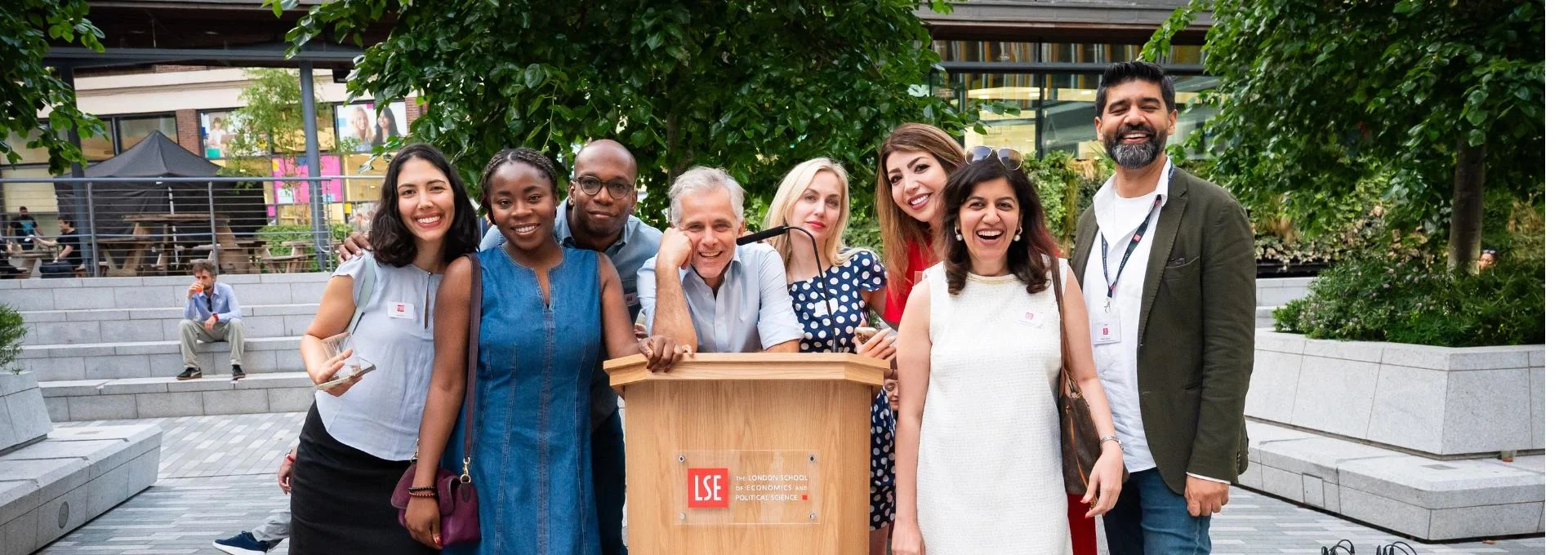

Areen appears in our Instagram Student Spotlight series, discussing her experiences of studying on her undergraduate programme.
- What is your favourite spot on campus? The red chairs in the back of The Huddle by the fridge. It’s always warm there and the chairs are deceivingly comfortable. It’s great for a quick nap between seminars.
- What do you like most about studying at LSE? I really enjoy that the courses aren’t abstract, and all of our discussions are rooted in tangible contexts that we can connect with and use to understand the theory in more depth.
- What did you like most about your course at the Language Centre? The structure of the programme allowed us to feel like a small family because of the size of our cohort, but we were also able to connect with students from other programmes through our modules. Many people took language or literature courses as an outside option, and the sociology department was gigantic compared to our group. So, it felt like having an extended family on campus and, on a more practical level, it allowed us to bring these outside viewpoints into our discussions and our learning.
- How did the course equip you for further study/work? As I mentioned, the idea of having context-based learning really helps to transfer any ideas you may have from one topic to another. So, instead of forgetting what I learned in S0110 in my first year as soon as I finished the module, I actually still use concepts taught then in my master's degree now. I’m sure I’ll continue to do this with different lessons I’ve learned as I finish my studies and move into the workforce.
- What is the most useful advice you can give to a new student? In the wise words of our Head of Department, always try to teach the marker something they don’t know! This is something that I heard Neil say a few times throughout my degree but could almost never seem to apply to my work. As I’m completing my Master’s, however, I’ve found that grounding myself in my own history and background has not only helped me produce better work, but it also makes discussions within seminars much more interesting. There are times where you may feel excluded from the lessons you’re being taught. Not through any fault of the lecturers, but because of the nature of the theories or scenarios being discussed. It’s very important that you think about where you fit into the topic, and make your voice heard. Not only will you teach people something they don’t know, but you could also be changing the way people have viewed or studied different topics. P.S. “The answer to every question at LSE is ‘It depends.’”
- What are you studying/working in now? I’m still on campus! I’m getting my MSc in Politics and Communication in the Department of Media and Communications. I’m really happy that being at LSE for another year has allowed me to explore the university differently but also keep my ties to the Language Centre. I’ve even been fortunate enough to continue my volunteering through the Arabic Bitesize Sessions I signed up for back during my first year. It’s been great being a part of the LSE Language Community, and I’m lucky to have been a part of it for this long.
- What are you looking forward to in the next year? I’m looking forward to finishing my dissertation and graduating. I’ve been excited to write my thesis ever since I completed my research internship with the Language Centre in 2024, and now I get the opportunity to do so! I have to say though, I will miss being on campus and sitting in those red chairs after the year is over.
- Where do you see yourself in 5 years? I will probably still be looking for ways to collect more degrees, if I’m honest! I thought my MSc would help me answer questions that came up during undergrad, but while some have been answered so many more have come up in their place. I think I’ll always be looking for ways to learn (and teach others what they may not know).
Areen Taher
BSc Language, Culture and Society
Alumni Networks:
There are many alumni groups around the world, including professional and inclusion networks, all run by alumni volunteers. Why not explore these groups and networks and see if one of them interests you?
Global Alumni survey:
Watch out for this alumni survey, coming to your inbox soon! Closes 3 April.
Alumni Hub:
What if graduation is only the beginning? Check out the Alumni Hub for all alumni opportunities and join in!