

AI Rationales: How Technologists, Policy Makers and Lawyers Imagine Artificial Intelligence for Migration in London and New York City

Partner institution: New York University (NYU)
Funded by the 2024/25 LSE-NYU Joint Research Seed Fund
Start Date: 31 August 2025
End Date: 31 August 2026
Research team
- Professor Myria Georgiou, Media and Communications, LSE
- Dr Philipp Seuferling, Media and Communications, LSE
- Professor Radha Hegde, Steinhardt School of Culture, Education, and Human Development, NYU
- Dr Margaret Jack, Tandon School of Engineering, NYU
- Shivani Rao, Research Assistant, Media and Communications, LSE
Abstract
Migration and its governance are increasingly caught up in the promises and deployments of new AI technologies. The widespread adoption of automated, machine-learning, and predictive systems affects different dimensions of migrants’ lives, from visa paperwork and border control to access to benefits, housing and care in cities.
The quest for technological solutions to more efficiently and effectively govern and control migration is not unprecedented. Yet, we currently see the intensification of investment and commitment to the technologization of migration governance across time and space. In this context, cities become inner borders where automated and predictive systems are used to govern and control migrant settlement, mobility and access to resources. This raises important questions of how new technological systems are inserted into the structures of migration and reshape the lives of those affected by technologized borders.
We ask: How is AI rationalised as a facilitator of migration governance by technologists, policy makers and lawyers in global cities?
By engaging with the three key constituencies involved in migration policy and its technological implementation – technologists, policy makers, lawyers – the project seeks to understand: (i.) how AI becomes integrated in migration policies in the two cities; (ii.) how the technologization of migration governance is conceived and applied; and (iii.) the ethical, technological, and political considerations of this technologization for migrants’ lives.
We focus on the urban scale of London and New York City – two cities where AI is imagined, applied and contested as a core element of migration governance. These two global cities have long histories of migration, and they are environments where migration is lived but also governed, increasingly through digital bordering technologies. From predictive policing to immigration databases, automation and data modeling become integral elements of decision-making on whether migrants can have access to resources, such as work, health and education.
This project assembles a team of scholars from the LSE and NYU with expertise on digital change and the technologization of migration. We will conduct interviews with representatives from the key constituencies of migration governance to understand how AI is imagined, implemented or resisted as a core element of migration governance in the three cities. The project will result in a joint academic publication as well as co-creative impact work with stakeholders and civil society in the form of a workshop in London.
Keywords: AI, migration, urban governance, global cities
Activities
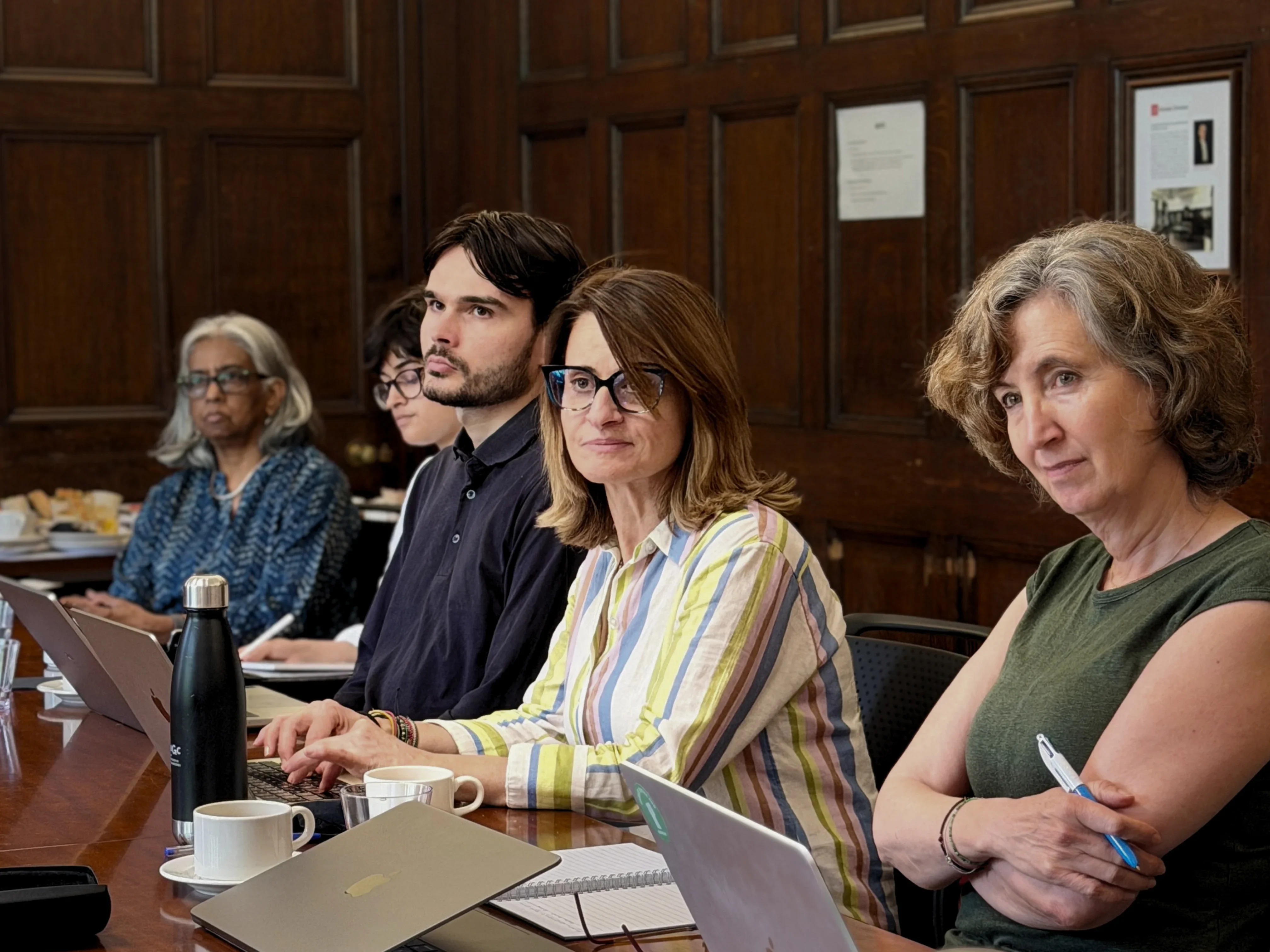
Funded through the LSE-NYU Joint Research Seed Fund, this project has involved a range of activities including:
- Producing a literature review
- Discourse analysis of public documents focusing on marketing materials (including websites) for AI tools in the migration space and NYC and London municipal AI policy, as well as national AI policy, especially in regard to immigration adjudication and lawsuits against such use of AI
- Semi-structured interviews with technologists/entrepreneurs building and marketing AI tools, immigration lawyer(s) who use AI tools, nonprofit networks building AI-driven applications, and local authority officials responsible for planning and implementing AI innovations in migration governance.
- Analysis of results
- Production of a co-authored blog post
- Two-part workshop in London – the first part bringing together cross-disciplinary academic expertise on migration, borders and technology; the second part bringing together academics, lawyers, and industry experts
- The production of a white paper containing findings, implications and recommendations
Outputs
The activities above have contributed to the following outputs:
- Co-authored journal article
- Workshop with stakeholders
- Larger collaborative external grant application (pending)
- Paper presentation at the European Communication Research and Education Association (ECREA), Brno, Czech Republic
Outcomes
Recorded long-term outcomes, such as follow-on external funding and evidence of long-term collaboration, will be added here.