
Fred Halliday memorial lecture series

A lecture series which celebrates the life and achievements of one of the world's leading Middle East scholars, international relations theorists and analysts of global affairs, Professor Fred Halliday.
The Fred Halliday Memorial Lecture 2026
The ecological continuation of empire in the Arab world
Hosted by the Department of International Relations
Thursday 11 June 2026 - 90 minutes
This lecture by Marwa Daoudy, held in honour of the renowned scholar Fred Halliday, explores the entanglement of colonialism, capitalism, and environmental exploitation that has shaped the modern global order in ways that continue to structure global inequality.
Mainstream approaches in international relations often obscure the violent histories of dispossession, domination, and extractive economies that drive contemporary political and ecological crises, producing racialized geographies of land, resources, labour and environment that endure.
Drawing on Fred Halliday’s critique of narratives that portray the Arab world as inherently locked in conflict, economic failure, or cultural clashes, this lecture situates climate and human vulnerabilities within the region’s (settler-) colonial, extractivist or war-torn past and present in contexts such Algeria, Palestine and Syria.
Meet our speakers and chair
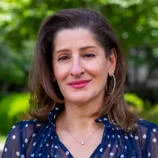
Marwa Daoudy is an Associate Professor of International Relations and the Seif Ghobash Chair in Arab Studies at the Center for Contemporary Arab Studies (CCAS), School of Foreign Service, Georgetown University. Her last book, The Origins of the Syrian Conflict: Climate Change and Human Security, received the Harold and Margaret Sprout Prize from ISA. She is currently writing a book on Climate Justice in the Arab World (which calls for rethinking security as justice. In this book, she argues that modernity, global capitalism, environmental destruction and epistemic erasure remain inseparable from colonial legacies and global capitalism that favour new forms of ecocide and green colonialism in the Arab world.
Jasmine Gani is Assistant Professor in International Relations Theory at LSE. She specialises in anti-colonial theory and history, and the politics of empire, race and knowledge production.
Jeffrey Chwieroth is Head of the Department of International Relations and Professor of International Political Economy.
More about this event
Find out more about this event
Read the event report by our student blogger
Revolutions and world order: still the 'Sixth Great Power'?
Department of International Relations Fred Halliday Memorial Lecture 2024/25
Tuesday 27 May 2025 90 minutes
This lecture, held in honour of the renowned scholar Fred Halliday, explores the relationship between revolutions and world order in contemporary geopolitics.
Fred Halliday argued that revolutions were the "sixth great power" of the modern world, a force that sat alongside the five great powers that sought to regulate 19th century world politics. Does Halliday’s assessment of the impact of revolutions remain true today?
This lecture analyses the three main forms that revolution takes today – ‘people power’ movements, ‘restoration revolutions’ and ‘decentralised vanguardism’ – and assesses their impact on contemporary world order. It argues that revolutions remain central to contemporary world politics, not as a "sixth great power", but still as the primary means through which people around the world mobilise against injustice, inequality and domination.
Meet our speakers and chair
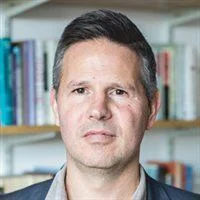
George Lawson is a professor in the Department of International Relations at the Australian National University. His work is oriented around the relationship between history and theory, with a particular interest in global historical sociology. He applied this interest to the study of revolutions in three books: Anatomies of Revolution, Negotiated Revolutions: The Czech Republic, South Africa and Chile, and On Revolutions: Unruly Politics in the Contemporary World, co-authored with Colin Beck, Mlada Bukavansky, Erica Chenoweth, Sharon Nepstad and Daniel Ritter.
Jasmine Gani is Assistant Professor in International Relations Theory at LSE. She specialises in anti-colonial theory and history, and the politics of empire, race and knowledge production. Her research has been published in International Studies Quarterly, Security Dialogue, International Affairs, Postcolonial Studies, and Millennium, among others. She is writing a book on ‘Racial Militarism’, using a postcolonial framework to analyse the relationship between race, militarism, and the state in both imperial metropoles and post-colonies.
Toby Dodge is a Professor in the Department of International Relations at LSE. He is also Kuwait Professor and Director of the Kuwait Programme, Middle East Centre. Toby currently serves as Iraq Research Director for the DFID-funded Conflict Research Programme (CRP). From 2013–18, Toby was Director of the Middle East Centre.
Find out more about this event
Read the student blogger report
The Perils of Saudi Nationalism
Department of International Relations Fred Halliday Memorial Lecture 2023/24
Monday 5 February 2024 (90 mins)
Listen to or watch the 2023/24 Fred Halliday Memorial Lecture with Madawi Al-Rasheed who discussed the history of Saudi nationalism and the new populist Saudi nationalism.
Since the rise of Crown Prince Muhammad bin Salman in 2017, a new populist Saudi nationalism has been promoted. This lecture traces the shift in Saudi nation-building from the early days of religious nationalism to the current populist trend. The new Saudi national narrative inevitably involves selectively remembering and forgetting aspects of the past in order to consolidate a shift in national consciousness about who Saudis are. But while the new nationalism promises to invigorate the nation, the process is accompanied by serious violence against dissenting voices.
Meet our speaker and chair
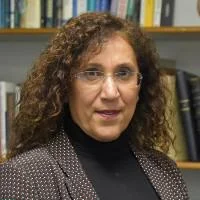
Madawi Al-Rasheed is Visiting Professor at the Middle East Centre, London School of Economics and Fellow of the British Academy. Her research focuses on history, society, religion and politics in Saudi Arabia and the Gulf, Middle Eastern Christian minorities in Britain, Arab migration, Islamist movements, state and gender relations, and Islamic modernism. She has published several books on Saudi Arabia. Her most recent book is The Son King: Reform and Repression in Saudi Arabia (OUP 2020).
Jeffrey Chwieroth is Professor in the Department of International Relations at the London School of Economics and Political Science (LSE) and Head of the Department. He is also co-investigator at the Systemic Risk Centre and Faculty Affiliate at the Phelan United States Centre at LSE.
Find out more about the perils of Saudi nationalism event
Watch the perils of Saudi nationalism on YouTube
Listen to the perils of Saudi nationalism podcast
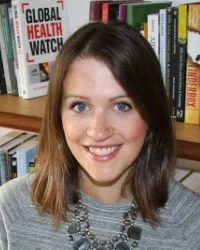
Hijacking Women's Health
Department of International Relations Fred Halliday Memorial Lecture 2022
Tuesday 4 October 2022 90 minutes
Speaker:
Sophie Harman, Professor of International Politics, Queen Mary University of London, where she teaches and conducts research into Global Health Politics, Africa and International Relations, gender and feminism, and Visual Politics.
Discussant: Marsha Henry, Associate Professor in the Department of Gender Studies, LSE
Chair: William A Callahan, Professor of International Relations, LSE
Women’s health is and always has been hijacked for political ends. The US Supreme Court overturning of Roe vs Wade is but another example of elites using the needless death of women to further their own political advantage.
In the 2022 Fred Halliday lecture, Professor Sophie Harman sought to answer two fundamental questions: first, why do women die when they don’t have to? and second, what happens when we take the relationship between women’s health and global politics seriously?
To answer these two questions, Harman mapped key trends in how women’s health is used and abused for political advantage around the world; and offer a key provocation, that these trends are fundamental to understanding, and even predicting, the chaos and crisis the world finds itself in. Women and women’s health saw it coming.
Listen to or download the podcast
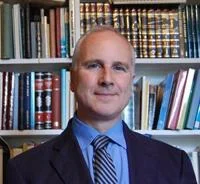
From Subject to Citizen - And Back: crises of the republic
Department of International Relations Fred Halliday Memorial Event 2021
Monday 22 March 2021
Online public lecture (90 mins)This lecture explores how and why the symbolic investment in republican discourse and the building of republican institutions can be so detrimental to the rights of the very public that they are meant to represent, even embody.
A lecture in the series which celebrates the life and achievements of one of the world's leading Middle East scholars, international relations theorists and analysts of global affairs, Professor Fred Halliday.
Speaker:
Charles Tripp is a Professor Emeritus of Politics with reference to the Middle East and North Africa, and a Fellow of the British Academy. His research interests include the nature of autocracy, state and resistance in the Middle East, the politics of Islamic identity and the relationship between art and power. He is currently working on a study of the emergence of the public and the rethinking of republican ideals in Tunisia. Together with other colleagues he has been one of the founders of the Centre for Comparative Political Thought at SOAS.
Chair: Karen E Smith is Professor of International Relations and Head of the Department of International Relations at LSE, and is Director of the European Foreign Policy Unit.
Listen to or download the audio podcast (90 mins)
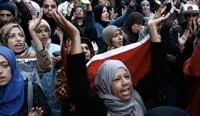
The Arab Uprisings and the future of revolution
Department of International Relations Fred Halliday Memorial Event 2019
Monday 4 February 2019
For this year's Fred Halliday Memorial Event, the speakers explore the shifting character of revolution through the prism of the 2011 Arab Uprisings.
We are living in a new age of revolution. Revolutions are everywhere: on the streets of Kobane, Caracas, and Tehran, in the rhetoric of groups like Podemos and Black Lives Matter, and in the imaginaries of popular culture, from Star Wars to Hamilton. Yet contemporary revolutions often appear more as minor disturbances than as projects of deep confrontation and systemic transformation – ‘small r’ revolutions next to the ‘big R’ Revolutions associated with France, Russia, China, and other major uprisings.
Eight years on from the revolutions in Tunisia, Egypt, Syria and elsewhere, what can be said about how these uprisings came about, how they were novel, and what balance-sheet can be drawn up of their successes and failures? Most importantly, what do they tell us about the current – and future – place of revolution in world politics?
Speakers:
Professor Salwa Ismail is Professor of Politics with reference to the Middle East at SOAS. Her latest book is The Rule of Violence: Subjectivity, Memory and Government in Syria (Cambridge, 2018).
Dr George Lawson is an Associate Professor of International Relations at LSE. His latest books are Anatomies of Revolution (Cambridge, 2019); Global Historical Sociology, edited with Julian Go (Cambridge, 2017); The Global Transformation, with Barry Buzan (Cambridge, 2015).
Chair: Dame Minouche Shafik is Director of the London School of Economics and Political Science.
This event forms part of the "New World (Dis)Orders" series, held in the run up to the LSE Festival, a week-long series of events taking place from 25 February to 2 March 2019, free to attend and open to all, exploring how social science can tackle global issues. How did we get here? What are the challenges? And, importantly, how can we address them? The full LSE Festival programme is online.
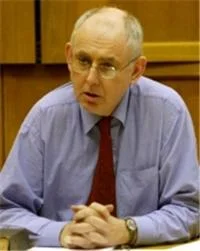
Populism: A Global Perspective
International Relations Fred Halliday memorial roundtable 2018
Monday 5 February 2018
Panellists explored the emergence of populism as a global force, its historical roots, and contemporary rise in the US, India and Turkey.
Panellists:
Mukulika Banerjee is Associate Professor and Director of the South Asia Centre at LSE.
Firdevs Robinson is a London-based journalist who has covered international affairs for three decades.
Robert Singh is Professor of Politics at Birkbeck College, University of London.
Chair: Professor Toby Dodge is Professor of International Relations and Director of the Middle East Centre at LSE.
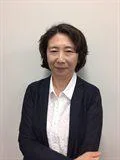
International Norm Change: the outlawry of war in the interwar years
Monday 14 November 2016
Speaker: Professor Hatsue Shinohara
Chair: Professor Christopher Hughes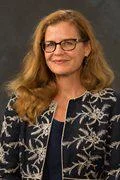
Conflict-Related Sexual Violence: the politics of the UN Security Council's approach to the protection of civilians
Thursday 19 November 2015
Speaker: Professor Anne Marie Goetz
Chair: Professor Christopher Hughes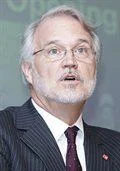
Human Suffering and Humanitarian Emergencies
Tuesday 5 November 2013
Speaker: Professor Craig Calhoun
Chair: Professor Christopher Hughes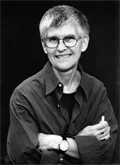
A Woman's War Doesn't End When the Guns go Silent
Monday 5 November 2012
Speaker: Professor Cynthia Enloe
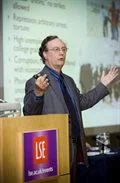
Framing the Arab Uprisings: a historical perspective
Thursday 6 October 2011
Speaker: Professor Juan Cole
Chair: Professor Kimberly Hutchings