

Book Launch - The Economics of Crime in Latin America: From Diagnosis to Policy Responses
Speaker

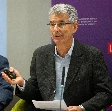

Join the Department of International Development for the launch of The Economics of Crime in Latin America: From Diagnosis to Policy Responses, co‑edited by Raphael Espinoza, IMF Mission Chief for Uruguay and Deputy Division Chief in the Central America Division of the IMF’s Western Hemisphere Department, and an external research associate at the University of Oxford.
About the Book
Crime and insecurity are major challenges in Latin America and the Caribbean. Although the region has a small share of the world’s population, it experiences a disproportionate level of violence. The book argues that the real impact of crime goes far beyond homicide figures.
Crime shapes economic growth, weakens institutions and erodes social trust. It drives migration, deepens poverty and creates instability that crosses borders through the movement of drugs, money, gold, arms and people.
Because these issues directly affect development, the book argues that crime reduction is not only a security concern but also a priority for finance ministries, central banks and development institutions. The contributors examine why crime takes root, how it affects societies and what kinds of policies might help, stressing the need to address deeper causes while strengthening state capacity.
The book also highlights that no country can tackle these problems alone. Organised criminal networks operate across borders, making regional cooperation essential for building safer and more resilient societies.
Career Talk
We’ll also be hosting a short career talk and Q&A with Raphael Espinoza toward the end of the event. He’ll share insights into working with DC‑based international organisations, including the IMF and the wider landscape around institutions like the World Bank. Given how much that job market has shifted recently, his perspective on navigating those spaces will be especially valuable.
About the speaker
Raphael Espinoza is the IMF Mission Chief for Uruguay. He is also Deputy Division Chief, IMF Western Hemisphere Department and an external research associate at the University of Oxford. Previously, he was Deputy Division Chief in the Fiscal Policy Division of the IMF Fiscal Affairs Department. He has worked on a variety of IMF program and near-program countries as well as on research-oriented positions at the IMF and at the European Central Bank. He has also been Assistant Professor in Economics at University College London (UCL), where he was the Director of the Centre for Studies of Emerging Economies, and provided advisory services as a financial stability expert for the central banks of Peru and Colombia. He has published extensively on macroeconomics and economic development issues, including in two books (Macroeconomic Policy in Fragile States, OUP, 2021; The Macroeconomics of the Arab States of the Gulf, OUP, 2013). He holds a PhD in Economics from the University of Oxford.
About the chair
Jean-Paul Faguet is Professor of the Political Economy of Development at the London School of Economics. He is also Chair of the Decentralization Task Force at Columbia University’s Initiative for Policy Dialogue. He works at the frontier between economics and political science, using quantitative and qualitative methods to investigate the institutions and organizational forms that underpin development transformations. He has published in the economics, political science, and development literatures, including Is Decentralization Good for Development? Perspectives from Academics and Policymakers (Oxford, 2015), and Governance from Below: Decentralization and Popular Democracy in Bolivia (Michigan), which won the W.J.M. Mackenzie Prize for best political science book of 2012.
Any questions?
You can contact us at intdev.comms@lse.ac.uk
From time to time there are changes to event details so we strongly recommend that if you plan to attend this event you check back on this listing on the day of the event.
Whilst we are hosting this listing, LSE Events does not take responsibility for the running and administration of this event. While we take responsible measures to ensure that accurate information is given here this event is ultimately the responsibility of the organisation presenting the event.
LSE holds a wide range of events, covering many of the most controversial issues of the day, and speakers at our events may express views that cause offence. The views expressed by speakers at LSE events do not reflect the position or views of the London School of Economics and Political Science.