

GSoS Student Blog: Making Climate Change Relevant - Reflections from the GSoS Forum
From Climate Targets to Everyday Conversations: Reflections from the GSoS Forum
Written by Jingjing Shi, MSc Environmental Economics and Climate Change
As I sit in an air-conditioned cafe writing this blog, London is experiencing one of its hottest weeks of the year. Like many homes in the UK, my room has neither air conditioning nor much ventilation, making it almost impossible to work there during the heatwave. Just a few days earlier, I had attended the Global School of Sustainability (GSoS) Forum as a GSoS Scholar, listening to world leaders, policymakers and academics discuss climate change, sustainable development and the transition to a greener future. I did not expect those conversations to feel so relevant to my own life so quickly.
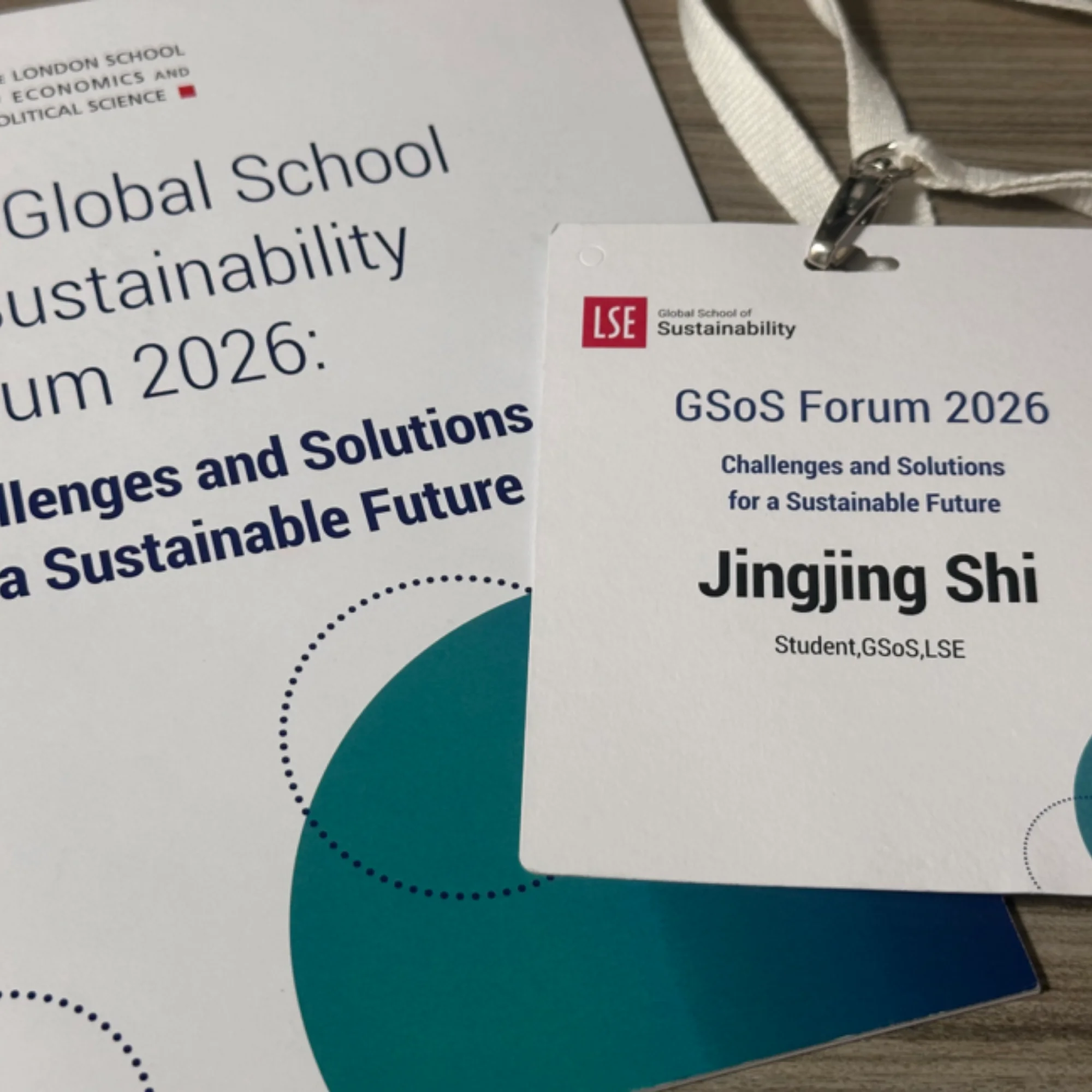
I expected to hear discussions about climate policy, finance and technology. Those topics were certainly there. For example, in the afternoon session on creating sustainable finance and business, the discussion turned to sustainable investment, blended finance and the challenge of mobilising capital for the transition. These questions are crucial to making climate action possible in practice. Yet what stayed with me most came from the opening panel, where Professor Jonathan Pershing asked the speakers what they saw as the most significant sustainable development issues we face today, and what might be done about them. Across their different answers, I heard another question running beneath the discussion: how can we make climate change feel close enough for people to care and act?
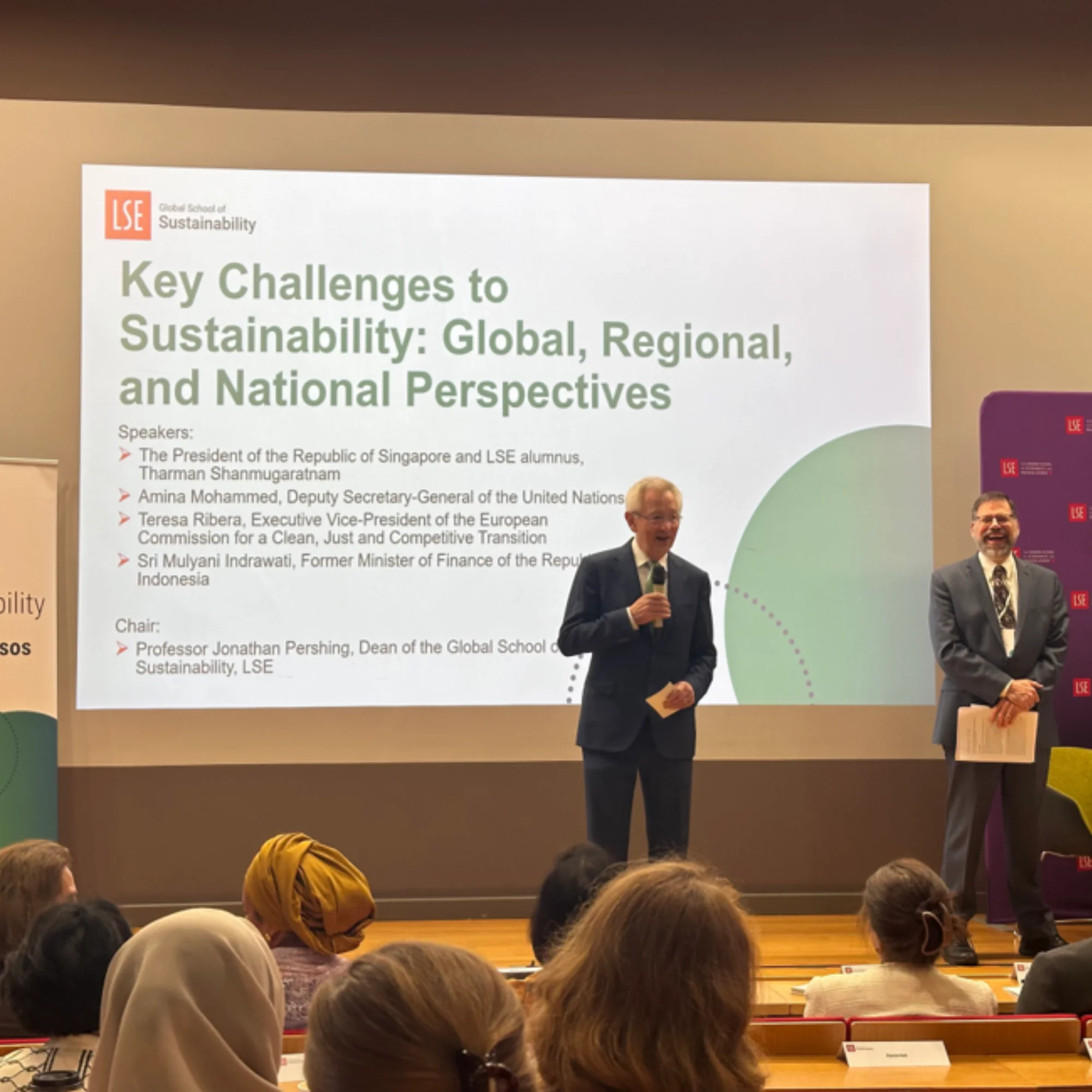
President Tharman Shanmugaratnam's answer began with politics. He argued that one of the central challenges is building political momentum for more urgent and coordinated climate action. What struck me most, however, was how he connected this political challenge to the question of narrative. People may already feel that something is "weird" about the weather and that something is not right with the climate, even if they do not fully understand the science. Yet they also have many other concerns weighing on them: jobs, the cost of living, geopolitics, corruption and uncertainty about the future. The task, then, is not simply to tell people that climate change matters, but to connect climate action to the concerns already shaping their everyday lives. Climate action, therefore, cannot be narrated only as a response to climate change itself. It also has to become "more social, more local, and more immediate."
This idea stayed with me because it speaks directly to something I have been thinking about in my own studies. In environmental economics and climate policy, we often work with models, scenarios and long-term targets. I am interested in these tools, especially in how climate mitigation pathways are shaped by narratives about technology, disruption and social resilience. But President Tharman's remarks reminded me that narratives are not only used in academic scenario design. They also shape whether people can see climate action as part of their own lives.
A way of communicating climate change that only speaks in the language of 2050 targets, global temperature pathways or abstract emissions curves may be technically important, but it can still feel distant. A narrative connected to heat stress, cleaner air, energy bills, public health and jobs feels different. It does not make the issue less serious; it makes the seriousness easier to recognise. Evidence often becomes politically meaningful only when people can relate it to their own lives. To me, this was one of the most powerful messages of the forum: climate narrative is not about making people care about something far away, but about helping them recognise what is already close.
Amina Mohammed's remarks deepened this point, but from a different starting place. While President Tharman focused on the political challenge of building momentum, she brought the discussion back to people and human dignity. If climate narratives matter, then we also have to ask who is included in them. Her emphasis on human dignity and her question of who we mean by "we" made me think more carefully about the politics of climate storytelling. It is easy to say that "we" need to act, "we" need to transition, or "we" need to leave no one behind. But the impacts of climate change, the capacity to respond, and the power to shape decisions are not distributed equally. A narrative that claims to speak for everyone can still exclude the people most affected if they are not present in the conversation.
In that sense, Amina Mohammed did not contradict President Tharman's focus on political momentum; she made it more demanding. A climate narrative must be relatable, but it must also be inclusive. It must speak to everyday concerns without pretending that everyone experiences those concerns in the same way. It must connect people, but not erase difference. For me, this was an important reminder that the question is not only how to make climate change feel close, but also whose experiences are allowed to define what "close" means.
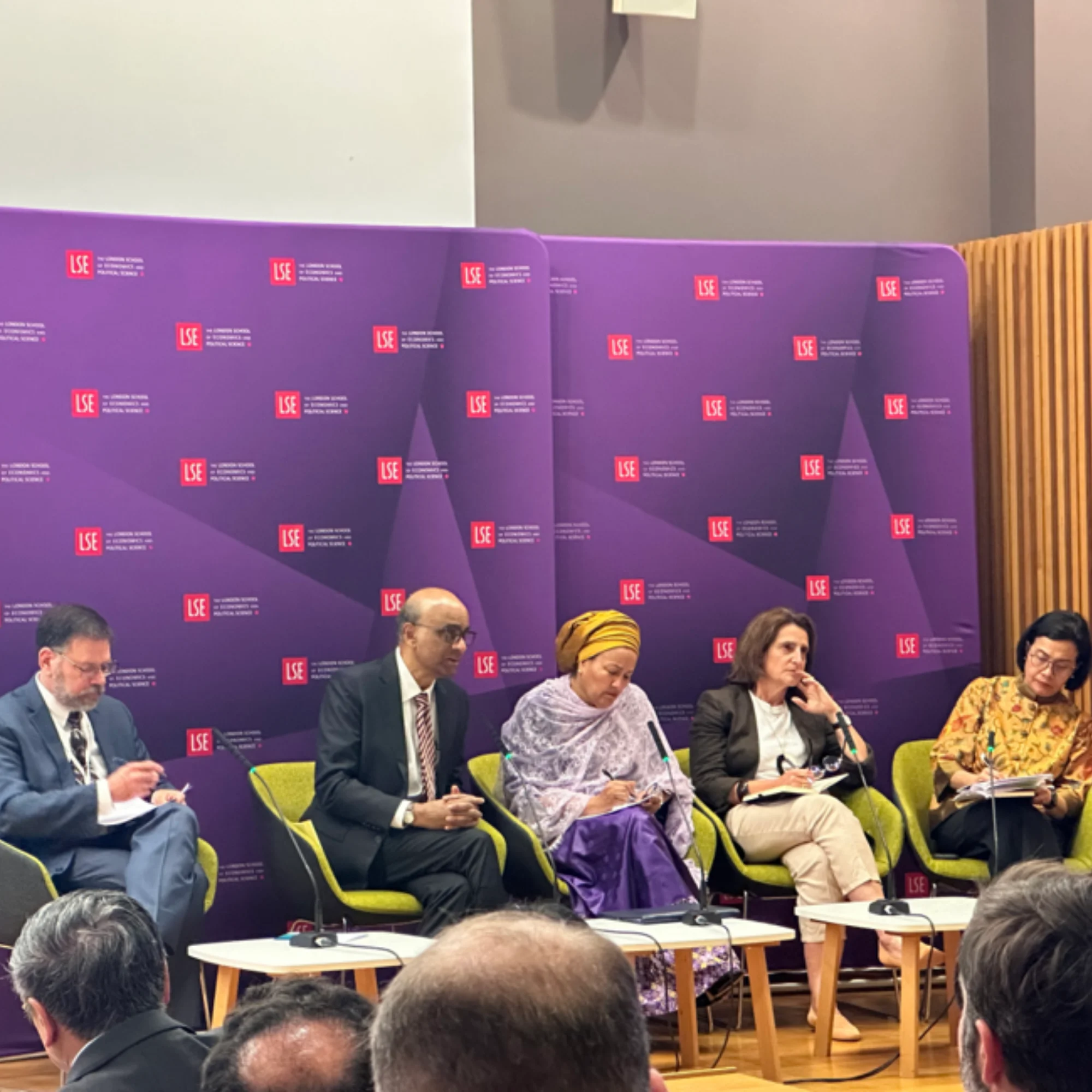
This is where Teresa Ribera's contribution connected the discussion back to everyday practice. She emphasised the need to keep talking: to neighbours, friends, those who think like us and those who think differently; to keep discussing, disputing, reading and developing critical thinking. I found this surprisingly powerful because she proposed that meaningful climate action does not begin only in international negotiations or policy documents. It also begins in ordinary conversations between people. At the time, I simply thought it was a thoughtful observation. I did not realise how quickly I would experience it myself.
A few days later, London's heatwave gave me an unexpected opportunity to understand that lesson in practice. Until then, most conversations about my degree ended with "That sounds interesting." This time was different. Friends from completely different academic backgrounds suddenly began asking me questions, not about carbon markets or net-zero pathways, but about their own lives. "Is this what global warming feels like?" "Why doesn't a developed country like the UK have air conditioning everywhere?" "Why can't we just install air conditioning if summers are getting hotter?"
I realised they were not asking me about climate policy. They were asking me about their everyday experiences.
Trying to answer those questions made me rethink my own role as a climate student. Instead of starting with electricity markets or infrastructure policy, I found myself explaining that even if every household suddenly installed air conditioning, the electricity grid would struggle to support such a dramatic increase in demand. Air conditioning is not simply an appliance; it depends on energy infrastructure, investment, planning and public policy. To my surprise, I could almost see the moment when the conversation changed. Rather than asking why the UK had not "just installed more air conditioning," my friends began asking how electricity systems are planned, and how societies adapt to a warming climate.
That experience helped me understand what the forum had been pointing towards. Effective climate communication is not about oversimplifying complex issues until they lose their meaning. It is about finding an entry point that allows people to discover the complexity for themselves. A question about air conditioning can become a conversation about electricity grids. A complaint about heat can become a discussion about adaptation. An uncomfortable week in London can become a way of understanding why climate change is not only a scientific or technical issue, but also a social one.
Looking back, I do not think the most valuable lesson I took from the GSoS Forum was a single statistic or policy proposal. Instead, it was a different way of thinking about the relationship between evidence, politics and everyday life. As students of environmental economics and climate change, we spend years learning how to analyse evidence, evaluate policies and understand complex systems. Those skills are essential. But if sustainability is to become a genuinely shared project, we also need to learn how to translate those ideas into conversations that people recognise as relevant to their own lives.
Before attending the forum, I thought studying climate policy meant learning how to design better policies and understand better models. After attending the forum, I spent the following week having unexpected conversations during London's heatwave. Together, these experiences made me realise that studying climate policy also means learning how to tell the story of those policies in ways that invite more people into the conversation. Perhaps one of the most important skills for the next generation of sustainability practitioners is not only to understand the transition, but to help more people see themselves in it.