

Key challenges to sustainability: global, regional and national perspectives
Speakers





Join GSoS this June to welcome three eminent world leaders to LSE for a landmark community event on sustainability.
The President of the Republic of Singapore, Tharman Shanmugaratnam; Amina Mohammed, Deputy Secretary-General of the United Nations; and Teresa Ribera, Executive Vice-President of the European Commission for a Clean, Just and Competitive Transition, as well as leading figures from LSE and the Global School of Sustainability at LSE, will come together with the LSE community and general public for a morning of in-depth discussion, insights and perspectives on the critical challenges to global sustainability.
Registration for this event includes:
- 9.30am – 10am, Welcome: Andrew Steer, Professor in Practice, Global School of Sustainability; Susana Mourato, LSE Vice President and Pro-Vice Chancellor (Research)
- 10am – 11.30am, Panel discussion and audience Q&A – Key challenges to Sustainability: global, regional, and national perspectives: President of the Republic of Singapore, Tharman Shanmugaratnam; Amina Mohammed, Deputy Secretary-General of the United Nations; and Teresa Ribera, Executive Vice-President of the European Commission for a Clean, Just and Competitive Transition
- 11.30am – 12pm, Views from the Co-Founders: A fireside chat with GSoS Co-Founders Professor Lord Nicholas Stern and LSE alum and CEO of Envision, Lei Zhang
Due to the high-profile nature of this event, in-person attendance will be limited to members of the LSE community. Members of the wider public are warmly invited to participate online.
Meet our speakers
Tharman Shanmugaratnam was elected as Singapore’s President in September 2023. He served in politics for 22 years before resigning to contest in the Presidential Election. He was Deputy Prime Minister and Finance Minister for several years, and Education Minister earlier. He also served as Chairman of the Monetary Authority of Singapore (MAS), Singapore’s central bank and financial regulator over more than a decade. Internationally, Tharman has led several commissions focused on global financial reforms, job creation in a new era, preparedness for future pandemics, and global water sustainability.
- He currently co-chairs the High-Level Advisory Council on Jobs, established by the World Bank Group in July 2024. He recently co-chaired the Global Commission on the Economics of Water, which released its report in October 2024.
- Tharman also chairs the board of the Group of Thirty, an independent global council of economic and financial leaders from the public and private sectors.
- He earlier chaired the G20 Eminent Persons Group on Global Financial Governance in 2017-2018, and co-chaired the G20 High-Level Panel on financing pandemic preparedness and response in 2021. He also chaired the IMF’s International Monetary and Financial Committee from 2011-2014, and the Advisory Board for the UN’s Human Development Report for several years.
Tharman has been committed through his years in government to building a more inclusive society, and sustaining social mobility and economic resilience.
- He introduced major educational reforms while serving as Education Minister, aimed at achieving a broader and more flexible system of meritocracy. He later led the ‘SkillsFuture’ programme, launched in 2014 to make life-long learning a reality for all. He also chaired tripartite councils from 2011 to 2016 which drove national efforts to raise productivity through industry-specific transformation programmes.
Tharman did undergraduate studies at the London School of Economics and an M.Phil in Economics at the University of Cambridge. He later obtained an MPA at Harvard University’s Kennedy School of Government, where he was conferred the Lucius N Littauer Fellow award for outstanding performance and leadership potential. In 2019, the Institute of International Finance awarded him its inaugural Distinguished Leadership and Service Award. In 2025, Tharman was awarded the Miriam Pozen Prize by the MIT Golub Center for Finance and Policy, in recognition of leadership in international financial policy.
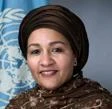
Amina J. Mohammed is the Deputy Secretary-General of the United Nations and Chair of the United Nations Sustainable Development Group. Prior to her appointment, Ms. Mohammed served as Minister of Environment of the Federal Republic of Nigeria where she steered the country’s efforts on climate action and efforts to protect the natural environment. Ms. Mohammed first joined the United Nations in 2012 as Special Adviser to former Secretary-General Ban Ki-moon with the responsibility for post-2015 development planning. She led the process that resulted in global agreement around the 2030 Agenda for Sustainable Development and the creation of the Sustainable Development Goals. Ms. Mohammed began her career working on the design of schools and hospitals in Nigeria. She served as an advocate focused on increasing access to education and other social services, before moving into the public sector, where she rose to the position of adviser to four successive Presidents on poverty, public sector reform, and sustainable development. Ms. Mohammed has been conferred several honorary doctorates and has served as an adjunct professor, lecturing on international development. The recipient of various global awards, Ms. Mohammed has served on numerous international advisory boards and panels.
Teresa Ribera is the Executive Vice-President of the European Commission for a Clean, Just and Competitive Transition. She previously served as Vice President of the Government of Spain and Minister for the Ecological Transition and the Demographic Challenge as well as Member of Spanish Parliament. Prior to that, she was Director of the Institute for Sustainable Development and International Relations (IDDRI) from 2014 to 2018, enabling the Institute to play a key role in the negotiation of the Paris Climate Agreement. From 2008 to 2011, she served as the Spanish Secretary of State for Climate Change and Biodiversity. A public official from the Senior Corps of State Civil Administrators, she has also taught public law at the Autonomous University of Madrid. She is member of the Royal Academy of Science, Letters and Fine Arts of Belgium since 2021.
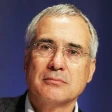
Nicholas Stern is IG Patel Chair of Economics and Government and the inaugural Chair of the Global School of Sustainability at LSE. His book The Growth Story of the 21st Century: The Economics and Opportunity of Climate Action is published by LSE Press.
Lei Zhang is a Global Climate Tech Entrepreneur and Co-Founder of the Global School of Sustainability at LSe, as well as Founder and CEO of Envision – a new renewable energy system pioneer behind the world’s first Net Zero Industrial Park and Zero Carbon Hydrogen Ammonia project. Envision’s business spans across 6 continents and includes smart wind and solar power, energy storage and hydrogen fuels and decarbonization technology. He is Executive Chairman of the Board at AESC – a leading Japanese battery technology company, and at Univers – Singapore-headquartered technology provider of the world’s largest decarbonization system. Lei is a Founding Member and Chair of the Bloomberg New Economy Climate Technology Coalition and a member of the World Economic Forum’s Alliance of CEO Climate Leaders. Envision was recognized as a leader on FORTUNE’s “Change the World” top 50 companies list.
More about this event
This event is part of the Global School of Sustainability Forum 2026: Challenges and Solutions for a Sustainable Future (GSoS Forum 2026). The GSoS Forum 2026 brings together global leaders, policy makers and social science researchers to drive dialogue and frame opportunities for collaboration and action.
Further public events in this series include:
Thursday 18 June, 5.30pm - 6.30pm, LSE campus and online
Speaker: Adam Met; Chair: Ganga Shreedar
Friday 19 June 2026 12.30pm - 1pm, LSE Campus
THE HERDS performance
Saturday 20 June, 10am – 2pm
The Global School of Sustainability at LSE (GSoS) is the interdisciplinary centre for sustainability research impact at the London School of Economics and Political Science (LSE). GSoS works in partnerships to advance pioneering sustainability research, global policy engagement and world-leading educational opportunities. Grounded in LSE’s interdisciplinary excellence across the social sciences, GSoS’s global networks target the systemic challenges to sustainability embedded in the world’s economies, politics and societies.
From time to time there are changes to event details so we strongly recommend that if you plan to attend this event you check back on this listing on the day of the event.
Whilst we are hosting this listing, LSE Events does not take responsibility for the running and administration of this event. While we take responsible measures to ensure that accurate information is given here this event is ultimately the responsibility of the organisation presenting the event.
LSE holds a wide range of events, covering many of the most controversial issues of the day, and speakers at our events may express views that cause offence. The views expressed by speakers at LSE events do not reflect the position or views of the London School of Economics and Political Science.