

The economics of transitioning away from fossil fuels
Speakers



At COP28 in Dubai, countries agreed, for the first time, to transition away from fossil fuels in energy systems, in a just, orderly and equitable manner. Governments now face questions that are as much economic as political in turning that commitment into practice: how quickly can clean technologies keep falling in cost, what role can carbon pricing play in driving the transition, and why investment in clean energy continues to bypass many of the countries with the greatest potential.
Register to attend hereThe COP30 Presidency has prepared a Roadmap for Transitioning Away from Fossil Fuels, which offers governments strategic guidance for navigating these challenges, grounded in national circumstances and in the evidence on systemic risks, demand, supply and finance. In support of the Presidency, the Economics of Climate Organisation (ECO), hosted at LSE has brought together leading researchers working on the economics of climate change to generate policy-relevant research on areas such as innovation, carbon pricing and the cost of capital. This work aims to strengthen the economic foundations of the transition and support its implementation beyond COP30.
This event showcases the main conclusions of both contributions and opens a discussion on how countries can carry them into implementation in the years ahead. Bringing together leaders from climate diplomacy, policy and economic research, the discussion will consider how to accelerate the transition, overcome barriers to investment and ensure that the shift away from fossil fuels is both economically viable and equitable.
Meet our speakers and chair
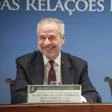
André Corrêa do Lago is President of COP30 and is on the ECO Steering Committee. As a career diplomat, he has worked across international organizations, trade promotion, protocol and energy, and served as adviser at the Office of the President between 1991 and 1992, contributing to the organization of the Earth Summit (Rio-92). He served as Director of the Energy Department (2008-2011) and of the Environment Department (2011-2013) at the Brazilian Ministry of Foreign Affairs and was Brazil's chief negotiator for climate change and for the Rio+20 Conference. He has served as Brazilian Ambassador to Japan (2013-2018) and to India (2018-2023), and from March 2023 to January 2025 as Secretary for Climate, Energy, and Environment at the Ministry of Foreign Affairs. He is the author of several books and articles on sustainable development and climate change.
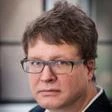
Robin Burgess is Co-Chair of ECO, Professor of Economics at LSE, where he is also Co-Director of the Economics of Environment and Energy (EEE) Research Programme, and co-Founder and Director of the International Growth Centre (IGC). He is co-Director of the Coase Project on the Economics of Climate, Energy and Environment. His research spans environmental economics, development economics and political economy, and he has published on topics including natural disasters, land reform, industrial policy, taxation and poverty. He has held visiting positions at MIT, Harvard University, the National Bureau of Economic Research and UC Berkeley, and is a Fellow of the British Academy and the Econometric Society. He is currently leading research across Bangladesh, Brazil, China, India, Indonesia, Kenya, Myanmar, Pakistan, South Korea and Uganda. Robin has serves on the COP30 President’s Council on Economics, Finance, and Climate.
Rachel Kyte was appointed UK Special Representative for Climate on 21 October 2024. She is Professor of Practice in Climate Policy at the Blavatnik School of Government, University of Oxford and dean emerita of the Fletcher School of Law and Diplomacy at Tufts University. Rachel was previously Special Representative of the UN Secretary-General and CEO of Sustainable Energy for All. She has also served as World Bank Group Vice President and Special Envoy for Climate Change, as well as Vice President for Sustainable Development at the World Bank, and for Business Advisory Services at the International Finance Corporation. Rachel has held non-executive director, trustee and board member roles with a number of private and public financial institutions, as well as non-profit organisations, focused on climate and development.
José A. Scheinkman is the Charles and Lynn Zhang Professor of Economics at Columbia University and Theodore A. Wells '29 Professor of Economics (emeritus) at Princeton University, and Co-Chair of ECO. Previously, he was the Alvin H. Baum Distinguished Service Professor and Chairman of the Department of Economics at the University of Chicago, and Vice President in the Financial Strategies Group of Goldman Sachs. His research spans financial economics and climate finance, with a particular focus on speculation in financial markets and the effects of liquidity on financial fragility. Scheinkman is a Member of the National Academy of Sciences, a Fellow of the American Academy of Arts and Sciences, a Fellow of the Econometric Society and a Corresponding Member of the Brazilian Academy of Sciences. He was awarded a John Simon Guggenheim Memorial Fellowship in 2007 and the CME-MSRI Prize in Innovative Quantitative Applications in 2014. Jose convened and chaired the COP30 President's Council on Economics, Finance, and Climate.
Jonathan Pershing is the inaugural Dean of the Global School of Sustainability at LSE and is on the ECO Steering Committee.. He has extensive experience at the highest level of US climate policy and has played a key role in creating international climate agreements. He has held significant positions in the US Department of State — including as the US Special Envoy for Climate Change — and at the US Department of Energy. Most recently, he was the Director of the Environment Program at the Hewlett Foundation.
More information
The Global School of Sustainability at LSE (GSoS) is the interdisciplinary centre for sustainability research impact at the London School of Economics and Political Science (LSE). GSoS works in partnerships to advance pioneering sustainability research, global policy engagement and world-leading educational opportunities. Grounded in LSE’s interdisciplinary excellence across the social sciences, GSoS’s global networks target the systemic challenges to sustainability embedded in the world’s economies, politics and societies.
The Economics of Climate Organisation (ECO), launched at the London Climate Action Week by COP30 President Andre Correa do Lago, who continues to advise ECO as part of its steering committee, is led by Professors Jose Schienkman and Robin Burgess, alongside a core group of researchers who were part of the founding COP30 President’s Council on Economics, Finance, and Climate. ECO hopes to serve as a bridge between frontier economics and climate policy. A global collaborative initiative between leading economists and policy makers, it aims to inject new thinking into the design and implementation of climate policies by leveraging analytical advances and the best possible data from all fields of economics. By placing mitigation and adaptation at the core of economic policy, ECO aims to support decision-makers in designing policies that address climate challenges at scale and speed and facilitate improvements in human welfare. In doing so, ECO directly supports the COP Action Agenda, mobilizing the analytical capacity of leading economists to enrich the debate on adaptation, energy, deforestation, carbon markets, climate finance, and helps decision-makers turn the Action Agenda's ambitions into implementable policy. ECO is hosted at LSE.
The Economics of Environment and Energy (EEE) Programme gathers a dynamic group of researchers working on the interaction between human activity and the natural environment. EEE's objective is to bring these concerns into mainstream economics and to create the policy-relevant research needed to address environmental and energy challenges at scale and speed.
The International Growth Centre (IGC) is a global research centre with a network of world-leading researchers, country teams across Africa, South Asia, and the Middle East, and a set of global policy initiatives that works with policymakers in developing countries to promote inclusive and sustainable growth through cutting-edge and responsive research.
Any questions?
Contact us at STICERD@lse.ac.uk
From time to time there are changes to event details so we strongly recommend that if you plan to attend this event you check back on this listing on the day of the event.
Whilst we are hosting this listing, LSE Events does not take responsibility for the running and administration of this event. While we take responsible measures to ensure that accurate information is given here this event is ultimately the responsibility of the organisation presenting the event.
LSE holds a wide range of events, covering many of the most controversial issues of the day, and speakers at our events may express views that cause offence. The views expressed by speakers at LSE events do not reflect the position or views of the London School of Economics and Political Science.