

Cinema and the city in the era of planetary urbanisation



This book talk asks what it means to approach cinema not only as a medium of representation, but as a method of urban research. In presenting Cinema and the City in the Era of Planetary Urbanisation (2026, JOVIS), Nitin Bathla reflects on how film can open alternative ways of sensing, documenting, and analysing contemporary urbanisation. The volume brings together interdisciplinary contributions that treat cinema as an active participant in the production of urban knowledge, rather than a passive mirror of the city.
Drawing on case studies that span urban centres, infrastructural corridors, and extended urban landscapes, the book situates cinema within debates on planetary urbanisation, infrastructure, labour migration, and environmental transformation. Contributors examine how cinematic practices register urban processes that unfold across scales and temporalities, often remaining invisible to conventional planning, policy, and analytical frameworks.
The book foregrounds film as a situated and embodied practice of inquiry that intervenes in how urbanisation is made visible and intelligible. Attending to sensory, temporal, and affective registers, the contributions unsettle dominant visual regimes and open space for alternative urban imaginaries and modes of engagement.
The talk will be accompanied by the screening of selected excerpts from Bathla’s documentary Not Just Roads, which is also discussed in the volume. The film excerpts will be used to reflect on cinema’s capacity to operate as a research practice—one that intervenes in debates in urban political ecology by foregrounding infrastructure, everyday life, and environmental struggle.
Meet our speakers and chair
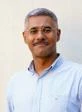
Nitin Bathla is Group Leader in Infrastructure Geography at the University of Zurich, and Lecturer in Urban Studies at ETH Zurich. He is the author of the award-winning book Researching Otherwise: Pluriversal Methods for Urban and Landscape Studies and the critically acclaimed documentary Not Just Roads. He serves as an editor at Urban Geography and the Urban Political Podcast. His research is situated in the field of urban political ecology, with a focus on infrastructure, environmental governance, and the socio-ecological dimensions of urbanization. His work combines transdisciplinary academic inquiry with artistic practices.
Monica Degen is Professor of Urban Studies, Brunel University London. She has worked on a range of international projects researching the role sensory experiences play in framing architectural practices, urban planning and culture in cities from Doha to Cologne, Barcelona and London. She has written on how the transformation of public spaces affects different communities, processes of cultural regeneration and the sensory and temporal experiencing of urban places from high streets, heritage areas or shopping malls. In recent years her work has examined how digital technologies are transforming the design and experience of cities discussed in her latest book ‘The New Urban Aesthetic: Digital Experiences of Urban Change’ co-authored with Gillian Rose (Bloomsbury, 2022).
Myria Georgiou is a professor in the Department of Media and Communications at LSE. Professor Georgiou researches and teaches on migration and urbanisation in the context of their increasing mediation and digitisation. In research conducted across 8 countries over the last 25 years, she has been studying communication practices and media representations that profoundly, but unevenly, shape meanings and experiences of citizenship and identity. Her latest book is Being Human in Digital Cities (Polity/Wiley 2024, winner of the Jane Jacobs Urban Communication book award, 2025). She is also the author and editor of five other books, including The Digital Border (2022, NYU Press, with L.Chouliaraki) and The Sage Handbook of Media and Migration (2019, with co-editors K.Smets, K.Leurs, S.Witteborn, R.Gajjala).
Hyun Bang Shin is Professor of Geography and Urban Studies and Head of the Department of Geography and Environment at LSE. Elected Fellow of the Academy of Social Sciences in the UK, Professor Shin has contributed to reshaping the understanding of contemporary urban transformation, emphasising the socio-political dynamics of cities in rapidly developing regions, particularly in East and Southeast Asia. From 2018 to 2023, he served as Director of the Saw Swee Hock Southeast Asia Centre at LSE, fostering interdisciplinary research on Asia. He was the Editor of the International Journal of Urban and Regional Research from 2021 to 2024 and a trustee of the Urban Studies Foundation from 2016 to 2023, contributing to global urban scholarship and mentorship. Since 2009, he has co-organised The Urban Salon, a London-based forum for architecture, cities, and international urbanism.
More about this event
The Department of Geography and Environment is a centre of international academic excellence in economic, urban and development geography, environmental social science and climate change.
The Urban Salon is a London-based forum for architecture, cities, and international urbanism.
If you have a query, please contact us at geog.comms@lse.ac.uk.
From time to time there are changes to event details so we strongly recommend that if you plan to attend this event you check back on this listing on the day of the event.
Whilst we are hosting this listing, LSE Events does not take responsibility for the running and administration of this event. While we take responsible measures to ensure that accurate information is given here this event is ultimately the responsibility of the organisation presenting the event.
LSE holds a wide range of events, covering many of the most controversial issues of the day, and speakers at our events may express views that cause offence. The views expressed by speakers at LSE events do not reflect the position or views of the London School of Economics and Political Science.