

Alumni stories

Our alumni community reflects the breadth and impact of Geography and Environment at LSE. From recent graduates to those who completed their studies several decades ago, our alumni are working across sectors, disciplines and continents.
These profiles highlight the diverse pathways our graduates take, spanning policy, research, finance, sustainability, international development and beyond.
Climate, energy and sustainability

Programme: MSc Environmental Economics and Climate Change, 2021
Role: Junior Professional Officer (environment and climate finance) at the Food and Agriculture Organization of the United Nations (FAO)
Understanding environmental challenges through an economic and policy lens
I chose to study Geography and Environment at LSE because I was interested in understanding environmental challenges through an economic and policy lens. The programme gave me strong analytical foundations and exposed me to real-world policy debates, particularly around climate change and development.
The skills I developed at LSE have been central throughout my career. They are skills I use daily in my current role, whether assessing climate finance proposals, working with governments and international institutions, or helping design investments that balance environmental ambition with economic feasibility.
Analytical skills, translating technical work into decisions, and working in international teams
My role relies on strong quantitative and analytical skills to assess climate finance and investment proposals. I developed these at LSE and strengthened them through applied work in international organisations. My advice is to focus on building solid analytical foundations and look for practical ways to apply them early on.
A key part of my job is turning complex analysis into inputs for policy and investment decisions. This skill developed through working across research and operational roles. Students, through seminars, have the opportunity to practise writing and presenting complex ideas simply.
Climate finance is highly collaborative and international. I built this skill through hands-on experience in diverse teams. I recommend seeking internships or projects that expose you to multidisciplinary and international settings.
Combining technical expertise with social and environmental dynamics
EDI matters because climate and agrifood projects must be inclusive and respond to diverse local needs. Digital transformation, including AI and data analytics, is transforming how we model emissions, assess risks, and make evidence-based decisions.
Global trends like climate change, migration, and conflict directly shape priorities and project design, requiring solutions that are resilient, equitable, and sustainable. In my role, combining technical expertise with awareness of social and environmental dynamics is essential to delivering impact at scale.
Inspired by professors and peers
Courses on environmental economics and climate policy strengthened my analytical skills and helped me connect theory to real-world solutions. I was also inspired by professors and peers who challenged me to think critically about sustainability, policy, and international development.
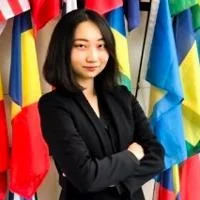
Programme: MSc Environment and Development, 2020
Role: Industrial Development Officer, United Nations Industrial Development Organization
Practical skills in conducting thematic research
I have recognized that the field of development is ‘tackling the reality’. Looking upon the development paradigm, I felt the urge to acquire practical skills in conducting thematic research and adequately design development projects. The MSc in Environment and Development has enabled me to shape my views towards international development and contribute towards developing countries with a focus on climate mitigation. My work focuses on accelerating the uptake of clean hydrogen in emerging economies, particularly in South Africa, to enable net-zero industrial decarbonisation and sustainable development as part of UNIDO's Global Programme for Hydrogen in Industry.
Focus on purpose and clear objectives
A key skill is to maintain 'leadership', and reflect on collaboration by bringing together diverse stakeholders to drive impact for net-zero industrial development. By building consensus towards addressing pressing issues on knowledge and information gaps, restricted market participation and risk of green colonialism towards extraction of clean commodities and resources, I strived to ensure sustainable and equitable solutions deliver tangible benefits for developing countries and emerging economies and their local communities.
My advice would be to focus on the purpose of the work and ensure there is a clear objective. By prioritising country ownership in such development projects, it is essential to enable tangible socio-economic benefits to truly reach communities for local job creation, delivering equitable development and environmental impact.
Reframing clean energy and adapting to economic uncertainty
Political polarisation and geopolitical tensions continuously shape the context of my work in clean energy cooperation, particularly around energy security, trade and financing which steers collective action and development aid.
To approach these issues, I have framed clean energy not only as a climate imperative but also as a driver of industrial competitiveness and local industrialisation. Accordingly, I have convened national and provincial governments, multilateral banks, and research institutions around a common agenda. I also strive to cooperate with climate funds that support climate priorities in developing countries and emerging economies. In parallel, I am adapting to economic uncertainty by responding to integrating innovative mechanisms such as Article 6 readiness and carbon financing into project design and implementation.
Applying learnings in the design of climate projects
One key course has significantly shaped my career path: 'Politics of Environment and Development' lectured by Kasia Paprocki and Julia Corwin. The course explored key themes at the intersection of development and environmental politics, focusing on the application of political ecology. This deepened my understanding of complex relationships amongst inequality centred on natural resource and environmental issues, while critically questioning prevailing international development approaches.
I have since applied these learnings in the design of climate projects by prioritising national ownership and ensuring that leadership rests with government counterparts. I have also emphasised the importance of integrating environmental and social considerations from the outset, including the early involvement of local communities in hydrogen projects, to promote inclusive sustainable development.

Programme: MSc Environmental Economics and Climate Change, 2017
Role: Senior Energy Consultant at WMG Sustainable Innovation
Understanding how real decisions about climate change are made
I chose to study Environmental Economics and Climate Change at LSE because I wanted to move beyond abstract discussions about climate change and understand how real decisions are made. During my undergraduate studies in economics, it became clear to me that climate change is not only an environmental issue, but an economic one. It is about incentives, costs, risks, and trade-offs over time. I wanted the analytical tools to evaluate climate/energy policies and investments in a way that is credible to policymakers, investors, and institutions.
The MSc at LSE gave me a solid framework for doing exactly that. The program emphasized economic appraisal, valuation and policy analysis under uncertainty. I learned how to quantify environmental impacts, compare alternative policy and investment options, and assess whether an intervention delivers real value once long-term effects and externalities are considered. Just as important, it trained me to think in a structured, evidence-based way and to be precise in how I frame and communicate complex problems.
These skills are central to my current role as a senior energy consultant. Much of my work sits at the intersection of economics, technology and policy, from assessing renewable energy and hydrogen projects to supporting regional decarbonization strategies. The LSE training helps me break down complex systems, challenge assumptions, and translate technical analysis into clear insights that support practical decision-making. In that sense, the degree did not just shape my career path, it continues to shape how I think and work every day.
Build strong fundamentals and practice applying them
Analytical thinking is one of the most essential skills required for my role. I developed it through academic training in economics and environmental/energy economics, and later by working on projects where incomplete data, uncertainty, and trade-offs are the norm.
Over time, I learned how to structure complex problems and focus on what really drives results. My advice to students is to build strong fundamentals but also to practice applying them. Work on real cases, internships, or projects where answers are not given and ambiguity is unavoidable.
The ability to translate complexity into clear decisions is equally important. In energy and climate work, technical and policy details can quickly become overwhelming. I developed this skill by working with different backgrounds (engineers, policymakers, investors) and learning that clarity matters as much as accuracy. Students should practice explaining complex ideas in simple terms, both in writing and verbally. If you cannot explain something clearly, you probably do not fully understand it yet.
Finally, professional judgment and responsibility are critical. Many decisions in this field have long-term consequences and no perfect answer. I developed judgment by gradually taking on more responsibility, learning from mistakes, and working with more experienced colleagues. My advice is to seek feedback, take ownership of your work and accept that good decisions often mean choosing the least-worst option, not a perfect one. These skills take time, but they define strong professionals in the energy and climate sector.
Diverse perspectives lead to better analysis and more realistic solutions
Equality, diversity, and inclusion have become increasingly important in the energy and climate sector, not as abstract values but as practical necessities. The challenges we work on (e.g. energy access, climate impacts, and infrastructure planning) affect people unevenly. In my role, this means being aware of who benefits, who bears the costs, and whose voices are included in decision-making. Working with multidisciplinary and international teams has also shown me that diverse perspectives lead to better analysis and more realistic solutions, especially when advising public authorities.
Digital transformation has fundamentally changed how we work. Advanced modelling tools, data platforms, and more recently AI have made analysis faster and more detailed, but they have also raised expectations. Today, it is not enough to produce results. You must be able to manage data, understand model limitations and use digital tools responsibly. In my role, AI and automation increasingly support report preparation, scenario analysis and policy monitoring, allowing more time to focus on interpretation and strategic advice.
Global trends such as climate change, migration, and conflict directly shape the energy sector. Climate change drives the urgency of decarbonization while migration and conflict highlight the links between energy security, affordability and social stability. These dynamics have made energy policy more complex and more political. As a result, my role has shifted from more techno-economic analysis toward integrated thinking (combining economics, policy, risks, social impacts) to support decisions in a more uncertain world.
Challenge ideas, defend your analysis and accept uncertainty
There were a few defining elements at LSE that clearly shaped my professional direction. The most important were the courses on economic appraisal and environmental valuation. They changed how I think about policy and investment decisions by forcing me to quantify impacts and compare alternatives. That analytical discipline has stayed with me and still underpins how I approach energy and climate projects today.
Equally important was the overall academic culture at LSE. The program encouraged critical thinking and debate, not passive learning. You were expected to challenge ideas, defend your analysis and accept uncertainty where it exists. That mindset prepared me well for real-world challenges, where decisions rarely have clear answers.
Finally, exposure to classmates from different nationalities and professional backgrounds played a major role. Discussing climate and energy issues with people who had lived through very different economic and political realities helped me understand how global and uneven these challenges really are. That experience pushed me toward a career that sits at the intersection of energy/environmental economics, policy, and practical decision-making.

Programme: MSc Environment and Development, 2023
Role: Energy Analyst at Aurora Energy Research
Developing skills in economic analysis, policy evaluation, and critical thinking
Before coming to LSE, I had already been involved in environmental causes since high school, when I volunteered with Greenpeace in Valencia, Spain. That was a formative and rewarding experience: contributing to a bigger cause gave me a real sense of purpose and showed me how impactful environmental action can be. Later, during my undergraduate studies, I took every opportunity to write about politics and the environment from an academic perspective. It was only in the final years of my degree, through a few elective courses, that I began to engage more deeply with development economics and the development sector.
The connections between resource management, environmental justice, and development quickly became clear to me, and I realised that sustainable development was the field I wanted to contribute to. The Geography and Environment programme at LSE gave me the analytical tools and critical perspective to understand these links in depth. The skills I developed at LSE, namely in economic analysis, policy evaluation, and critical thinking, help me guide how I approach complex questions today, particularly when working on energy transition issues that sit at the core of my current role.
Building robust quantitative analysis and developing market intuition
In my current role, I work on macroeconomic data analysis with a focus on Latin American energy markets. If I had to break down the skills I use the most in my day-to-day work, it would be as follows:
First and foremost is building a robust quantitative analysis: being able to work with data, build robust analysis, and draw clear conclusions. The second is developing sharp market intuition, so that the numbers are always interpreted in the right economic and political context. The third is structured problem-solving, which helps me break down complex market questions into manageable pieces and looking at them from different angles.
I would say that whilst studying at LSE, I developed these skills through a mix of quantitative coursework, applied research projects, and policy-focused classes. Studying international development courses taught me how to connect data, theory, and real-world constraints. My advice to students would be to lean into quantitative courses, as these become a real asset on the job market, but not to stop there; Understanding the bigger picture is just as important in macroeconomic and energy market analysis. Being able to combine technical skills with a broad, critical perspective is what ultimately leads to stronger and more relevant analysis, in my opinion.
The intersection of economics, policy, and geopolitics
Global trends like climate change, migration, and conflict sit at the heart of the energy sector. Climate policy is reshaping investment decisions and market design, while conflict and geopolitical tensions affect supply chains, prices, and energy security. This is particularly true for natural resources markets, such as natural gas, where geopolitical events dictate market fundamentals, sentiment and ultimately price movements.
Migration and development challenges also influence energy demand and infrastructure needs, particularly in emerging markets. These issues highlight how my role sits at the intersection of economics, policy, and geopolitics. Having a grasp on these broader dynamics is just as important as the numbers themselves.
Intellectual challenge and encouragement from professors
Taking GY474 Politics of Environment and Development, taught by Kasia Paprocki and Julia Corwin, was a real turning point for me. The course not only confirmed that I had chosen the right postgraduate degree, but it also opened my eyes to the sheer breadth of issues that the sustainable development sector engages with: from resource politics and environmental justice to development policy and power relations. It pushed me to think more critically about who benefits from “sustainable” transitions and who might be left behind, and to look beyond purely technical or economic solutions.
More broadly, the course showed me that sustainable development challenges can’t be understood through a single lens, but need to be approached through a mix of economic, political, and technical perspectives. That way of thinking has strongly shaped how I approach problems today. It reinforced the importance of combining rigorous analysis with a solid understanding of political and social contexts, which I now rely on heavily in my work on energy markets and the energy transition. The intellectual challenge and encouragement from the aforementioned professors also gave me the confidence to pursue a career geared towards more technical tasks, which I initially was not convinced I was capable of.

Programme: BSc Environmental Policy with Economics, 2013
Role: Executive Director, Santander CIB Structured Finance
Combining sustainability with finance
I wanted to combine sustainability with a degree suitable for a career in finance. My specialisation now is on financing low-carbon energy projects, which is at the heart of many of the global issues faced today.
Essential skills
1) Personal skills - constant need to network
2) Soft skills - ability to talk convincingly and ultimately sell banking solutions and manage challenging conversations
3) Technical skills - presentational, documentary and numeracy skills are all needed for effective client work.Diversity and innovation
Recruitment is ultimately about the people, and making the right choices promotes an effective team. Diversity is essential for a high-performing team in finance in the current era. I'm proud of the level of diversity we have in my business, but there is always room to do more. AI is starting to play a role and is expected to grow.
Climate change is at the heart of my career, and my focus is on innovative financing of next-generation asset classes (BESS, SAF, nuclear SMR, CCS, etc) and conventional low-carbon energy (renewables).
Defining courses
A course in the third year on climate policy and systems was especially memorable, as well as GY221 Environmental Assessment and Management (now discontinued). And of course EC102 Introductory Macroeconomics!
Programme: MSc Environmental Economics and Climate Change, 2023
Role: Project Coordinator, Conservation Strategy Fund
Alejandra is an environmental economist specializing in conservation finance and climate policy, focusing on Bolivia and the Amazon. She is currently Project Coordinator at Conservation Strategy Fund, where she leads initiatives linking finance and public policy to advance forest conservation and climate action.
Her work includes the analysis of investment needs and employment impacts of Bolivia’s Nationally Determined Contributions, the Permanent Financing Project for Protected Areas, and the design of finance mechanisms for the forests. She also contributed to the formulation of Bolivia’s NDC 3.0, supporting mitigation targets for the agricultural and forest sectors.
Regionally, Alejandra has co-developed mappings of innovative climate finance mechanisms across the Amazon and has represented Bolivia at international climate forums, including COP29 in Baku. She is a member of the Science Panel for the Amazon. Alejandra holds an MSc in Environmental Economics and Climate Change from the London School of Economics as a Chevening Scholar, and a BSc in Economics from Universidad Católica Boliviana.
Watch Alejandra discuss her career journeyProgramme: MSc Environment and Development, 2016
Role: Partner, ERM
Sandra is an expert in the design, implementation, and evaluation of sustainable development strategies across the private and public sectors, as well as international cooperation, in Latin America and the Caribbean. Over the past 15 years, she has led projects in 16 countries focusing on ESG risk management, sustainable finance, socio-environmental conflict prevention, and social inclusion and productive diversification. She has played a pivotal role in advancing the sustainable finance market in Latin America, leading more than 60 regional projects—many of them pioneering initiatives in their respective countries related to green and sustainable debt instruments. Sandra is currently a Partner at ERM, leading ESG and Sustainable Finance initiatives, with projects spanning Latin America, Asia, and North America.
Academically, Sandra holds a Master’s degree in Environment and Development from LSE, where she was a Chevening Scholar. She has published on corporate sustainability and has been a speaker at major international events, including the World Resources Forum (Geneva) in 2017, 2021, and 2023, as well as multiple investor and stock exchange forums across Latin America.
Watch Sandra discuss her career journeyProgramme: MSc Environmental Policy and Regulation, 2023
Role: Senior Sourcing & Strategic Partnerships Manager for Nature-based Solutions at Climeworks
Sophia Wood works at the intersection of climate finance, forest conservation, and community-led stewardship. As Senior Sourcing & Strategic Partnerships Manager for Nature-based Solutions at Climeworks, a Swiss carbon removal company delivering both nature-based and engineered credits to the voluntary market, she sources and structures partnerships with high-integrity NbS developers globally to support efforts to mitigate climate change. Her path to this role spans nearly a decade of conservation and climate work, including ARR and mangrove project development at Pachama and rePLANET, biodiversity research expeditions in the Ecuadorian Amazon with Operation Wallacea, and venture capital investment in Chile with Magma Partners.
Sophia's LSE dissertation used geospatial modeling to examine whether payments for ecosystem services reduce deforestation risk in Central African rainforests; that research continues to shape how she evaluates carbon projects today. She also serves as Chapter Lead for Women in Carbon Mexico, building a network of more than 500 women across the region's carbon markets. Sophia is driven by a conviction that the most durable conservation outcomes come from directing finance to Indigenous and local communities: those who have protected forests and biodiversity long before nature markets existed, and who continue to do so today.
Watch Sophia discuss her career journeyInternational policy, development and diplomacy
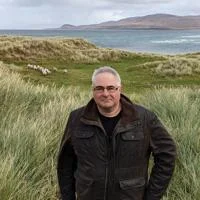
Programme: MSc Environment and Development, 2004
Role: Deputy Director - Bilateral relations for Asia and the Indo-Pacific - Natural Resources Canada
An ideal programme
MSc Environment and Development was an ideal programme to complete the research I wanted to. Specifically, researching the opportunities for shared resource scarcity to be an opportunity for conflict prevention and peacemaking rather than just a source of conflict. Early in my career, I was able to use my graduate research as the foundation for work to develop Canada's first environment/climate peace and security policy. Alas, due to restructuring and budget cuts, this was only in operation for a few years. In my current role, the potential for energy and resource governance to play a conflict prevention role remains as part of my duties (albeit secondary to core mandates).
Honing skills and learning from others
Essential skills for my role are 1) Interdisciplinary awareness of critical global geopolitical trends (with an emphasis on energy and natural resources); 2) Ability to synthesize enormous amounts of information and distil this for elected officials for critical deliverables; and 3) strong written and verbal communication skills.
I would say much of this is learned, although some of it is just experience and intuition. Practicing and honing skills over years and learning from others is key. Further, I always say I likely would have less honed relevant skills if I didn't read regularly and widely. Reading a wide variety of material from news, to world issues, to history, etc lays the foundation for skills that are able to link disparate issues and provide clarity, risks, and opportunities for where they intersect. Last, avoid letting AI do 'the work for you'. There is no substitute for doing your own research, writing, and preparing your own presentations tailored to you and your audience.
A geostrategic angle
Climate change and conflict have certainly shaped my career. I would also say the geopolitics of energy and resources enabled me to take on my current role as one of the only people in my role who has consistently warned about the monopolization of key supply chains by leading markets and the issues of holding countries hostage via energy monopolies. The geostrategic angle is likely why I attained my current post.
Defining moments and courses
I would say the following were big shapers of my professional path: i) the seminar debates which were always enlightening, particularly to hear the views and experiences of students from completely different parts of the world/culture/societies; ii) the course on complex emergencies provided a window into realities of international actions rather than just widely held public assumptions and shallow media reporting; iii) the ability to deep dive the research topic chosen for my thesis.
Programme: MSc Environment and Development, 2021
Role: Policy Officer - Land and Environment, European Commission (Directorate-General for International Partnerships)
After finishing a BSc in International Business Administration with a Minor in Development Economics at the Rotterdam School of Management, I decided to slightly adjust course and opted for an MSc in International Economics at the Erasmus School of Economics (Rotterdam). I took my first steps in the professional world at Trinomics, a public sector consultancy with a focus on environmental-, energy-, and climate change topics.
I was drawn back to academia to dive deeper into the topic and chose to pursue an additional MSc in Environment and Development at LSE. I entered the European institutions through an internship, working on water and biodiversity programmes in international cooperation. For the past 4 years now, I have been working as a Policy Officer for Land and Environment at the European Commission’s Directorate-General for International Partnerships.
Watch Niclas discuss his career journeyProgramme: MSc Environmental Assessment and Evaluation, 1998
Role: Ambassador of Luxembourg to Cabo Verde
An international outlook
It was mostly because of my interest in environmental affairs and in international affairs that I chose to study at LSE. It greatly contributed to my career by giving me a more international outlook and the tools to tackle complex issues and to provide solutions to them.
Essential skills and advice to students
Commitment to the job. Willingness to keep on learning, to be curious, to get "to know the cause of things". To get things done, it is more important to show empathy and to be generous than to be efficient. Communication skills paired with a good sense of humour always help.
The job of diplomacy
Following global trends is part and parcel of my job. Through our development cooperation, we work on climate adaptation and to improve professional skills and opportunities in the country. My job is to contribute to avoiding conflict through diplomacy and, if diplomacy fails, help to mitigate its human and economic consequences.
Memorable professors
I remember the staff of the Geography Department fondly, in particular the formidable Professor Judith Rees. I had the chance to attend an eye-opening seminar by Professor Bruno Latour on science and technology in society. I learnt a great deal on IR and war from Professor Christopher Coker, who became a dear friend, and from Professor Fred Halliday on the politics of the Middle East.
Cities, real estate and urban change
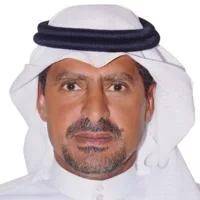
Programme: MSc Real Estate Economics and Finance, 2001
Role: Managing Partner at Allied Development Company
A rare and highly specialised academic pathway
What led me to study at LSE was, first and foremost, the institution itself. The London School of Economics and Political Science is globally recognised as one of the most prestigious universities in the fields of economics and finance, with a unique reputation for intellectual rigor, policy relevance, and real-world impact. I was drawn to an environment where economic theory is not treated as abstract, but as a tool for understanding and shaping markets and societies.
More specifically, the MSc in Real Estate Economics and Finance offered a rare and highly specialised academic pathway. Unlike more common degrees in accounting or finance the programme is deeply grounded in economic theory and empirical evidence, applied directly to real estate markets. That focus made the degree both distinctive and highly industry-specific, positioning me as a specialist rather than a generalist.
The knowledge gained was not theoretical for its own sake—it was tangible and immediately applicable. Concepts such as market efficiency, valuation under uncertainty, capital structures, spatial economics, and risk pricing translated directly into real investment decisions, development feasibility, and financing structures. This gave me a practical advantage early in my career and continues to shape how I analyse projects, structure transactions, and advise public and private stakeholders today.
Ultimately, the programme sharpened not just my technical skills, but my way of thinking— linking place, capital, and policy — which remains central to my current role in real estate development and advisory work.
Go beyond learning tools or formulas
One essential skill in my role is the ability to analyse complex situations and make sound judgments under uncertainty — whether evaluating a development site, structuring a financing solution, or advising a public institution. I developed this skill through a combination of rigorous academic training at LSE and early exposure to real transactions in commercial and investment banking, followed by hands-on development work.
LSE trained me to think in terms of theory, data, and evidence, while the market taught me how imperfect information, timing, regulation, and human behaviour affect outcomes.
Advice to students: go beyond learning tools or formulas — focus on understanding why markets behave the way they do, and constantly test theory against reality through internships, case studies, and real projects.
International and cross-cultural
From an EDI perspective, my work is inherently international and cross-cultural. I collaborate with colleagues, clients, investors, and public-sector counterparts across different countries, cultures, and belief systems.
For me, inclusion means treating everyone with respect and dignity regardless of gender, race, nationality, or religion, and creating professional environments where merit, competence, and integrity matter more than background.
I also tend to favour horizontal, collaborative working structures over rigid hierarchies, as they encourage accountability, faster decision-making, and more effective problem-solving—particularly in complex development and advisory contexts.
Influential professors
There were several defining academic influences during my time at LSE that shaped my professional path.
One particularly influential figure was Professor Henry Overman, whose work emphasised the importance of rigorous, evidence-based analysis when explaining how real estate and urban markets function. His approach reinforced the idea that real estate should be understood not only as a practical industry, but as a discipline grounded in economics, data, and clear analytical reasoning. This way of thinking has stayed with me throughout my career, and I remain in contact with him to this day.
Programme: MSc Regional and Urban Planning Studies, 2019
Role: Development Manager, Pierre & Vacances Europe
Since I was young, I have wanted to work on cities: what brings them to life, the people who shape them, and what makes them attractive. With a broad academic background enriched by the social and economic sciences, I gradually specialized in urban planning, eventually completing my studies at LSE.
It was important to me to gain an international perspective and to challenge my thinking by engaging with different viewpoints. Since then, I have worked on the Paris 2024 Olympic Village, as well as on residential and hospitality developments. Today, I continue to focus on local tourism, exploring its links with real estate development and the adaptive reuse of existing buildings.
Watch Mouna discuss her career journeyProgramme: MSc Real Estate Economics and Finance, 2023
Role: CFO, Daramis
I work for a leading residential real estate developer in Prague, called Daramis, in the position of a CFO. The company has built more than 4,300 apartments in the last 25 years and is preparing for another 3,000 in the near future. I started working for Daraims with a solid foundation and base. By shadowing the previous CFO, I gained an overview of her operational and managerial skills.
Watch Arman discuss his career journeyMarine conservation and the blue economy

Programme: BA Geography, 2013
Role: Blue Economy Manager, Waitt Institute
Supporting sustainable development projects
I wanted to study Geography and Environment at LSE because I have always considered myself to be an environmentalist since I love nature. It began in school when I learned about the impact of climate change and warming, acidic waters on coral reefs, called coral bleaching.
I was born in the Caribbean in Trinidad and Tobago. My dad used to take my sister and I snorkelling on a beautiful reef in Buccoo which has since been damaged due to changing environmental conditions. Knowing that I could work in this space and contribute to positive change for the environment, and people that rely on it for livelihoods, community, culture, food, intrinsic value and love was really important to me.
What I have learned in the degree has been useful in many ways for supporting sustainable development projects, advocacy, appreciation of diversity and working with different people in different parts of the world and different methods for research as well as ensuring impact.
Be open to learning from people who are not the same as you
There are so many free courses nowadays, but my work sponsored me to do the APMP which I found very useful for understanding the theoretical project management foundations. Plus, there is nothing like learning on the job, starting your own business or project to develop this!
I always loved traveling, so I either took holidays or opportunities in different countries that exposed me to different ways of living, being and thinking. This creates an openness and willingness to learn from and share with different people. LSE is also a very diverse institution and great for this. Growing up in London and being born in Trinidad, which are both very diverse places, also helped. Be open to interacting with and learning from people who are not the same as you.
Also, being able to present confidently, stand in front of audiences, and deliver ideas. LSE helped with this through presentations, but you can also join clubs and societies for this, or Toastmasters. Or just practice your ideas in the mirror, apply for jobs for interview practice, and get family and friends to question you.
Disparities and inequalities produced by climate change
EDI is something that is talked about a lot, and very important to this work, but is not always something that is actively practiced as much as it should be. Political shifts can sometimes make EDI and environmentalism trends, but they are foundational to the existence of many societies.
I think the climate change space is opening up to the fact that it is important, especially due to the disparities and inequalities that climate change is producing. Digital transformation is being brought more into analysis and being able to speed up the learnings and amount of information we analyse, use and produce.
Fantastic support at crucial times
LSE100 was very interesting. Environmental Change; Past, Present and Future was a great course and I met my best friend to this day on the programme. I also really enjoyed Economy, Society and Space, Environment and Development, and the Geography of Gender. Professor Diane Perrons was my supervisor and mentor, and she was such a fantastic support at crucial times. I still keep in touch with her.
Communications, HR and organisational leadership

Programme: BSc Geography, 1987
Role: Director and Senior Consultant, Seeing More Clearly
Solid grounding in statistics and writing
My parents encouraged me to study the subject that I enjoyed most. That was geography. Studying geography - as people advised me at the time - gave me a solid grounding in both statistics and writing, which have both been vital to my career and current role.
Beyond this, I think the need to look beyond superficial explanations - to think deeper - that geography demands of us, has shaped my fundamental approach to problem solving and played a key role in my success.
Invest time and money in personal development
One of my favourite sayings is that "it is no use being right if people don't listen to you". As a communication specialist, I have found this insight essential to my success.
Regard yourself as a work in progress, invest time and money in your personal development. If you look back on something you did a year or so ago and do not think you could do it better now, think about whether you have stalled.
Major impact of digital transformation
As a communication specialist, digital transformation has had a major impact on my craft. Individuals have a wider range of information sources, which means even 'finding' them is harder.
Individuals (and algorithms) create 'tailored' information domains (silos or echo chambers), making it harder to get their attention. The vastly reduced cost of creating and distributing information makes all of us more vulnerable to misinformation, making it harder to gain individuals' trust. Global trends such as climate change, migration, and conflict have informed the 'what' of communication but less the 'how'.
Importance of prioritisation
My first three years at LSE* were massively important. Mentioning specific moments, courses and people seems invidious but, just two:
Professor Derek Diamond sending me away with instructions to turn every sentence into two in an essay I had written for him was probably the single most useful intervention in my writing.
Helen Scogin and Craig Whitehead, whose support without doubt helped me actually get a degree (I really - and I mean really - enjoyed my second year with an unsurprising impact on my results). This was also an important life lesson about the importance of prioritisation.
*Note that I loved it so much that I came back to do a master's in Political Communication in 2011 and a master's in Public Policy in 2017.
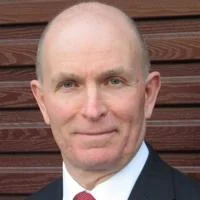
Programme: BSc Geography, 1980
Role: Retired. Formerly HR Director and prior to that Teacher and Lecturer.
It is easier to study what you like
I did a geography degree because I enjoyed the subject matter. I am a firm believer that it is easier to study what you like. I also did some Economics as well in my first degree, as I seemed to have some aptitude for both subjects. I also went on to a master's degree in Urban and Regional Planning for fun - on a part-time basis.
I ended up teaching mostly Geography and Economics, with a few variations. For example, I taught the first cohort to take an A-level in Environmental Science in the UK in the 1990s, and Land Use planning in Australia. The master's that I did for fun ended up creating an employment opportunity. The content and skills learned in getting the degrees were directly relevant to the first part of my career.
I switched to HR in the mid-nineties and spent the rest of my career managing people and facilities in global organisations. There are a lot of transferable skills that you learn as a teacher that can be directly applied to managing the people function (HR) in organisations.
I believe that my Geography degree directly contributed to my success in HR and Facilities Management in a number of ways; I had a good appreciation of cultural diversity and inclusion, a good understanding of project management, skills in using wide-ranging data sets, working both individually and as part of a team, and when working in international companies, an awareness of spatial impacts of decisions.
Take advantage of every opportunity presented to you
Spatial awareness and an appreciation of cultural diversity is crucial for international roles. Taking courses that focussed on these areas was particularly beneficial to developing an early awareness. This gave me an advantage in the jobs market in the 1980s and 1990s when these concepts were much less explicitly articulated in work environments.
Development of skills in using wide-ranging data sets and the ability to think clearly, logically and concisely. These are crucial in business environments.
As part of my degree, I needed to develop skills to work both individually and as part of a team. These are crucial skills for working in corporate environments in both 'for profit' and 'nonprofit' organisations.
My general advice is to take advantage of every opportunity that is presented to you. One simply never knows when or how the opportunity will translate into an opportunity - but it always seems to do so at some point in a career.
Business cultural transformation
EDI is a core part of an HR role, so this was an area where I was responsible for ensuring that EDI was understood and applied.
Digital transformation was integral to the HR role through promotion of Professional Development for all staff (as well as within the function with the implementation of HR Systems).
I was part of the generation that saw the introduction of personal computers and mobile phones in the workplace - to a point where these are now ubiquitous.
Not only was I responsible for training staff to use these tools, but also in managing the business cultural transformation that was associated with what these tools offer. For example, remote working and managing relations when these tools are used inappropriately.
Climate change was less of an issue in the early part of my career, but in the latter stages it was more relevant. Particularly, post-COVID, where people became much more aware of personal carbon footprints and how digital tools can address some of their impact. Although there will always be a need for people to meet face to face - after all, we are a social animal - the assessment of what work gets done and where, is now much more balanced and focused.
Spot the opportunities, be courageous and grab them
My tutors, Simon Duncan, Judith Rees and David Jones all provided me with personal perspectives and skills that, with hindsight, have served me very well throughout my whole career.
In addition, John Thornes provided me with an ability to think clearly and a passion for understanding physical landscapes that has stayed with me all my life. He also taught me the discipline of getting things done!
I would also add Denys Brunsden from King's College London. We were part of the Joint School in the 1970s, and we could study both Physical and Human Geography in equal measure. He was a great lecturer, a great leader on field trips, and provided me with some very accurate advice at a leaving party that proved to be unerringly accurate. The trick is to first spot the opportunities, and secondly be courageous and grab them. I have followed this advice and it has shaped my career at several inflection points.
My fellow students were also great. We were a small cohort (I think about 30) by modern standards, but that helped us to know each other as a group and to work together. We had fun!
Research, academia and education
Programme: MA Cities, Space and Society 2006, MSc Human Geography Research, 2008, PhD Human Geography, 2013
Role: Reader in Geography and Sustainable Development, University of St Andrews and Professor in Human Geography, Department of Sociology & Human Geography, University of Oslo
Fostering genuine intellectual curiosity and independence
I was frankly star-struck, as literally all the major figures in critical urban studies were teaching at LSE at the time, including Richard Sennett, Saskia Sassen and Ed Soja. Joining them as a student was a dream come true!
Studying geography at LSE meant combining theoretical depth with real-world engagement throughout. All three (yes, three!) of my programmes, from the MA to the MSc to the PhD encouraged us to think carefully about how urban processes unfold across different places and scales, from neighbourhoods to global systems. That approach has remained central to my work.
During my MSc and PhD, I began researching the spatial politics of Athens, particularly the neighbourhood of Exarcheia, which became a laboratory for thinking about urban conflict, solidarity networks, and grassroots organisation during the Greek economic crisis.
That research has since shaped my long-term interest in how communities organise collectively in times of crisis. Perhaps most importantly, LSE fostered a genuine sense of intellectual curiosity and independence. It encouraged us as students not only to understand the world but also to question how knowledge itself is produced. Needless to say, that mindset continues to guide both my research and my teaching today.
Critical thinking is foundational
Critical thinking is foundational in research; while having something of an intangible, 'stardust' quality, it entails not only analysing existing knowledge but also questioning assumptions and identifying new ways of understanding social processes. I developed this skill largely through the research training I received during my postgraduate studies at LSE, particularly through reading widely and learning how to engage constructively with different theoretical perspectives.
For the next generation of students, and therefore our future colleagues, my advice would be to read broadly, remain curious, and treat disagreement as an opportunity to refine your thinking. It's not something to avoid!
Collaboration is another essential skill. Many of the most interesting research projects today involve teams that span disciplines, institutions, and countries. In my own work, collaboration with colleagues, artists, and community organisations has been central to developing participatory research approaches that I focus mostly on. As students, you can begin building these collaborative skills early by working on group projects, engaging with organisations outside the LSE walls, and learning to appreciate different perspectives.
Finally, communication is critical. You might have the best ideas in the world, and I bet you will, but you need to communicate them clearly to different audiences, which will of course vary. Whether it is your colleagues, policymakers, community organisations, or the 'broader public' (whatever that means!), you need to learn to tweak and adjust your message to speak to their register. Luckily, this is something that becomes much, much easier with time - as do most things!
Institutional barriers and injustices
We are all still navigating the AI maze. Is it a convenience or a nightmare path to hell? The jury's still out, in my opinion. EDI has been paramount - as a non-Anglo member of academia in the UK, I have sometimes felt the institutional confines of inadequate EDI policies, but in return as a heteronormative cis-man I have also, however inadvertently, been on the receiving end of the bias that the institutions show, still to this day, toward my demographic category. Fighting these institutional barriers and injustices is, suffice to say, always ongoing.
Generosity and kindness
I still remember Professor Richard Sennett, in his seminal urban studies course, asking us to write a short piece of feedback after each week's lecture. Incredibly for a scholar of his calibre, it was only until the very end of the course that he assigned us one of his own readings - 'Uses of Disorder', one of his early books.
I prepared a well-intentioned, but in my mind still polemical critique of his work, printed it out to distribute to the students and himself, and accepted his invitation to read it out in class. I will not forget the generosity and kindness with which he responded to my half-baked argument, recognising perhaps the intention, but also how difficult it must have felt to try and stand up to him. This generosity and kindness is something that really stayed with me. I hope, I can only hope, it is something I am passing on to the great next generation of urban colleagues to come.