

"It was a life-changing opportunity"

MSc Gender, Development and Globalisation alum Clara Soto Arias explains how the Chevening Scholarship led her to researching food security in Peru
Before coming to LSE, I had worked for five years across different sectors and themes before fully understanding how the initiatives I was involved in were connected by a common purpose: advancing a gender perspective in spaces where it was largely absent, especially in the field of urban studies in Peru. Coming from that background, joining the Gender Department at LSE through the Chevening Scholarship has been a life-changing opportunity. I could never reduce this experience to the content you learn, although it is outstanding. Rather, what truly gives meaning to the experience is becoming part of a broader academic community through faculty members, international colleagues, guests who visit the department, and other Chevening Scholars.


In my specific programme, Gender, Development & Globalisation, we were three Chevening Scholars and six students from Latin America, many of whom were already working in the field across the region. The master's programme became a key space to question our previous knowledge of gender from a feminist perspective while combining it with our own interests. In my case, it allowed me to deepen my understanding of gender and development while exploring their intersections with urbanism through optional courses in the Geography Department and the School of Public Policy. LSE offers many resources to shape your own learning experience. Even when you are enrolled in a specific programme, you can complement it through courses in other departments, skill labs and other opportunities. Therefore, take advantage of this in your Chevening application, highlighting not only the relevance of your course, but also experiences beyond the classroom that help you achieve your future goals.
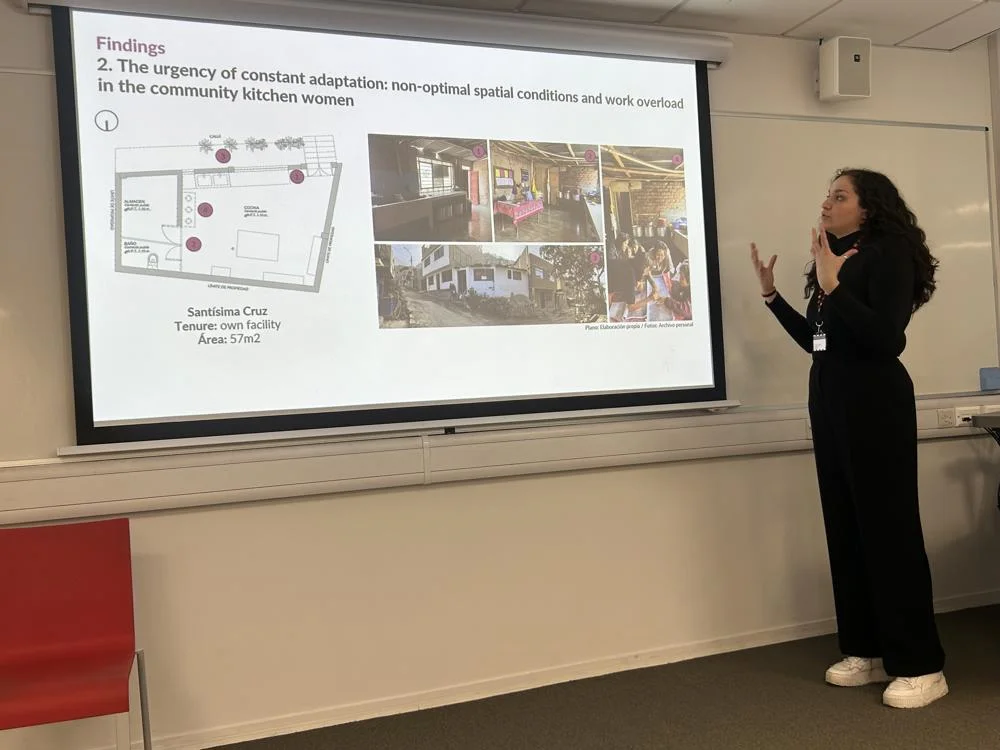


Looking back on my Chevening application process, I would say the key to submitting a successful application is having a clear understanding of your professional goals and how the Chevening experience, within your chosen university and department, can help you achieve them. While this may sound simple, it is a challenging process that requires significant self-reflection. For me, being able to study at LSE Gender This has been essential for me in continuing my work as an Associate Researcher at the Pontifical Catholic University of Peru (PUCP) within the Nurturing Food Inter-Structures project, funded by the Swiss National Science Foundation. Through this project, I conduct research on community kitchens in Peru as part of a comparative initiative that aims to create a counter-archive within the official architecture and urban repository focused on grassroots women's practices in urban informal settlements, while also contributing to a stronger evidence base for community kitchens policies in Peru.
