

Carrying the Street into the Classroom: Feminist Movements Around the World, six years on

MSc Gender, Policy and Inequalities alum Milena D’Atri shares a short history of her self-founded student initiative and how it uses shared learning to bring people together.
Feminist Movements Around the World (FMAW) started in 2020 as a community of students within LSE’s Department of Gender Studies. It was born as a strategy to reclaim shared spaces lost to the COVID-19 pandemic and the scarcity of meaningful online alternatives within formal education. The proposed dynamic was simple: each week, someone prepared a short presentation about a movement or social uprising in their home country, followed by questions, debates and sharing of experiences. During the 2020/21 academic year, FMAW became an important space of belonging for students studying in complete isolation, far away from home and their classmates.
In the following years, the initiative continued, and is now starting its seventh edition. FMAW remained a platform for students, especially those whose voices are less represented in the syllabus, to share their political stories. Unlike formal teaching, the meetings focus on transmitting the feelings of the street in a given context, rather than focusing on a movement's “formal” aspects. Our presentations prioritise shared experiences, asking not what we can be taught in a classroom, but rather what we can learn from each other.
FMAW also enables participants to engage with the history of their own countries from a new perspective. In increasingly authoritarian and anti-democratic times, learning with each other becomes essential to spark radical political imagination. Through collective learning, we aim to build a stronger bridge between academia and activism. Moreover, this community has always emphasised that you don’t need to “be an expert” to participate: the focus is on building a narrative that combines personal stories and political movements.
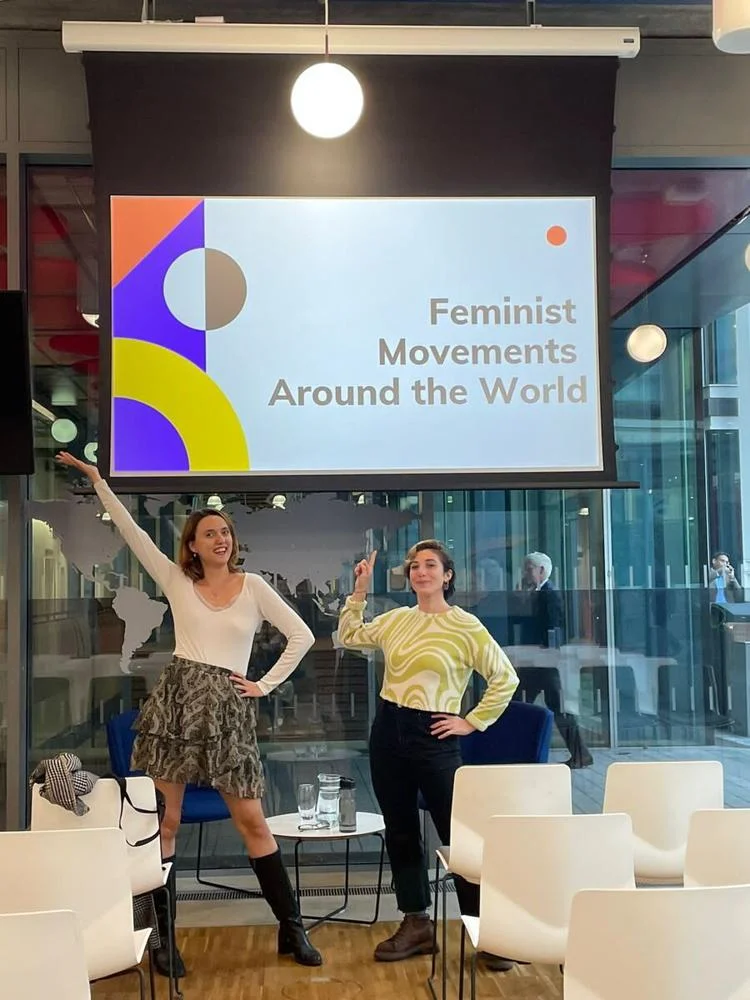
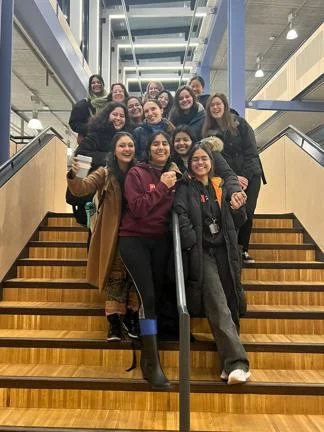
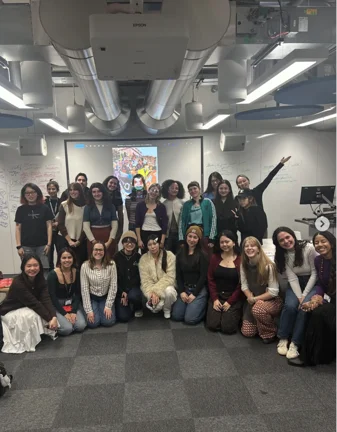
In the six years since its foundation, the space has transformed and grown. As a student-led initiative, each year we elect student reps who coordinate the meetings. Students from over 30 different countries have shared their stories, from Chile to Bangladesh, Senegal to North Macedonia. Our participants have also brought unique, varied and interesting interpretations of the word “presentation”. Some students put everyone to dance before presenting on reggaeton's political role in Puerto Rico's social uprising. Others brought food from their country to accompany a presentation and a lively discussion about domestic workers in Brazil. Three presenters shared poetry as a form of revolution in India. In each encounter, we share tools for solidarity, from movies and music to repositories, activists and laws. Most importantly, we have woven threads of solidarity between feminists from around the world.
From two decades of feminist activism for domestic violence legislation in China, to public advocacy against gender-based violence in the Dominican Republic, generations of anti-rape activism in Bangladesh, and legal aid for survivors of violencia vicaria (violence inflicted on women through their children, family members, or loved ones), the presentations highlighted both the global reach of gender-based violence and the diverse ways feminists resist it.
2025/26 was a particularly active year. Three student reps (huge shout-out to Lotte, Nikki, and Karleen!) led the community in an inspiring way. For the first time, FMAW had its own Instagram page. Moreover, the events started to be shared beyond the Gender Department, including presenters and audiences from a range of departments and programmes within LSE. I hope that the initiative continues to grow and attract students from all across the university.
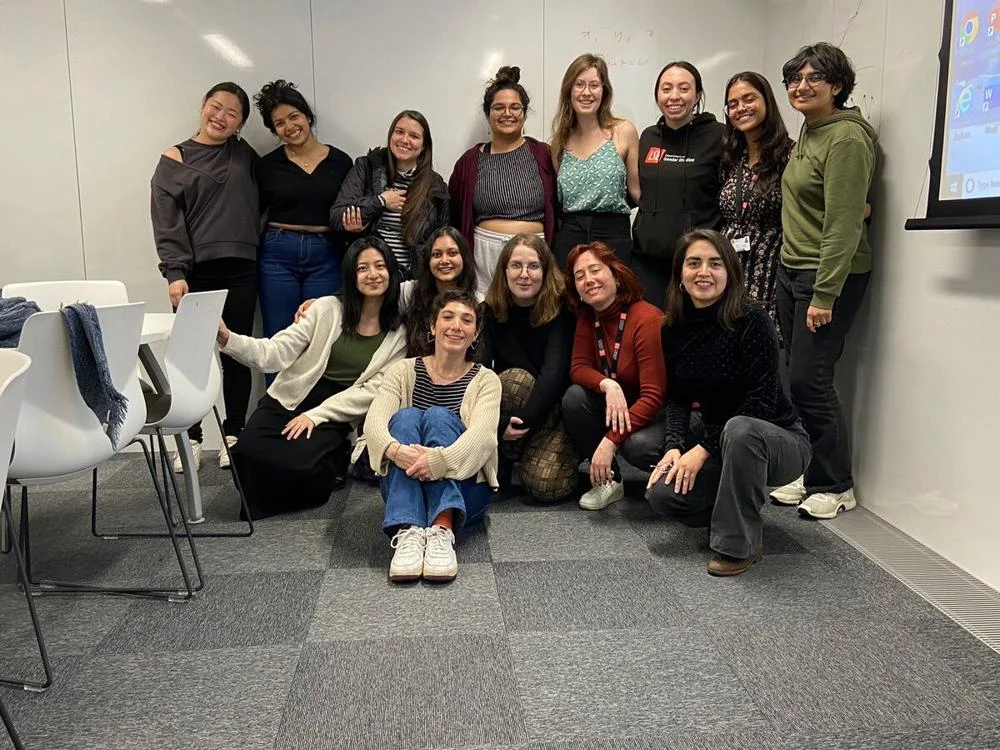
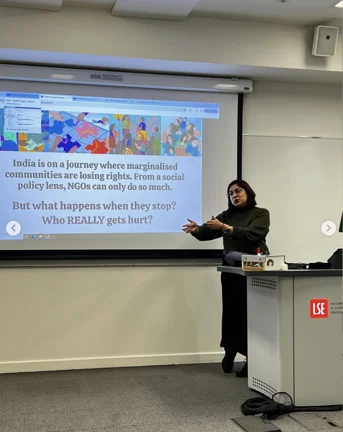
Feminist Movements Around the World is a space where people feel comfortable, safe, and sheltered. But what makes it unique is that it offers time: time for ideas to circulate, and for us to wander off on tangents beyond a set syllabus. Although it started as a response to the challenges of online learning, its continued relevance shows how much alternative learning spaces are needed, as Silvia Federici would put it, to re-enchant the world.
Milena D’Atri is currently a PhD candidate at the Centre of Latin American Studies and a Margaret Anstee Centre for Global Studies Scholarship recipient at the University of Cambridge. She holds an MSc in Gender, Policy and Inequalities from the London School of Economics and a BA in Education Sciences from the Universidad de Buenos Aires. She has over a decade of experience in sexual and reproductive health and rights, gender justice and human rights advocacy across civil society and international organisations. Her current research examines how feminist movements construct political imaginaries of the future amid democratic crisis and far-right consolidation, using Argentina as a case study, and sits at the intersection of feminist theory, political science, and the study of far-right politics.
Annex: Some titles of presentations over the years
2020/21
- The green wave: the abortion movement in Argentina
- The Colombian peace process and the feminist movements in it
- Femicides in Ciudad Juarez, Mexico
- Eritrean feminism: past, present and future
- We're still here: indigenous resistances in Canada
- Group rape and the issue of consent, La Manada cases in Spain
2021/22
- Feminist movements in Macedonia
- Women in the Italian Partisan Resistance: 1943-45
- Navigating Instability: Gender, Queerness and Sectarianism in Lebanon
- Repeal: The Struggle for Abortion Rights in Ireland
- From pre-colonial to contemporary days: a tale of Senegalese feminism
2022/23
- Puerto Rico: Neo-colonialism, Resistance, and Collective
- Revolution and Poetry in India
- Current Feminist Movement and Feminist Solidarity in Turkey
- Engaging with the diaspora: Feminist Movements of Saudi Arabia and the Philippines.
2023/24
- Lesbian, bisexual, queer, women, and gender non-conforming people’s movement in Kenya
- Norway: The utopia everyone dreams of (except from being freezing cold)
- Invisible Brazil: The women who were swept under the rug
- Azerbaijan at a crossroads: Gender, culture and change
2024/25
- The 4B Movement in South Korea and its Implications after the US Elections
- Feminist Movements in China’s Cyberspace
- From TikTok to National TV: Digital Feminist Activism and the Institutional Downplaying of Gendered Oppression in Vietnam
2025/26
- 30 years after Beijing: translating global policy into local feminist actions in China and Perú
- Rage Against Rape: Tracing Bangladesh’s Anti-Rape Movement and Feminist Activism
- Underground Unlearning: How NGOs in India are tackling the Far-Right Movement through Educational Institutions
- Threads of Resistance: Feminist Movements and Collective Liberation in South Asia