
Global Trade Policy Challenges: preparing for the next decade

The world economy is going through a phase of considerable turmoil and instability. First, globalisation seems to be reversing with an acceleration of economic disintegration among major trading powers, securitisation of global trade and investment relations within geo-economic blocks and paralysis of multilateral global governance. Second, our domestic economies are undergoing profound structural shifts in the light of the climate emergency, energy scarcity and rise of digital technologies and artificial intelligence. And third, the centre of the world economy is shifting towards the Asia and Global South. How do policy-makers see these developments? And how can states position themselves to benefit rather than lose from today’s phase of turmoil?
This event brings together trade policy-makers and academics to discuss the challenges and policy strategies for the next decade.
Meet our speakers and chair
Ignacio Garcia Bercero (@ignaciobercero) is a Director in DG Trade of the European Commission. Since 2012, he has been responsible for overseeing EC activities in the fields of Neighbouring Countries, US and Canada as well as being the Chief Negotiator for the EU- India FTA.
Iana Dreyer (@IanaDreyer) is the founder editor of Borderlex.eu, the leading European publication on trade policy. Before founding her publishing activity, Iana worked in think tanks, writing on trade and energy policy in Brussels and Paris. She has worked for the European Centre for International Political Economy, the Institute Montaigne and the EU Institute for Security Studies.
Crawford Falconer is Second Permanent Secretary for the Department for International Trade. He also heads the trade negotiation profession within the Civil Service. Crawford has spent over 25 years working on trade policy and trade negotiations both inside and outside government. He has worked in a number of high-profile positions including as the New Zealand Chief Negotiator and Adviser. He most recently served as Professor of Global Value Chains and Trade at Lincoln University, New Zealand.
Han-Koo Yeo is the former Minister for Trade of South Korea and served under President Moon Jae-in from 2021 to 2022. He has published multiple works in both English and Korean, including a Harvard Business School case study about the Kaesong Industrial Complex, and a chapter in the World Bank’s "Special Economic Zones".
Geoffrey Yu is a Senior EMEA Market Strategist at BNY Mellon. Prior to this he spent almost 14 years at UBS. Additionally, Yu served as an investment strategist for European UHNW clients, providing cross asset UHNW investment and trading ideas.
John Alty (@JohnAlty1) is a Visiting Professor in Practice at LSE's European Institute. He was previously the Director General for Trade Policy, Department for International Trade, responsible for building UK trade capacity and developing trade policy post EU referendum.
Robert Basedow (@JRBasedow) is an Assistant Professor for International Political Economy. Prior to joining LSE, he was an official at the Organisation for Economic Co-Operation and Development (OECD) in Paris, worked as consultant for the European Institutions, the German government and was a Max Weber Fellow at the European University Institute (EUI) in Florence.
More about this event
This event forms part of LSE’s series, showcasing research and expertise on the state of the UK economy, its global context and its future.
The European Institute (@LSEEI) is a centre for research and graduate teaching on the processes of integration and fragmentation within Europe.
Twitter Hashtag for this event: #LSEUKEconomy
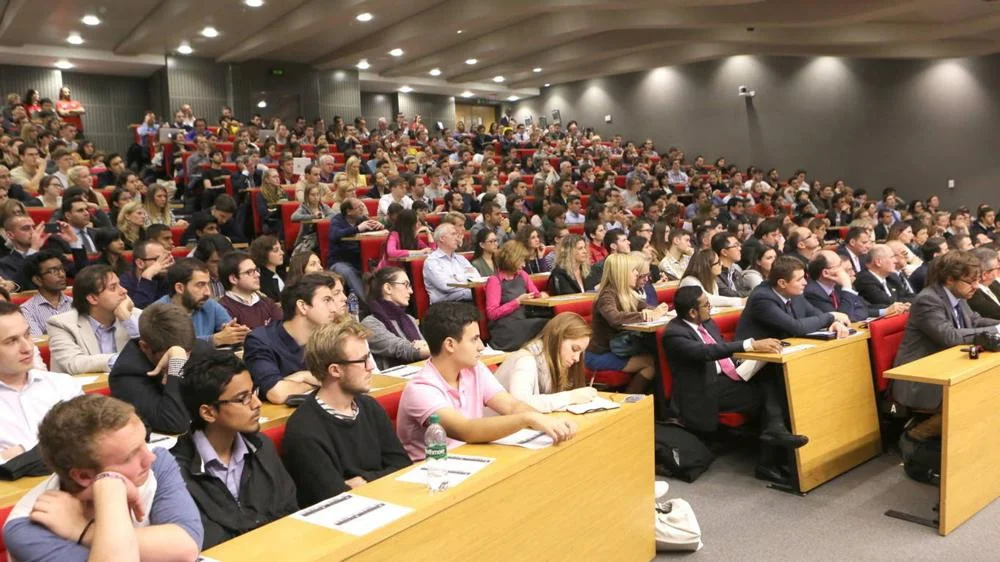
Featured image (used in source code with watermark added): Photo by Dennis Amith on Flickr
Podcast & Video
A podcast of this event is available to download from Global Trade Policy Challenges: preparing for the next decade.
A video of this event is available to watch at Global Trade Policy Challenges: preparing for the next decade.
Podcasts and videos of many LSE events can be found at the LSE Public Lectures and Events: podcasts and videos channel.
Many speakers at LSE events also write for
, which present research and critical commentary accessibly for a public audience. Follow
, the
, the
,
and the
to learn more about the debates our events series present.
Automated live captions will be available at this webinar. Please note that this feature uses Automatic Speech Recognition (ASR) technology, or machine generated transcription, and is not 100% accurate.
Photographs taken on behalf of LSE are often used on our social media accounts, website and publications. At events, photographs could include broad shots of the audience and lecture theatre, of speakers during the talk, and of audience members as they participate in the Q&A.
If you are photographed participating in an event Q&A but would not like your photograph to be stored for future use, please contact events@lse.ac.uk.
We aim to make all LSE events available as a podcast subject to receiving permission from the speaker/s to do this, and subject to no technical problems with the recording of the event. Podcasts are normally available 1-2 working days after the event.
of past events can be found online.
Follow LSE public events on Twitterfor notification on the availability of an event podcast, the posting of transcripts and videos, the announcement of new events and other important event updates. Event updates and other information about what’s happening at LSE can be found on the LSE's Facebookpage and for live photos from events and around campus, follow us on Instagram. For live webcasts and archive video of lectures, follow us on YouTube.
LSE in Picturesis a selection of images taken by the school photographer.
If you are planning to attend this event and would like details on how to get here and what time to arrive, as well as on accessibility and special requirements, please refer to
. LSE aims to ensure that people have equal access to these public events, but please contact the events organiser as far as possible in advance if you have any access requirements so that arrangements, where possible, can be made. If the event is ticketed, please ensure you get in touch in advance of the ticket release date.
Access Guides to all our venues can be viewed online
.
LSE has now introduced wireless for guests and visitors in association with 'The Cloud', also in use at many other locations across the UK. If you are on campus visiting for the day or attending a conference or event, you can connect your device to wireless. See more information and create an account at Join the Cloud.
Visitors from other participating institutions are encouraged to use
. If you are having trouble connecting to eduroam, please contact your home institution for assistance.
The Cloud is only intended for guest and visitor access to wifi. Existing LSE staff and students are encouraged to use
instead.
LSE holds a wide range of events, covering many of the most controversial issues of the day, and speakers at our events may express views that cause offence. The views expressed by speakers at LSE events do not reflect the position or views of The London School of Economics and Political Science.
From time to time there are changes to event details so we strongly recommend that if you plan to attend this event you check back on this listing on the day of the event.
LSE holds a wide range of events, covering many of the most controversial issues of the day, and speakers at our events may express views that cause offence. The views expressed by speakers at LSE events do not reflect the position or views of the London School of Economics and Political Science.
Join the LSE Events mailing list