Wired to save the planet: rethinking energy in an electrified world

Speakers


Chair
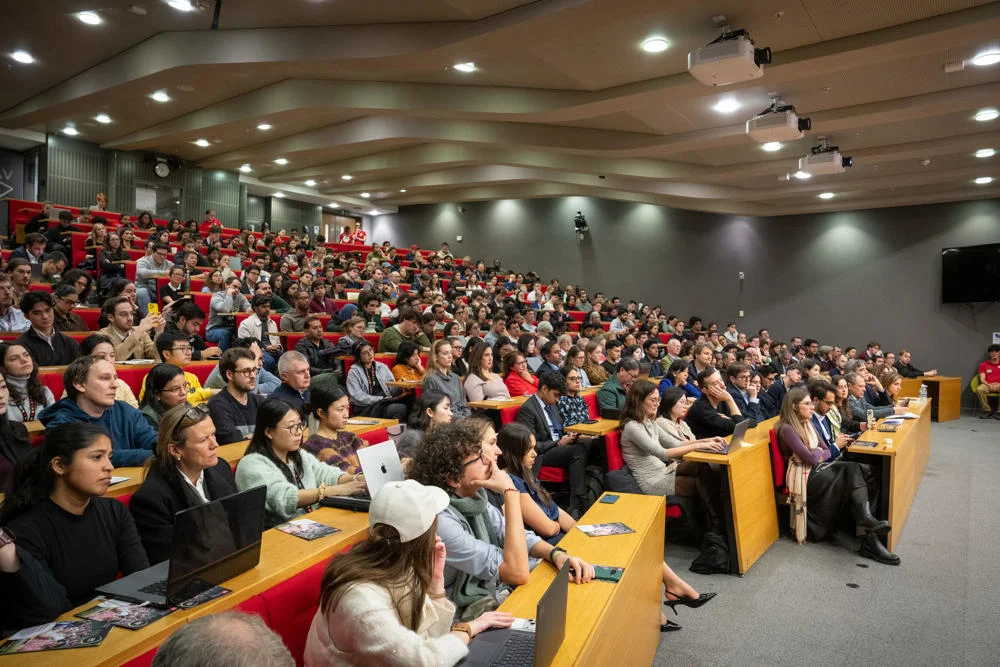
As the world races toward net zero, electricity systems are under pressure like never before. The push for cleaner power collides with soaring demand – driven by electrification, population growth, and energy-hungry technologies such as artificial intelligence and data centres. Can we keep the lights on, cut emissions, and keep energy affordable all at once?
This panel brings together experts from academia, industry, and the policy world to debate the forces reshaping the grid of the future. Speakers from LSE, government, and the private sector will explore how digitalisation, renewable integration, and evolving market structures are transforming the way we generate, trade, and consume electricity.
Together, we'll ask: what does a truly sustainable and intelligent grid look like and who gets to design it?
Meet your speakers and chair
Min-kyeong (Min) Cha is a LSE Fellow in Energy Economics and Policy in the Department of Geography & Environment. She draws on her interdisciplinary background to examine topics such as renewable energy policy, electricity markets, the adoption of clean energy technologies, and energy consumption behaviour.
Theresa Chambers is a senior analyst and public sector leader, currently working in the UK government's Department for Energy Security and Net Zero, where she leads on power sector analysis. Her team applies analytical, economic and systems‑thinking approaches to some of the most complex challenges facing the energy system. Theresa has previously served as Operational Research Head of Profession in three major government departments and was instrumental in establishing the Home Office Data Analytics Centre. Her career spans strategic leadership, applied analysis and embedding evidence‑driven decision‑making at scale, with a consistent focus on improving policy outcomes and public value.
Spencer Dale is Professor in Practice in the Global School of Sustainability at LSE. He was previously Chief Economist at the Bank of England (including during the financial crisis). He has been a trusted advisor and counsellor for a range of individuals and institutions, including the Federal Reserve Board.
Tim Heal sits on the Octopus leadership team and is responsible for global strategy, corporate development, and international expansion. For four years he led revenue growth for Kraken, delivering enterprise software deals totalling 70 million utility customers relationships. Since 2017, Tim’s team has executed more than 40 strategic deals, including acquisitions of retail energy businesses, energy start-ups, and technology platforms. Before Octopus, Tim was at Boston Consulting Group. He holds an MBA from INSEAD and a degree in Natural Sciences from University of Cambridge.
Shefali Khanna is an LSE Fellow in Energy Economics and Policy in the Department of Geography and Environment at LSE. Her research focuses on understanding the role of behaviour change in the transition to a zero emissions economy and on evaluating the impact of climate and pollution mitigation policies. She was previously a Research Associate in Energy and Environmental Economics in the Business School at Imperial College London. She earned a PhD in Public Policy from Harvard University.
More about this event
This event is part of the LSE Festival: How to save the planet running from Monday 15 to Saturday 20 June 2026. This year's Festival explores how existential threats including the climate crisis, conflict and AI are affecting all parts of the world, transforming the way and where we live, and how our societies function. With a series of events asking what can we be doing to save the Earth, its people and environment? Booking for all Festival events will open on Monday 18 May.
The Department of Geography and Environment is a centre of international academic excellence in economic, urban and development geography, environmental social science and climate change.
For any queries relating to this event please email events@lse.ac.uk.
Hashtag for this event: #LSEFestival
Many speakers at LSE events also write for
, which present research and critical commentary accessibly for a public audience. Follow
, the
, the
,
and the
to learn more about the debates our events series present.
For events that are livestreamed, automated live captions are available. Please note that this feature uses Automatic Speech Recognition (ASR) technology, or machine generated transcription and is not 100% accurate.
Photographs taken on behalf of LSE are often used on our social media accounts, website and publications. At events, photographs could include broad shots of the audience and lecture theatre, of speakers during the talk, and of audience members as they participate in the Q&A.
If you are photographed participating in an event Q&A but would not like your photograph to be stored for future use, please contact events@lse.ac.uk.
Please contact the Press Office if you would like to request a press seat or have a media query about this event, email
. Please note that press seats are usually allocated at least 24 hours before each event.
We aim to make all LSE events available as a podcast subject to receiving permission from the speaker/s to do this, and subject to no technical problems with the recording of the event. Podcasts are normally available 1 week after the event.
of past events can be found online
Follow LSE public events on X for the latest updates on all our events and ticket releases.
Livestreams and archive videos of past lectures are shared on our YouTube channel while event podcasts can be found on the LSE Player.
Event updates and other information about what’s happening at LSE can be found on our Facebook page and for live photos from events and around campus, follow us on Instagram.
Attending our events in-person or online? Join the conversation using #LSEEvents.
If you are planning to attend this event and would like details on how to get here and what time to arrive, as well as on accessibility and special requirements, please refer to
. LSE aims to ensure that people have equal access to these public events, but please contact the events organiser as far as possible in advance if you have any access requirements so that arrangements, where possible, can be made. If the event is ticketed, please ensure you get in touch in advance of the ticket release date.
Access Guides to all our venues can be viewed online
.
LSE has now introduced wireless for guests and visitors in association with 'The Cloud', also in use at many other locations across the UK. If you are on campus visiting for the day or attending a conference or event, you can connect your device to wireless. See more information and create an account at Join the Cloud.
Visitors from other participating institutions are encouraged to use
. If you are having trouble connecting to eduroam, please contact your home institution for assistance.
The Cloud is only intended for guest and visitor access to wifi. Existing LSE staff and students are encouraged to use
instead.
From time to time there are changes to event details so we strongly recommend that if you plan to attend this event you check back on this listing on the day of the event.
LSE holds a wide range of events, covering many of the most controversial issues of the day, and speakers at our events may express views that cause offence. The views expressed by speakers at LSE events do not reflect the position or views of the London School of Economics and Political Science.
Subscribe to the LSE Events newsletter