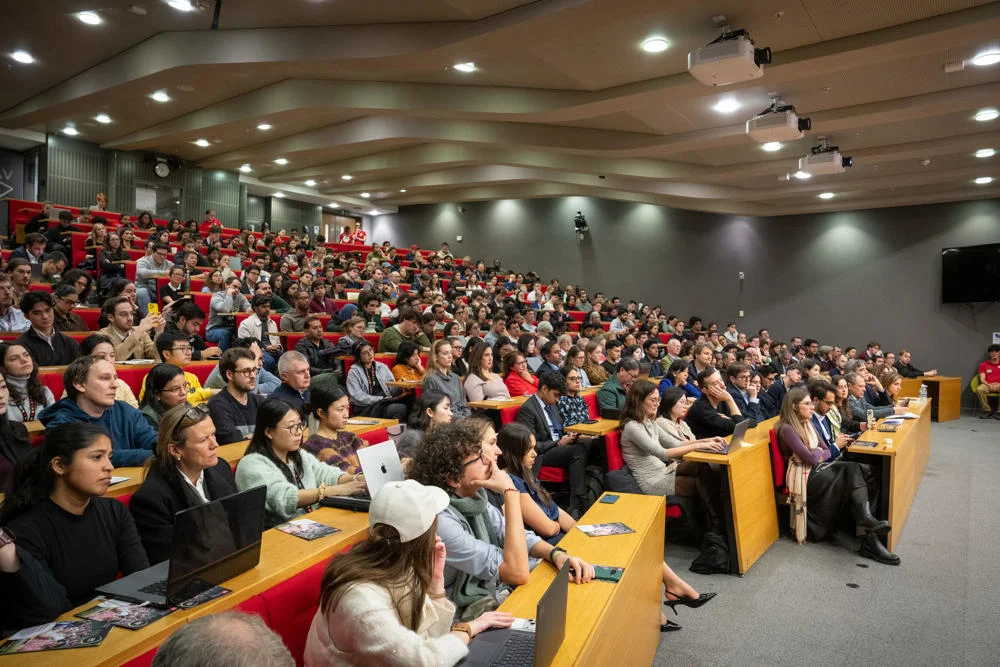
Governing growth: the postwar transformations of capitalism and democracy
Speaker



How do capitalist economies change over time? And what political consequences follow?
In his new book, Governing Growth, which he will discuss at this event, Peter Hall traces the interactions between politics and economics in Western democracies over the past eighty years, identifying a series of profound shifts in the political economies of Europe and the United States. Hall develops the concept of successive growth regimes, each the result of public policies interacting with the strategies of private firms. Alongside each growth regime, he argues, there is a distinctive representation regime, which determines whose voices have the most influence over public policy. Showing how these two regimes interact, he develops a new account of the processes through which political economies change over time. Hall outlines three postwar growth regimes: an era of modernization, from 1945 to about 1975; an era of liberalisation, from 1980 to the late 1990s; and an era of knowledge-based growth, beginning at the turn of the century. His sweeping analysis sheds new light not only on the relationship between capitalism and democracy, but also on the roots of our contemporary political dilemmas
Meet our speakers and chair
Peter A Hall is Krupp Foundation Professor of European Studies in the Department of Government at Harvard and a resident faculty member of the Minda de Gunzburg Center for European Studies.
Sara Hobolt is the Sutherland Chair in European Institutions and Head of the Department of Government at LSE.
David Soskice is Emeritus Professor in the Department of Government, and was School Professor of Political Science and Economics from 2012-2022 at LSE. He taught macroeconomics at Oxford and subsequently Research Professor of Comparative Political Economy at Oxford and senior research fellow at Nuffield College, and Research Professor of Political Science at Duke.
Cheryl Schonhardt-Bailey is author and editor of several books on trade policy and monetary policy. Her 2022 book, Deliberative Accountability in Parliamentary Committees, asks why we see declining trust in British government and political institutions while at the same time we have seen an explosion in government accountability.
More about this event
Join us on campus or register to watch the event online at LSE Live. LSE Live is the home for our live streams, allowing you to tune in and join the global debate at LSE, wherever you are in the world. If you can't attend live, a video will be made available shortly afterwards on LSE's YouTube channel.
The Department of Government is home to some of the most internationally respected experts in the study of politics. Within the Department, our expertise centres on six sub-disciplinary pillars of political research: Comparative Politics, Conflict Studies, Political Behaviour and Political Psychology, Political Economy and Institutional Analysis, Political Theory, and Public Policy and Public Administration
Hashtag for this event: #LSEEvents
Any questions?
If you have a query see our Events FAQ or take a look at the information below.
You can also contact us at events@lse.ac.uk.
Many speakers at LSE events also write for LSE Blogs, which present research and critical commentary accessibly for a public audience. Follow LSE British Politics, LSE Business Review, LSE Impact, LSE European Politics and the LSE Review of Books to learn more about the debates our events series present.
If the event is live streamed, automated live captions will be available. Please note that this feature uses Automatic Speech Recognition (ASR) technology, or machine generated transcription and is not 100% accurate.
Photographs are regularly taken at LSE events both by LSE staff and members of the media and events are routinely filmed. Photographs from events taken by LSE staff are often used on LSE's social media accounts, with videos being made available on the LSE Player. If you have any concerns about this please contact the event organiser in advance of the event.
Please contact the Press Office if you would like to request a press seat or have a media query about this event, email LSE.Press.Events@lse.ac.uk. Please note that press seats are usually allocated at least 24 hours before each event.
We aim to make all LSE events available as a podcast subject to receiving permission from the speaker/s to do this, and subject to no technical problems with the recording of the event. Podcasts are normally available 1 week after the event. Podcasts and videos of past events can be found online.
Event updates and other information about what’s happening at LSE can be found on our Facebook page and for live photos from events and around campus, follow us on Instagram.
Livestreams and archive videos of past lectures are shared on our YouTube channel while event podcasts can be found on the LSE Player.
Attending our events in-person or online? Join the conversation using #LSEEvents.
If you are planning to attend this event and would like details on how to get here and what time to arrive, as well as on accessibility and special requirements, please refer to LSE Events FAQ. LSE aims to ensure that people have equal access to these public events, but please contact the events organiser as far as possible in advance if you have any access requirements so that arrangements, where possible, can be made. If the event is ticketed, please ensure you get in touch in advance of the ticket release date. Access Guides to all our venues can be viewed online.
LSE has now introduced wireless for guests and visitors in association with 'The Cloud', also in use at many other locations across the UK. If you are on campus visiting for the day or attending a conference or event, you can connect your device to wireless. See more information and create an account at Join the Cloud.
Visitors from other participating institutions are encouraged to use eduroam. If you are having trouble connecting to eduroam, please contact your home institution for assistance.
The Cloud is only intended for guest and visitor access to wifi. Existing LSE staff and students are encouraged to use eduroam instead.
From time to time there are changes to event details so we strongly recommend that if you plan to attend this event you check back on this listing on the day of the event.
LSE holds a wide range of events, covering many of the most controversial issues of the day, and speakers at our events may express views that cause offence. The views expressed by speakers at LSE events do not reflect the position or views of the London School of Economics and Political Science.
Subscribe to the LSE Events newsletter