
The European Institute celebrates conclusion of six-year SOLID project with partners in Milan
Over the past fifteen years, the European Union has experienced an unprecedented series of crises: from the debt crisis to the migration crisis, from Brexit to the pandemic, to war, energy challenges, and climate change. Each of these trials has called into question not only Europe’s ability to act collectively, but its very existence as a shared political project, threatened by the rise of populism and growing mistrust among citizens. At the same time, however, it has opened up spaces for new forms of cooperation, leadership, and political legitimacy.
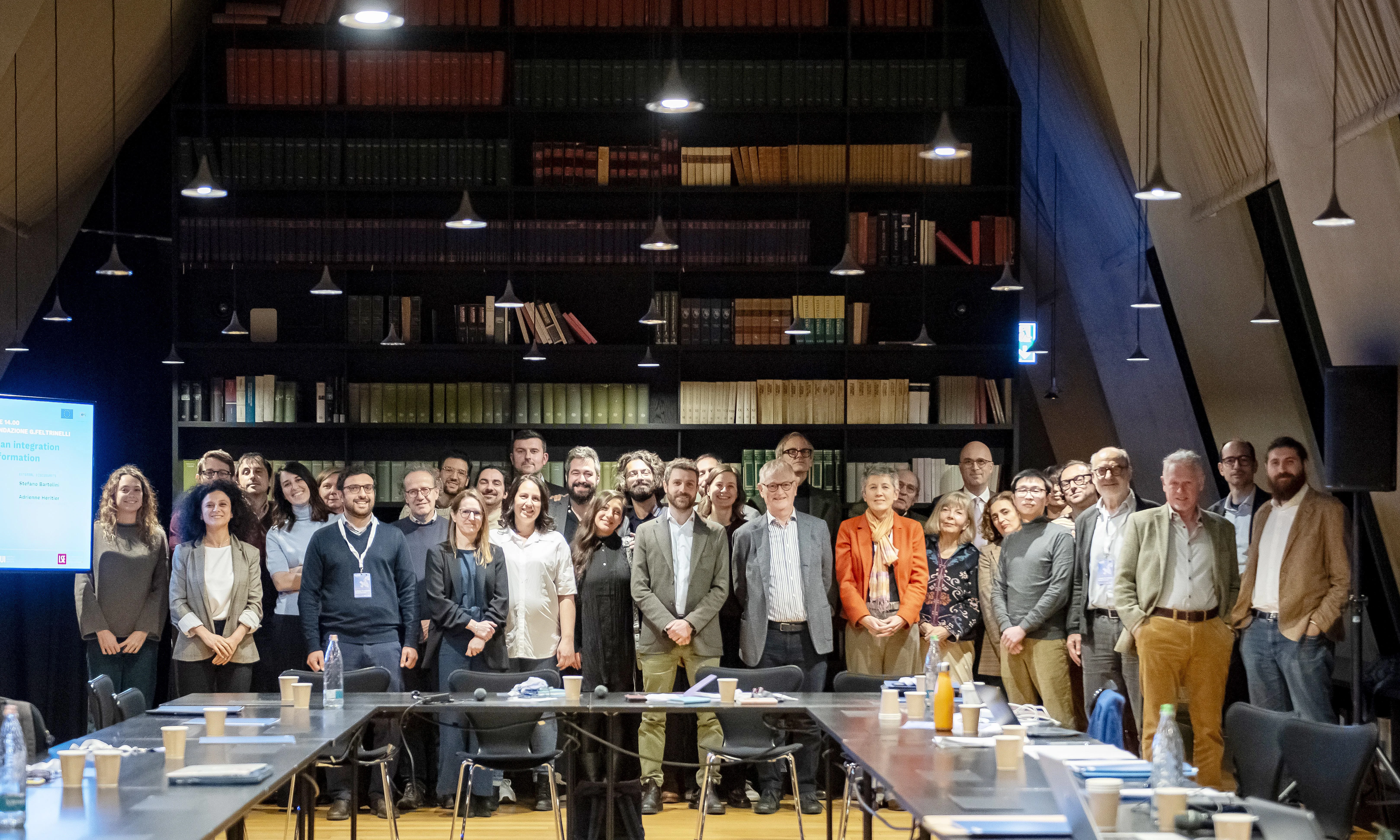
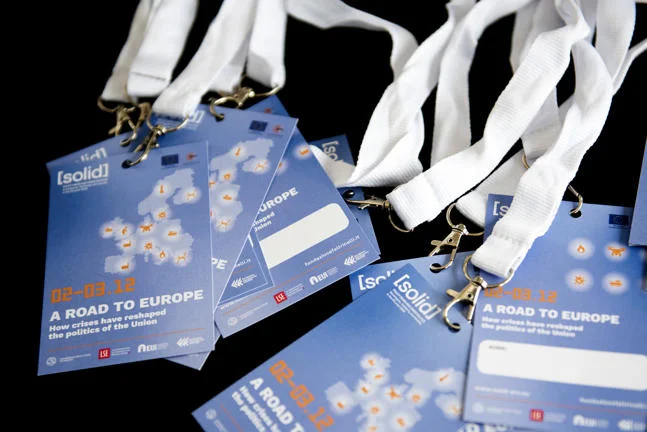
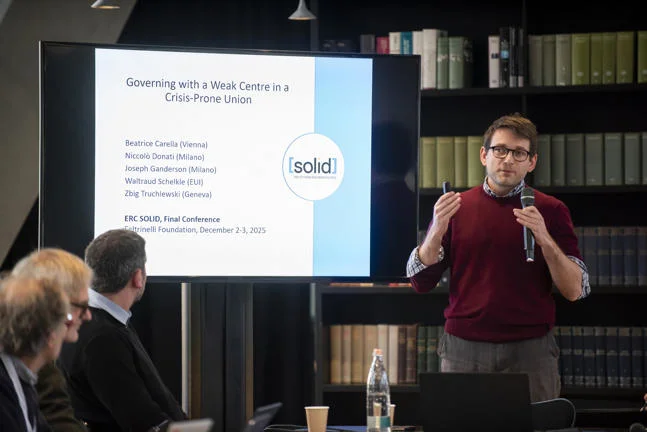
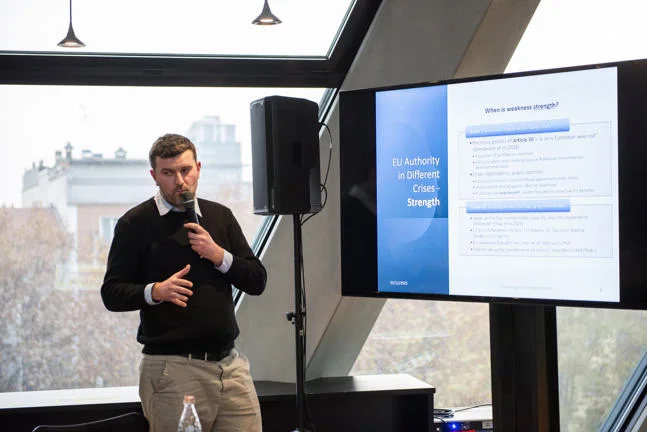
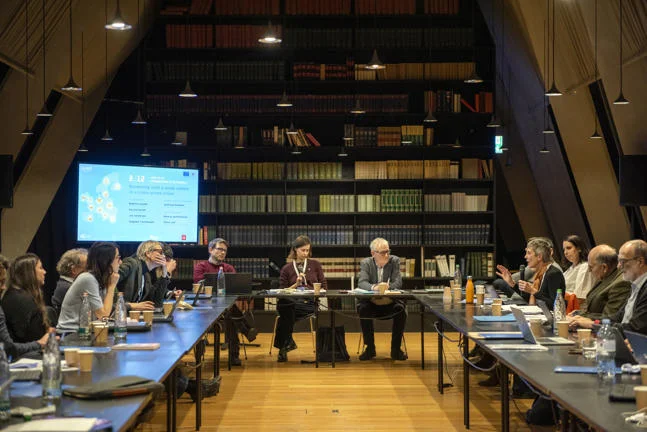
Over 2-3 December at the Giangiacomo Feltrinelli Foundation, the final conference of the SOLID project - Policy Crisis and Crisis Politics. Sovereignty, Solidarity and Identity in the EU Post 2008 - proposed a collective reflection on how Europe, in living with uncertainty, has redefined its way of governing, building consensus, and doing politics. It was an opportunity to look back at the transformations that the crises have wrought on the European project – and to ask ourselves what their legacy will be for the future of the Union.
SOLID is a European Research Council (ERC) Synergy Grant exploring how the EU has responded to crises since 2008. The project is partnered by Fondazione Giangiacomo Feltrinelli, the LSE European Institute, the European University Institute (EUI), and the Università degli Studi di Milano (University of Milan).
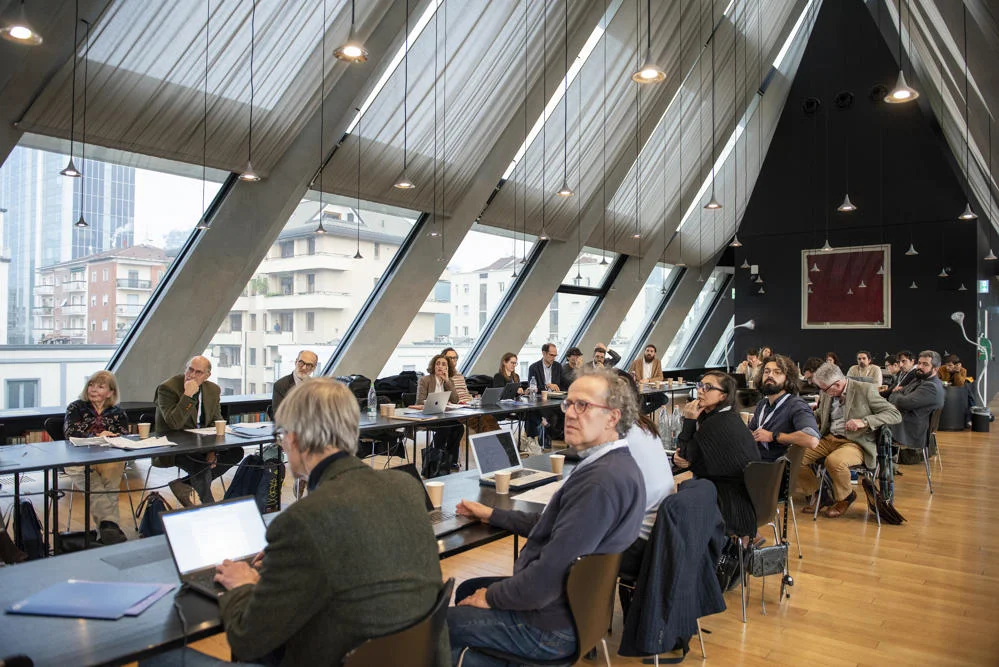
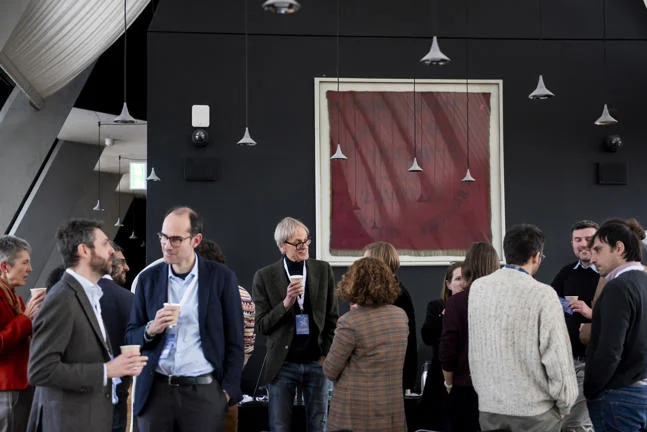
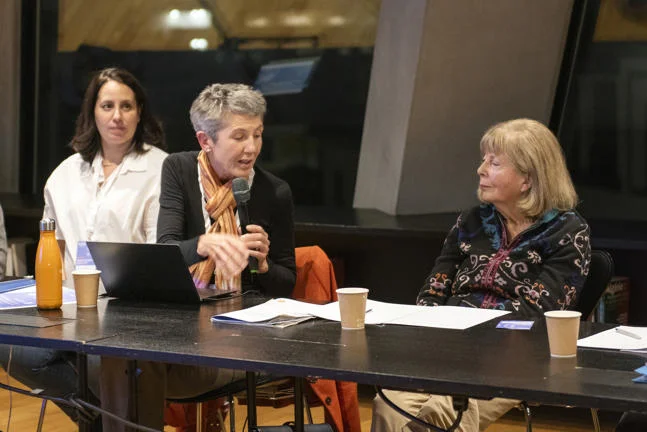
After six years of research, the project concluded with a series of closed-door working groups over the two days and an event open to the public.
During its development, SOLID has produced a vast body of scientific contributions, including monographs, peer-reviewed papers, comparative analyses, and original surveys at the European level. Together, these outputs provide a detailed mapping of public expectations and the institutional and political dynamics that have shaped the EU’s ability to respond to the various crises currently underway.
Coordinated by Principal Investigators Maurizio Ferrera, our Visiting Professor Professor Waltraud Schelkle, and Hanspeter Kriesi, SOLID has analysed the political and institutional mechanisms that have enabled the European Union not only to navigate the era of polycrisis, but in some cases, to strengthen its capacity to intervene, consolidating innovative tools and new forms of democratic legitimacy.
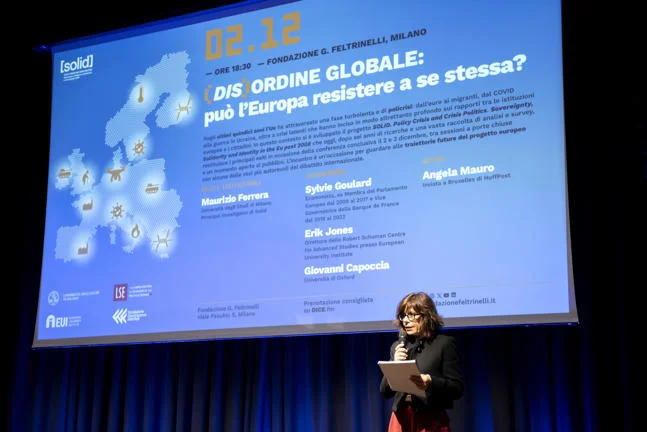
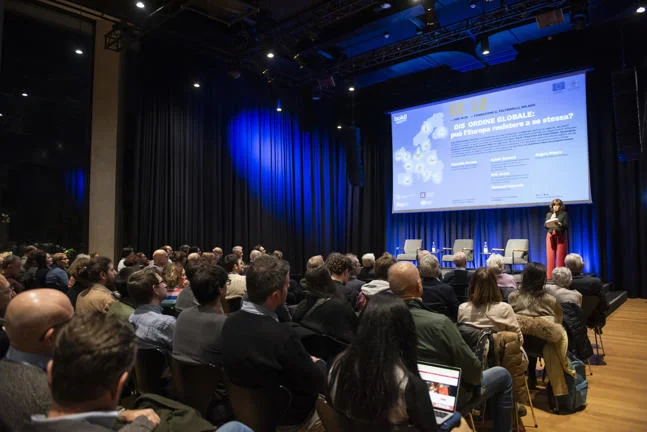
The conference also include a public event, "Global (dis)order: can Europe resist itself?," devoted to the future of Europe in an increasingly unstable international order. The discussion sought to address how the EU is navigating geopolitical fracture, democratic erosion and social insecurity, and whether the European project can sustain itself as a space for cooperation, solidarity and political imagination in a more conflictual world. You can catch up on the live translation of the event below.
Photo gallery
The text, photos, and recording on this page are courtesy of the Fondazione Giangiacomo Feltrinelli. Please see their original post on the SOLID website.